Morocco's Enduring Jewish Legacy: A Vibrant Past, A Precarious Future
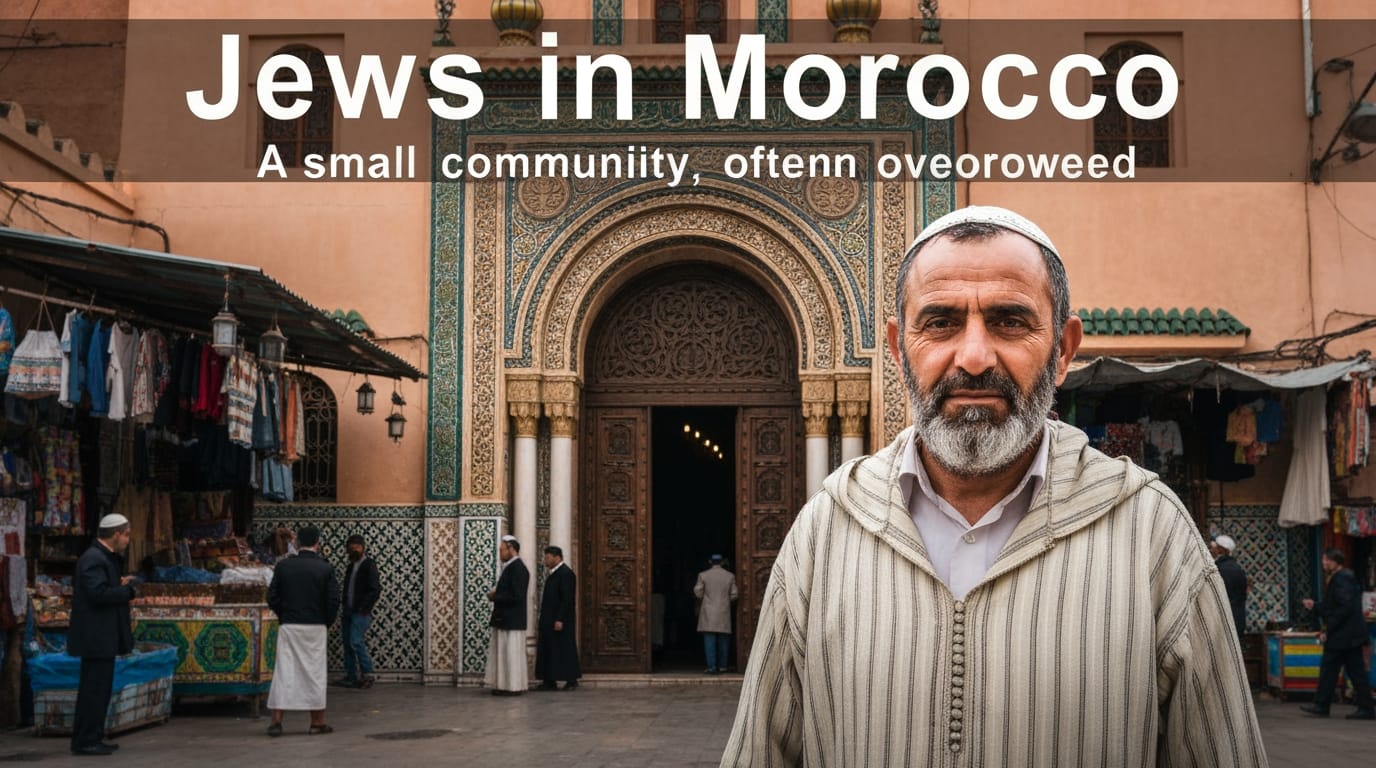
Rabat, Morocco — In the bustling medinas and serene mountain villages of Morocco, a quiet testament to millennia of coexistence endures. The Jewish community of Morocco, once the largest in the Muslim world, has seen its numbers dramatically diminish over the past 70 years, yet its deep roots and vibrant cultural contributions remain an indelible part of the nation's identity. From ancient origins predating Islam to a modern era marked by both steadfast royal protection and the gravitational pull of emigration, Moroccan Jews represent a unique story of heritage, resilience, and a future navigated with both hope and apprehension.
Ancient Roots and a Golden Age
The presence of Jews in Morocco stretches back more than two millennia, with the earliest evidence dating to the Roman period and possibly even to the 6th century BCE following the destruction of the First Temple in Jerusalem. Some theories suggest Phoenician traders brought Jews to the region, and even that indigenous Amazigh (Berber) tribes converted to Judaism. This ancient community was later significantly augmented by waves of Sephardic Jews expelled from Spain and Portugal following the Alhambra Decree in 1492. These newcomers brought with them rich Andalusian traditions, deeply influencing Moroccan Jewish culture and solidifying its unique character.
For centuries, Jewish communities thrived across Morocco, often living in designated quarters known as "mellahs" in urban centers like Fez, Marrakech, and Casablanca, as well as in rural areas alongside Berber tribes. They played pivotal roles in the country's economic life, serving as craftsmen, merchants, and financiers, and acted as crucial intermediaries in international trade between Europe, Africa, and the Middle East. This period saw a flourishing of Jewish culture, with distinctive liturgical melodies, piyyutim (religious poems) blending Andalusian and Berber influences, and unique culinary traditions. While enjoying periods of prosperity, Moroccan Jews also experienced episodes of persecution, notably during the Almohad dynasty in the 12th century, which forced many to convert or flee. However, the community largely endured, adapting and continuing to enrich the Moroccan tapestry.
A Community Transformed: Emigration and Decline
At its peak in the 1940s and 1950s, Morocco was home to the largest Jewish community in the Muslim world, with estimates ranging from 250,000 to 350,000 people. However, the mid-20th century marked a profound demographic shift. The establishment of the State of Israel in 1948 and Morocco's independence in 1956 triggered significant waves of emigration. Between 1949 and 1967, an estimated 200,000 Moroccan Jews departed, primarily for Israel, with others settling in France, Canada, the United States, and South America. This exodus reduced the community to a fraction of its former size. Today, the Jewish population in Morocco stands at approximately 2,000 to 3,000, predominantly concentrated in Casablanca, with smaller pockets in cities like Marrakech and Fez.
The demographic trend continues to present challenges. The community is aging, as many young people seek higher education and economic opportunities abroad, often choosing not to return. This ongoing departure raises concerns about the long-term viability of the community and the preservation of its vibrant traditions within Morocco. While the physical presence has shrunk, the deep emotional ties between Moroccan Jews in the diaspora and their homeland remain exceptionally strong, manifesting in frequent visits and pilgrimages to ancestral sites.
Royal Protection and Heritage Preservation
A defining characteristic of the Jewish experience in Morocco has been the consistent protection and recognition extended by the Moroccan monarchy. This relationship was notably underscored during World War II when King Mohammed V famously declared that there were "no Jewish citizens, there are no Muslim citizens, they are all Moroccans," refusing to comply with Vichy French demands to impose discriminatory laws or deport the country's Jewish population. This stance earned him reverence from Jewish communities worldwide.
Successive monarchs, including King Hassan II and the current King Mohammed VI, have continued this legacy, actively promoting the preservation of Jewish heritage. Under King Mohammed VI, significant initiatives have been launched to restore hundreds of Jewish sites, including synagogues, cemeteries, and mellahs across the country. Notably, in 2022, the King reorganized the Jewish community's institutional framework, establishing the National Council of the Moroccan Jewish Community, a Commission of Moroccan Jews Abroad, and the Foundation of Moroccan Judaism, further embedding Judaism as a "component" of national culture. These efforts include incorporating Jewish history into the national school curriculum and the inauguration of the first campus synagogue in the Arab world at Mohammed VI Polytechnic University. These actions reflect Morocco's constitutional recognition of its Hebraic heritage and its commitment to multiculturalism.
The Diaspora's Enduring Connection and Abraham Accords
The vast majority of Moroccan Jews now live outside the country, forming a vibrant diaspora. Israel is home to the largest contingent, with estimates suggesting between 500,000 and one million Israelis are of Moroccan descent, constituting the second-largest Jewish community in the country. Strong communities also thrive in France, Canada, the United States, and various South American nations, particularly due to a unique Spanish-speaking Jewish diaspora that maintained links with Hispanic culture. This global community maintains deep cultural and emotional ties to Morocco, often visiting for religious pilgrimages and cultural events, reinforcing the enduring connection to their ancestral land.
The renewal of diplomatic ties between Morocco and Israel in 2020, as part of the Abraham Accords, has further strengthened these connections. The accords have facilitated increased tourism, cultural exchange, and direct flights, allowing more Moroccan-Israelis to reconnect with their heritage. This diplomatic shift is seen by many as a "game changer," fostering new opportunities for economic and cultural projects, and deepening the strategic alliance between the two nations.
Navigating Modern Challenges
Despite the robust royal patronage and the flourishing ties with the diaspora, the Jewish community in Morocco faces contemporary challenges. While instances of direct persecution are rare, the community has experienced security concerns, such as the 2003 Casablanca bombings which targeted Jewish sites and the 2011 Marrakech attack. Societal intolerance, particularly when linked to Israeli-Palestinian issues, can also emerge, impacting the sense of security for some. The shrinking and aging demographic remains a fundamental concern, with many young people continuing to seek better educational and professional prospects abroad.
The future of the Moroccan Jewish community, while rooted in a profound history, is a delicate balance. The monarchy's unwavering commitment to preserving Jewish heritage, the strong bonds with a global diaspora, and the opportunities presented by renewed diplomatic relations offer reasons for optimism. Yet, the ongoing demographic decline and external geopolitical sensitivities mean the small community in Morocco continues to navigate its path with vigilance, striving to maintain its unique identity and rich traditions within a predominantly Muslim nation. Its continued existence stands as a powerful symbol of Morocco's diverse past and its aspirations for a pluralistic future.


