Mount Etna Erupts Again, Grounding Flights and Paralyzing Sicily’s Busiest Airport
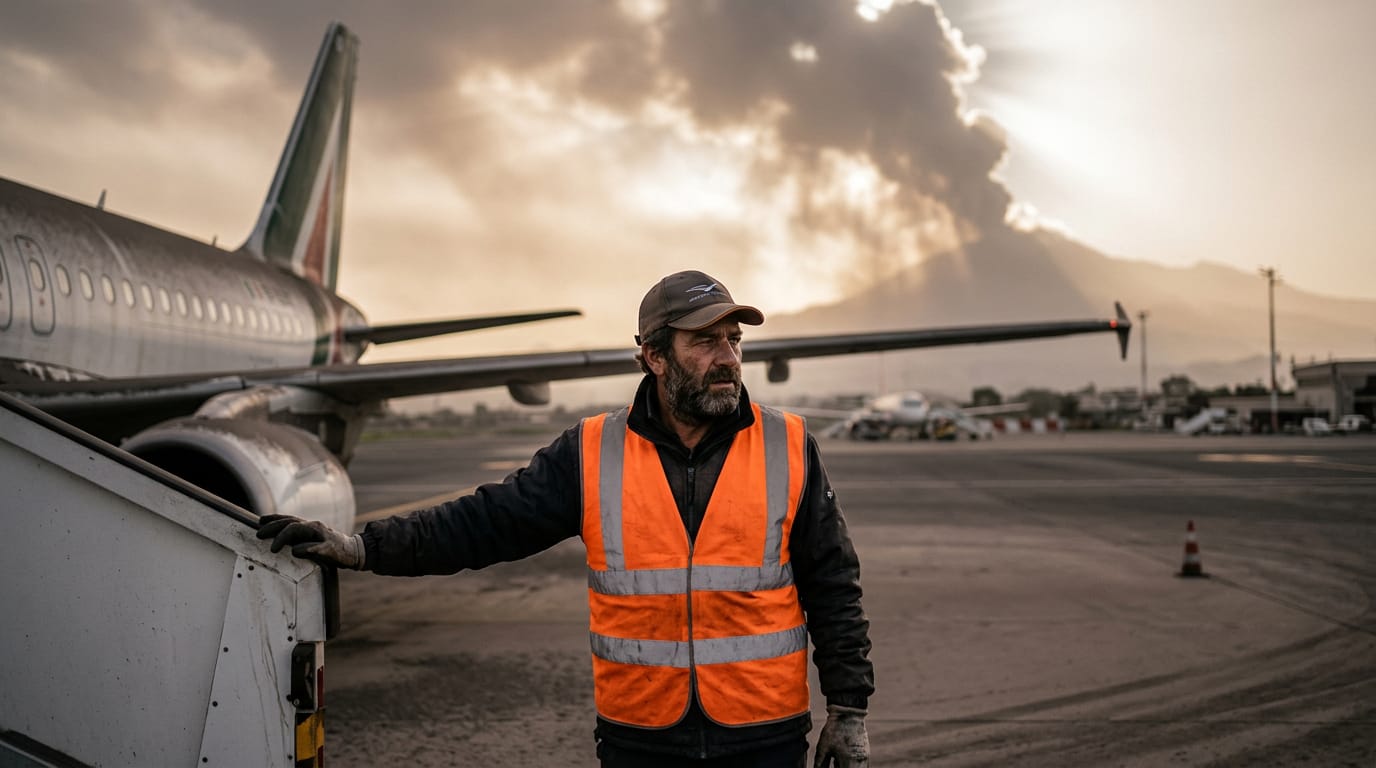
Renewed volcanic activity from Mount Etna has forced Sicily’s primary air transit hub to halt flight operations once more, stranding thousands of travelers and disrupting regional transport networks across southern Italy. The stratovolcano, recognized as Europe’s most active, sent dense plumes of ash and smoke four kilometers into the Mediterranean sky, prompting aviation authorities to issue their highest hazard alerts and close local airspace. The sudden halt at Catania-Fontanarossa Airport marks another costly interruption for an island already grappling with the volatile economic and logistical realities of living beside an active giant.
A Sudden Shutdown on the Runway
Operations at Catania-Fontanarossa Airport ground to a complete standstill after Italy’s National Institute of Geophysics and Volcanology reported intense activity at Etna’s northeast crater. The eruption generated an ash column reaching approximately four kilometers in height, with strong upper-level winds carrying the particulate cloud directly south over the city and the airport’s flight corridors.
Aviation safety regulators quickly elevated the flight alert to red, the most severe category, triggering the closure of designated airspace sectors. Airport management initially attempted to manage the situation by curbing incoming capacity from the standard twelve arrivals per hour down to four. However, as falling volcanic grit blanketed runways, taxiways, and aircraft stands, officials enforced a total stop on both landings and takeoffs.
Airport authorities mobilized specialized sweeping equipment to clear the fine, abrasive layer of basaltic debris from paved surfaces. Even minute quantities of volcanic material present severe technical risks for jet engines, capable of melting inside turbines, jamming ventilation components, and severely abrading cockpit windshields. Until ground crews can guarantee clean takeoff paths and radar tracks confirm the plume has dispersed, normal operations cannot safely resume.
Spillover Delays Across Regional Networks
The abrupt closure in Catania, which ranks as Italy’s fifth-busiest airport, caused immediate ripples throughout regional transit lines. Flights en route to eastern Sicily were rerouted mid-air to alternate airfields across the island, including Falcone-Borsellino Airport in Palermo, Vincenzo Florio Airport near Trapani, and the regional runway in Comiso.
The sudden influx of unscheduled aircraft rapidly overwhelmed facilities at these secondary hubs. In Palermo, ground crews worked through backlogs as dozens of diverted airliners filled apron gates. Passengers faced hours of delays awaiting luggage transfers and alternative transportation. Regional bus lines and taxi services saw sharp spikes in demand, with long queues forming outside terminal buildings as travelers sought cross-island connections back to Catania.
The disruption extended beyond the island’s borders as well. Airspace corridors extending toward neighboring Malta experienced delays due to drifting ash clouds and rerouted air traffic, illustrating how local volcanic events in Sicily routinely influence international transit corridors over the central Mediterranean.
The Rising Cost of Living with Europe's Most Active Volcano
For Catania’s local economy, repeated flight halts present a persistent operational hurdle. Tourism serves as a cornerstone of eastern Sicily's economic life, supporting thousands of hospitality businesses, coastal resorts, and cultural sites from Taormina to Syracuse. Because Catania handles more than ten million passengers annually, unexpected closures during peak or shoulder travel seasons cost airlines, hotels, and tour operators millions of euros in canceled bookings, refunds, and emergency logistics.
Airlines face heavy logistical burdens during each closure, absorbing the expenses of fuel for diversions, customer accommodation, and crew rerouting. Regional business groups have repeatedly voiced frustration over the vulnerability of eastern Sicily's transport infrastructure, pointing out that highway and rail links between the island's major hubs remain insufficient when air traffic fails.
At the municipal level, the falling ash creates steep maintenance expenses for local governments. Beyond the airport perimeter, falling volcanic lapilli and dust cover streets, plazas, and drainage systems across Catania and surrounding towns. Municipalities must deploy street sweepers and enforce temporary speed limits on roadways to prevent accidents caused by slippery, ash-coated asphalt. Disposal of the collected volcanic sand presents additional logistical hurdles, requiring designated storage sites and public funding to manage thousands of tons of sediment.
Balancing Natural Majesty and Modern Infrastructure
Mount Etna stands at more than 3,300 meters, dominating the Sicilian landscape both physically and culturally. Its fertile volcanic soils sustain world-renowned vineyards, olive groves, and citrus orchards that line its slopes, while its spectacular nocturnal lava fountains attract thousands of mountaineers and sightseers every year.
Yet this same geographic powerhouse demands continuous vigilance from modern infrastructure planners. Scientists monitor the mountain around the clock using seismic sensors, satellite imagery, and gas-sampling networks to anticipate eruptive episodes. Even with advanced early-warning systems, the precise direction and behavior of explosive ash plumes remain largely at the mercy of prevailing winds.
Transportation planners in Sicily continue to debate long-term alternatives to reduce the island's reliance on a single primary eastern gateway. Proposals include permanently upgrading secondary airports like Comiso to handle sudden diversions more smoothly, alongside long-delayed modernizations to high-speed rail lines that would better connect eastern and western Sicily.
Moving Forward in Etna's Shadow
As maintenance crews clear runways and geophysicists track shifting wind patterns, Catania’s airport prepares to resume gradual operations once safety parameters are met. Airline operators continue advising travelers to verify flight schedules before departing for terminal gates, warning that secondary scheduling delays may persist for several days.
The repeated groundings underscore the delicate balance between high-volume modern transit and the ancient, unpredictable forces that shape Sicily. While Mount Etna remains a defining source of natural wonder and agricultural vitality for the island, its latest eruption serves as a vivid reminder that the rhythm of daily life in Catania remains inextricably tied to the mountain above it.