Mount Etna's Fiery Fury Grounds Hundreds of Flights, Stranding Travelers in Sicily
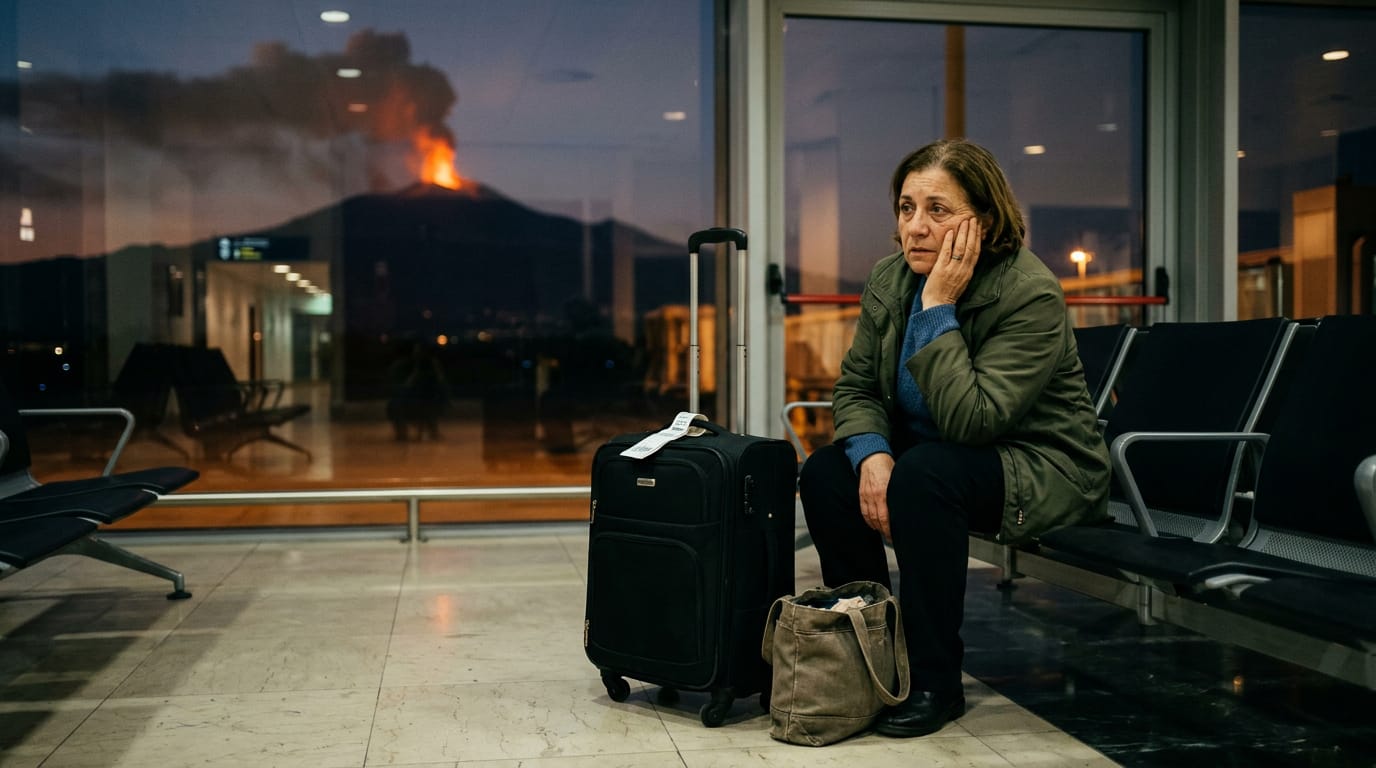
Catania, Sicily – Mount Etna, Europe's most active volcano, has once again asserted its power, unleashing a series of explosive eruptions that have blanketed eastern Sicily in volcanic ash and severely disrupted air travel, culminating in the complete suspension of all flights at Catania's international airport. The ongoing volcanic activity, which intensified in recent days, has led to the cancellation of hundreds of flights, rerouting many more, and leaving thousands of summer tourists and local residents grappling with travel chaos during the peak holiday season.
Etna's Explosive Display
The latest phase of Etna's eruptive activity began to escalate around early August 2026, with the volcano exhibiting intense explosive and effusive characteristics. Observations from the National Institute of Geophysics and Volcanology (INGV), Etna Observatory, on August 10, reported continuous explosive activity from the Voragine crater, one of Etna's summit vents. This activity has been characterized by abundant ash emissions, with volcanic bombs observed falling in the summit area. The eruptions have also generated multiple active lava flows, forming complex lava fields that have descended to elevations as low as 1,500 meters in some areas. A high column of gas and ash from the Voragine Crater was notably visible on August 7, painting dramatic scenes across the Sicilian sky. The aviation alert level for Mount Etna remains at red, the highest warning, underscoring the significant threat volcanic ash poses to aircraft.
Catania Airport Halted Amid Ash Fallout
The primary consequence of Etna's renewed vigor has been the extensive disruption to operations at Catania Fontanarossa Airport (CTA), Sicily's main gateway and Italy's fifth-busiest airport by passenger traffic. Volcanic ash, a serious hazard to aircraft engines and visibility, prompted airport authorities to repeatedly close its airspace. As of Wednesday, August 12, 2026, all arriving and departing flights at Catania were suspended until 4 pm local time on Thursday, August 13. This extended closure follows days of cascading disruptions; between August 8 and 11, approximately 400 departing flights were canceled, with an additional 52 cancellations scheduled for Wednesday. Over 250 flights were redirected to other Sicilian airports, including more than 100 to Comiso, roughly 50 to Palermo on Tuesday alone, and another 22 to Trapani. Earlier in the week, on August 10, all inbound flights were initially halted until 5 pm local time, after brief periods of highly restricted operations that allowed only five arrivals per hour. Airport management company SAC has consistently advised passengers to verify their flight status directly with airlines before traveling to the airport.
Ripple Effects Across the Region
The impact of Etna's eruptions extends beyond the immediate vicinity of Catania. The closures and diversions have placed considerable strain on Sicily's other airports during what is typically one of the busiest periods for tourism. Palermo's airport, for instance, absorbed 190 flights originally destined for Catania in recent days, leading to its own operational challenges and causing delays. Comiso Airport, a smaller facility south of Catania, also experienced temporary suspensions due to ash contamination but has since resumed full operations. The pervasive ash cloud has even drifted south across the Mediterranean, causing flight cancellations and significant delays overnight in neighboring Malta, though conditions there reportedly improved by Wednesday. Beyond air travel, local communities have been affected by ashfall, which coats streets, buildings, and agricultural lands, necessitating extensive cleanup efforts and posing potential health concerns.
Living with a Living Volcano
Mount Etna's frequent activity is a defining characteristic of eastern Sicily, with its towering presence overlooking the island's eastern coast. While its eruptions are a spectacle of nature, they also present ongoing logistical and economic challenges for the region. Italian Civil Protection Minister Nello Musumeci acknowledged that the latest disruptions have reignited long-standing concerns regarding Catania Airport's inherent vulnerability due to its close proximity to the volatile mountain. Despite the recurrent nature of these events, the ability of local authorities and infrastructure to manage such disruptions has evolved, with protocols in place for flight diversions and ash cleanup. However, the unpredictability of volcanic activity ensures that residents and visitors alike must remain vigilant to Etna's ever-changing moods.
The current situation highlights the delicate balance between the allure of Sicily's natural beauty and the formidable power of its most iconic landmark. While air travel remains significantly hampered, the monitoring efforts by scientific bodies like INGV continue to provide critical data, informing operational decisions and helping to mitigate the risks associated with living in the shadow of one of the world's most active volcanoes. The resilience of the Sicilian people, accustomed to Etna's intermittent displays, will once again be tested as they navigate the disruptions and await the volcano's return to a quieter state.


