Munich Surfers Abandon Official Efforts to Restore Iconic Eisbach Wave
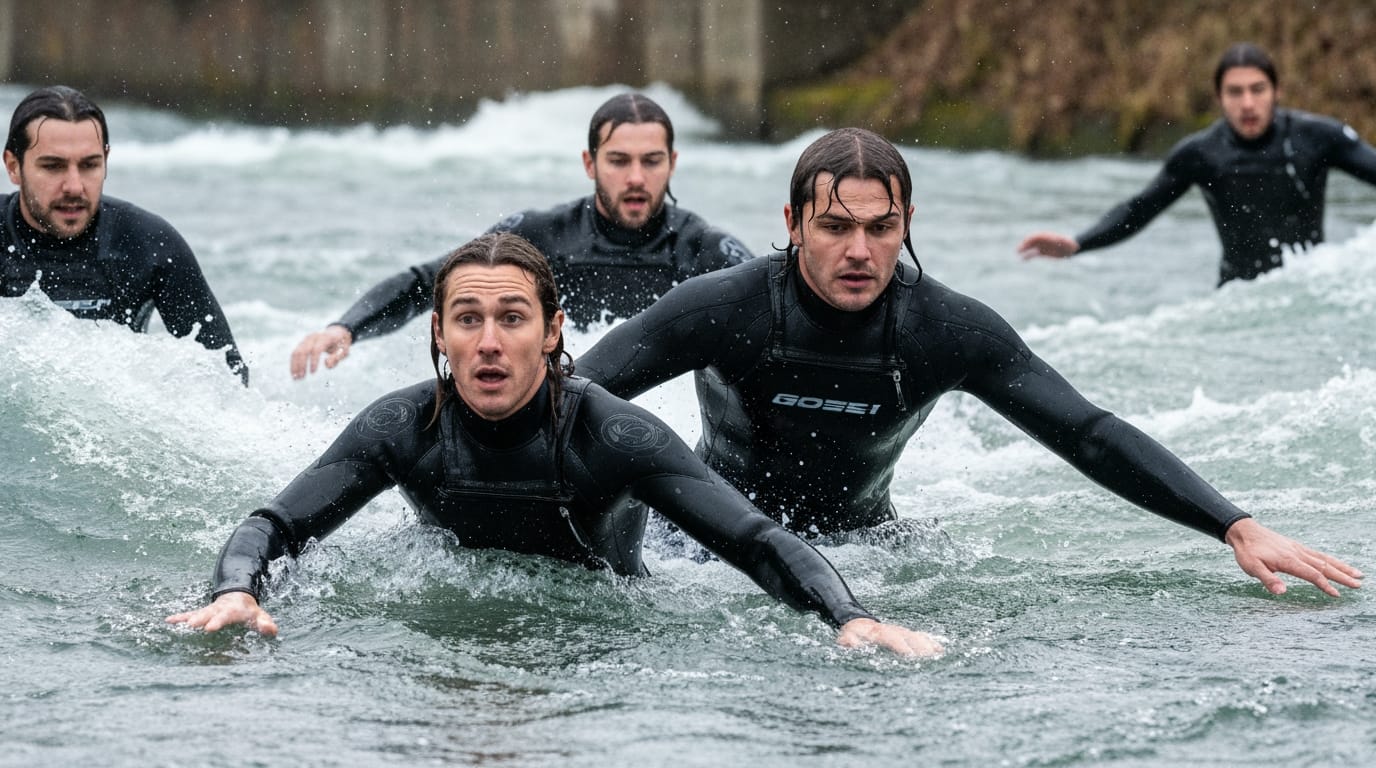
Munich, Germany – The long-running saga of Munich's legendary Eisbach wave has taken a dispiriting turn, as leaders of the local surfing community have announced the cessation of formal efforts to restore the iconic river wave. After months of collaboration with city authorities following the wave's mysterious disappearance in late 2025, surfers cite an "administrative blockade" and "unfulfilled conditions" as reasons for abandoning the official restart attempt, casting a shadow over the future of one of the world's most unique urban sporting phenomena. The decision highlights deep-seated frustrations with bureaucratic processes, leaving enthusiasts and international visitors questioning when, and if, the celebrated Eisbach will fully regain its former glory.
The Silence of the Eisbach
The renowned Eisbach wave, a constant fixture in Munich's Englischer Garten, abruptly vanished in late October and early November 2025, following the city's annual "Bachauskehr" – a routine stream cleaning operation. Where a powerful, continuous standing wave once drew surfers from around the globe, only turbulent whitewater or a flat, unsurfable flow remained. City officials and the surfing community alike were initially baffled by the disappearance, with experts proposing various theories ranging from altered water flow dynamics to subtle changes in the riverbed's structure.
This sudden silence at the Eisbach came after a year already marked by heightened scrutiny and tragedy. Earlier in April 2025, the wave had been temporarily closed for several months following the fatal drowning of a 33-year-old surfer whose leash became entangled underwater. This incident led to an extensive investigation, temporary water level reductions, and the implementation of new safety regulations, including mandatory self-releasing leashes, a buddy system, and restricted surfing hours. While the wave had reportedly returned to its usual form by June 2025 after these safety adjustments, its subsequent disappearance after the autumn cleaning proved to be an even more persistent challenge. Surfers suspected that the dredging operations removed too much crucial sediment and gravel, essential for creating the precise hydraulic jump that forms the wave.
A Legacy on Hold
The Eisbach wave holds an almost mythical status, an improbable surfing hotspot in a landlocked Bavarian city, nearly 800 kilometers from any coastline. Its origins trace back to 1972, when concrete blocks strategically placed under a bridge in the two-kilometer-long distributary of the Isar River inadvertently created a surfable rapid. Early pioneers of river surfing further refined the wave with illegal installations of wooden planks, transforming it into a year-round attraction.
For decades, surfing the Eisbach was an underground activity, a "cat-and-mouse game" with authorities. However, its undeniable appeal and growing community led Munich to officially legalize surfing on the Eisbach in 2010, recognizing its importance as a cultural asset. The wave, often lauded as "the mother of all river waves" and "probably the most ridden wave in the world," became a global phenomenon, drawing professional surfers, tourists, and locals alike to witness or partake in its unique challenge. Its consistent, static nature and cold, icy waters ("Eisbach" literally means "icy creek") required a distinct skill set, fostering a vibrant and dedicated community of urban surfers. The Eisbach became more than just a wave; it symbolized Munich's innovative spirit and an unlikely blend of traditional Bavarian culture with adventurous, free-spirited surfing ethos.
The Futile Pursuit of Restoration
In the wake of the wave's disappearance, initial efforts to revive the Eisbach were marked by a spirit of collaboration between Munich's city administration and the surfing community. Mayor Dieter Reiter, a self-proclaimed "friend" of Munich's surfers, convened roundtables to discuss solutions, involving the local "Eisbach crew" in the dialogue. City engineers embarked on a series of tests, experimenting with increased water flow from the Isar River into the Eisbach and meticulously adjusting water levels in hopes of coaxing the wave back into existence. Flow experts from Helmut Schmidt University in Hamburg were even brought in, utilizing sonar technology to map the riverbed and understand the intricate hydraulic balance required for the wave's formation.
However, progress proved agonizingly slow. Initial tests yielded unsatisfactory results, and despite ongoing coordination between engineers and local surf associations, the desired hydraulic balance remained elusive. There was discussion about potentially restoring gravel formations to the riverbed, a critical element that many surfers believed was inadvertently removed during the cleaning process. Faced with the lack of official progress, some members of the surfing community took matters into their own hands, attempting unauthorized, DIY fixes by installing a wooden ramp to recreate the wave. While these makeshift solutions reportedly worked briefly, they were swiftly removed by authorities, highlighting the tension between community initiative and official protocol.
The Point of Exhaustion
As December 2025 drew to a close, the optimism that had initially fueled the restoration efforts began to wane, giving way to profound disappointment and frustration among Munich's surfing fraternity. Recent reports indicate that the "saviors of the famous Eisbachwelle" have effectively given up on the official process. Athletes are now publicly accusing authorities of an "administrative blockade," asserting that "unfulfilled conditions" from the city's side have rendered further formal engagement unproductive. This sentiment suggests a breakdown in trust and a perceived lack of decisive action from the municipality.
While some sporadic reports have emerged suggesting the wave might be "back again" due to a "night-and-nebula action," these appear to be unofficial or temporary occurrences, perhaps a testament to the persistent ingenuity of surfers or minor, transient hydraulic shifts, rather than a successful outcome of sustained official efforts. The overarching narrative from the core surfing community points to an abandonment of the structured, city-led initiatives. This marks a critical juncture, as the surfing community's decision to step back from the negotiation table signals a significant political dimension emerging from the technical challenge of wave restoration. The core frustration seems to stem from the slow pace of city administration, described as "bulky" and "slow-turning," hindering the return of what surfers consider a vital part of Munich's identity.
Conclusion
The abandonment of official restart efforts by Munich's surfing community marks a somber moment for a wave that has captivated imaginations worldwide. The Eisbach, a symbol of urban innovation and sporting passion, now faces an uncertain future. While the city and surfers have historically navigated challenges, the current stalemate underscores the complexities inherent in managing a natural-yet-man-made phenomenon within an urban landscape. The coming months will reveal whether this pause is a temporary setback or a more enduring shift for Munich's unique surf culture. The unique energy and challenge of the Eisbachwelle remain unmatched, and its prolonged absence serves as a stark reminder of the delicate balance required to maintain such an extraordinary urban marvel. The saga continues, but for now, the once-unending flow of the Eisbach wave, and the formal efforts to restore it, have reached a disheartening standstill.