Museveni Takes Commanding Lead in Tense Ugandan Presidential Election Amid Fraud Allegations and Internet Blackout
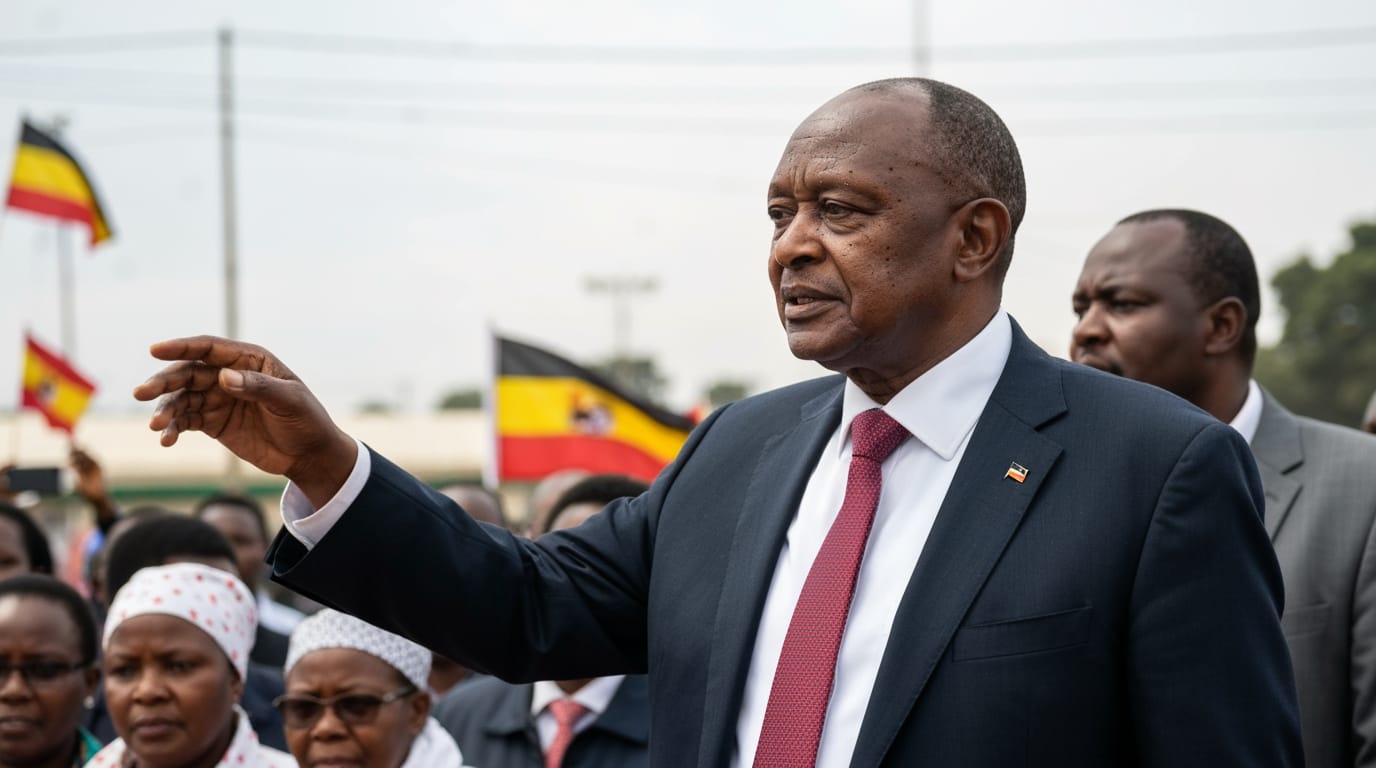
KAMPALA, Uganda – Incumbent President Yoweri Museveni has established a significant early lead in Uganda's presidential election, with preliminary results released Friday indicating a wide margin over his main challenger, pop star-turned-politician Bobi Wine. The early count, however, has been overshadowed by widespread allegations of fraud from the opposition, a government-imposed internet shutdown, and reports of pre-election violence that fueled an atmosphere of intense political tension across the East African nation.
The electoral process, which took place on Thursday, January 15, unfolded amidst heavy security presence and concerns from international observers regarding a level playing field. With just under half of the polling stations reporting, Museveni, who has governed Uganda since 1986, appears poised to extend his decades-long rule, while his opponent, Robert Kyagulanyi Ssentamu, known as Bobi Wine, urges his supporters to protest what he describes as a fraudulent exercise.
Early Returns Show Dominant Lead for Incumbent
According to the Uganda Electoral Commission (EC), President Yoweri Museveni, 81, has secured 76.25% of the vote based on tallies from 22,758 polling stations, representing 5,194,338 valid votes counted. His closest rival, 43-year-old Bobi Wine, has garnered 19.85%, or 1,312,047 votes. The remaining votes are split among six other candidates, each receiving single-digit shares. The EC stated that these early figures are being updated as counting continues, with a full picture yet to emerge. Museveni himself had earlier expressed confidence in winning with 80% of the vote, provided there was no "cheating."
This substantial lead, if it holds, would mark another decisive victory for the veteran leader, extending his continuous tenure in office beyond four decades. The scale of the early results reflects a pattern seen in previous Ugandan elections, where Museveni has consistently secured strong support.
Allegations of Fraud, Internet Shutdown Mar Electoral Process
The early results have been met with swift condemnation from Bobi Wine and his National Unity Platform (NUP) party, who have alleged "massive fraud" throughout the election. Wine's party reported that security forces, comprising military and police personnel, surrounded his home in the capital, Kampala, effectively placing him under house arrest as results were being announced. This action follows a campaign period marred by crackdowns on opposition rallies, with reports of tear gas, live bullets, and arrests of opposition supporters. The government defended these actions as necessary responses to unlawful behavior.
A nationwide internet blackout, imposed by authorities ahead of and during the election, has drawn significant criticism. While the government maintained the shutdown was crucial to prevent the spread of "misinformation," opposition figures like Wine labeled it a "tactic for fraud," hindering transparency and communication. The internet disruption also complicated efforts by independent monitors and journalists to observe the electoral process in real time and report on any irregularities.
The United Nations human rights office had previously noted that the election was taking place in an environment characterized by "widespread repression and intimidation." These concerns align with reports of technical glitches, including biometric voter identification failures that caused delays at numerous polling stations, even affecting President Museveni himself at his own station. Some locations were reportedly forced to revert to manual registers, and voting times were extended in affected constituencies.
A Generational Battle for Uganda's Future
This election represents a high-stakes rematch between President Museveni and Bobi Wine, a contest often framed as a generational struggle for Uganda's direction. Museveni seized power in 1986 following a five-year guerrilla war and has since been a dominant figure in Ugandan politics, overseeing periods of stability and economic growth but also facing increasing accusations of authoritarianism and human rights abuses. His previous electoral victories, including the 2021 polls where he secured a sixth term with 58.64% of the vote against Wine's 34.83%, have frequently been challenged by the opposition and noted for irregularities by international observers.
Bobi Wine, a former popular musician, emerged as a potent political force, particularly appealing to Uganda's large youth population with his calls for democratic change and an end to corruption. His National Unity Platform (NUP), formed recently, quickly became the second-largest political party, signaling a shift in the opposition landscape and challenging the long-established political order. The 2021 election saw the NUP make significant gains in parliamentary seats, even as Museveni's ruling National Resistance Movement (NRM) maintained a strong majority.
Scrutiny of the Electoral Process and International Response
The legitimacy of Uganda's elections has been a recurring point of contention. In the 2021 elections, the United States and the European Union refrained from deploying full observer missions, citing that their previous recommendations had been ignored and that the conditions for a free and fair election were not met. They called for investigations into alleged abuses of power and violence. The current election faces similar questions regarding its transparency and fairness, especially given the internet shutdown and reports of opposition suppression.
The lack of robust independent oversight in such a politically charged environment raises concerns about the integrity of the vote count and the ability of citizens to freely express their will. The call by Bobi Wine for protests indicates a potential for continued unrest and political instability as the final results are tallied and announced.
Conclusion
As preliminary results solidify President Museveni's lead in Uganda's latest presidential election, the nation stands at a critical juncture. While the Electoral Commission continues to release figures pointing towards another term for the long-serving leader, the process has been marred by serious accusations of electoral fraud and a significant curtailment of communication and opposition activity. The deep divisions between the incumbent and his challenger, representing different generations and political aspirations, suggest that the outcome, regardless of official declaration, may not be universally accepted, potentially prolonging a period of political uncertainty and social unrest in Uganda. The international community watches closely, balancing calls for democratic integrity with the realities of a tightly controlled political landscape.


