Myanmar Declares Week of Mourning as Earthquake Death Toll Surpasses 3,000
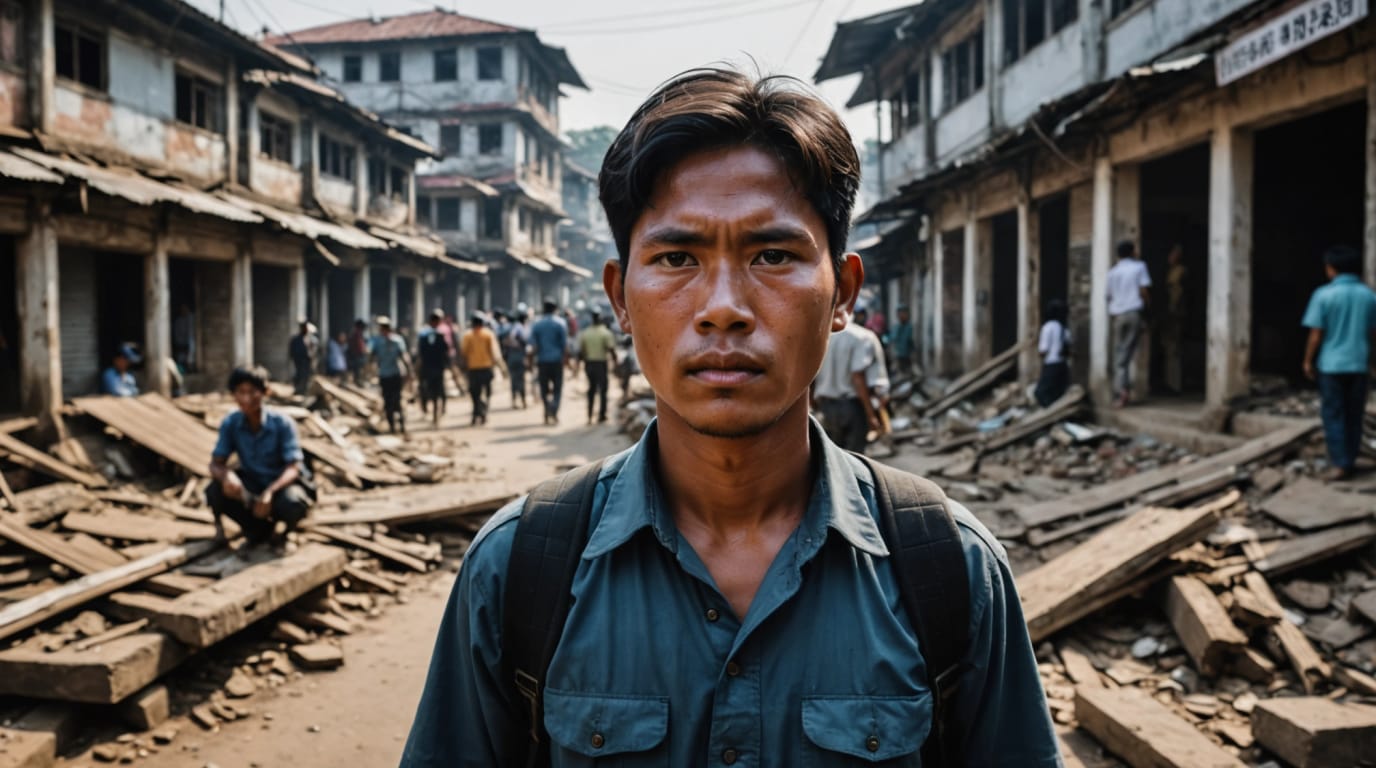
A week of national mourning has been declared in Myanmar as the confirmed death toll from Friday's devastating 7.7 magnitude earthquake continues to climb, exceeding 3,000. The quake, the most powerful to strike the nation since 1912, has left a trail of destruction across central Myanmar and caused significant damage in neighboring Thailand and southwestern China. Rescue efforts are underway, but are hampered by damaged infrastructure, communication disruptions, and ongoing aftershocks.
Earthquake Devastation
The earthquake struck on March 28th at 12:50 PM local time, with its epicenter near Mandalay, Myanmar's second-largest city. The shallow depth of 10 kilometers (6 miles) exacerbated the impact, resulting in a maximum Modified Mercalli intensity of IX (Violent). The tremors were felt across the country and beyond, shaking buildings in Thailand, Laos, Vietnam, Bangladesh, India, and China. A 6.4 magnitude aftershock followed shortly after, further compounding the damage and hindering rescue operations.
The Sagaing Region, close to the epicenter, has suffered catastrophic damage. In Sagaing city, a rescue worker reported almost 600 fatalities and 90% of structures destroyed. The city's fire station collapsed, trapping many and hampering relief efforts. Four out of five mosques in Sagaing collapsed, with fears that over 100 people were inside the Min Street Mosque when it crumbled. A school collapse in Kyaukse resulted in the deaths of 40 students and nine teachers.
Rising Casualties and Humanitarian Crisis
As of March 31st, the official death toll has surpassed 3,000 in Myanmar and 19 in Thailand, with over 3,900 people injured. Hundreds more are reported missing, including many at a collapsed construction site in Bangkok. The United Nations Office for the Coordination of Humanitarian Affairs (OCHA) and other aid organizations warn that the actual number of casualties may be significantly higher due to communication disruptions and limited access to remote areas.
The earthquake has exacerbated an already dire humanitarian situation in Myanmar, where nearly 20 million people were already in need of assistance due to ongoing conflict, economic hardship, and displacement. The International Rescue Committee (IRC) reports staggering humanitarian needs on the ground, including urgent medical care, clean drinking water, tents, and food. The health system, already decimated by conflict and disease outbreaks like cholera, is overwhelmed by the surge of casualties.
Infrastructure Damage and Disrupted Services
The earthquake has caused widespread destruction of homes and severe damage to critical infrastructure. Mandalay International Airport is closed until further notice, and major bridges, roads, universities, hotels, historical and religious sites, and public service buildings have been heavily damaged or destroyed. The Ava Bridge, a historic landmark connecting Sagaing and Mandalay, has partially collapsed.
Telecommunications and internet infrastructure have been disrupted nationwide, hindering humanitarian communications and operations. Damage to the Yangon-Nay Pyi Taw-Mandalay expressway has led to service disruptions, with cracks and surface distortions forcing highway buses to halt operations. Power outages are widespread, with electricity supply in Yangon limited to four hours daily.
International Response and Aid Efforts
Myanmar's government has declared a state of emergency in Bago Region, Mandalay Region, Nay Pyi Taw Union Territory, Sagaing Region, and parts of Shan State, and has called for international assistance. Numerous countries and organizations have responded with aid and support.
The United Nations has allocated an initial $5 million from the Central Emergency Response Fund (CERF) to support urgent response efforts. The World Health Organization (WHO) has launched a flash appeal for $8 million to deliver life-saving trauma care, prevent disease outbreaks, and restore essential health services. UNICEF is mobilizing 80 metric tons of life-saving supplies, including health kits, medical supplies, tents, and hygiene kits.
Several countries have pledged or delivered aid, including:
- China: 100 million yuan ($13.8 million) in emergency humanitarian aid.
- United Kingdom: Up to £10 million in support.
- Ireland: €6 million in humanitarian assistance.
- South Korea: $2 million worth of humanitarian aid.
- India, Russia, Singapore, and Thailand: Have sent rescue teams and relief supplies.
- Hong Kong: Sent a 51-person search-and-rescue team with specialized equipment.
The International Federation of Red Cross and Red Crescent Societies (IFRC) has launched an emergency appeal for more than $100 million to help victims of the earthquake.
Challenges and Ongoing Concerns
Despite the outpouring of international support, significant challenges remain in delivering aid and reaching affected communities. Damaged roads and debris are obstructing humanitarian access and complicating needs assessments. Hospitals and health facilities have sustained extensive damage or destruction, and there is a severe shortage of medical supplies.
The ongoing civil war in Myanmar is exacerbating the difficulty of disaster relief and information dissemination. The military government has continued to carry out attacks in some areas, even as opposition forces have declared a unilateral ceasefire to aid rescue efforts. There are concerns that the military junta may withhold international aid from certain regions.
A Nation in Mourning
As Myanmar begins a week of national mourning, the focus remains on rescuing survivors, providing aid to those in need, and assessing the full extent of the damage. The earthquake has not only caused immense physical destruction but has also deepened the humanitarian crisis in a country already struggling with conflict and instability. The road to recovery will be long and challenging, requiring sustained international support and cooperation.


