Myanmar Junta Chief Announces Election by January 2026 Amidst Ongoing Conflict
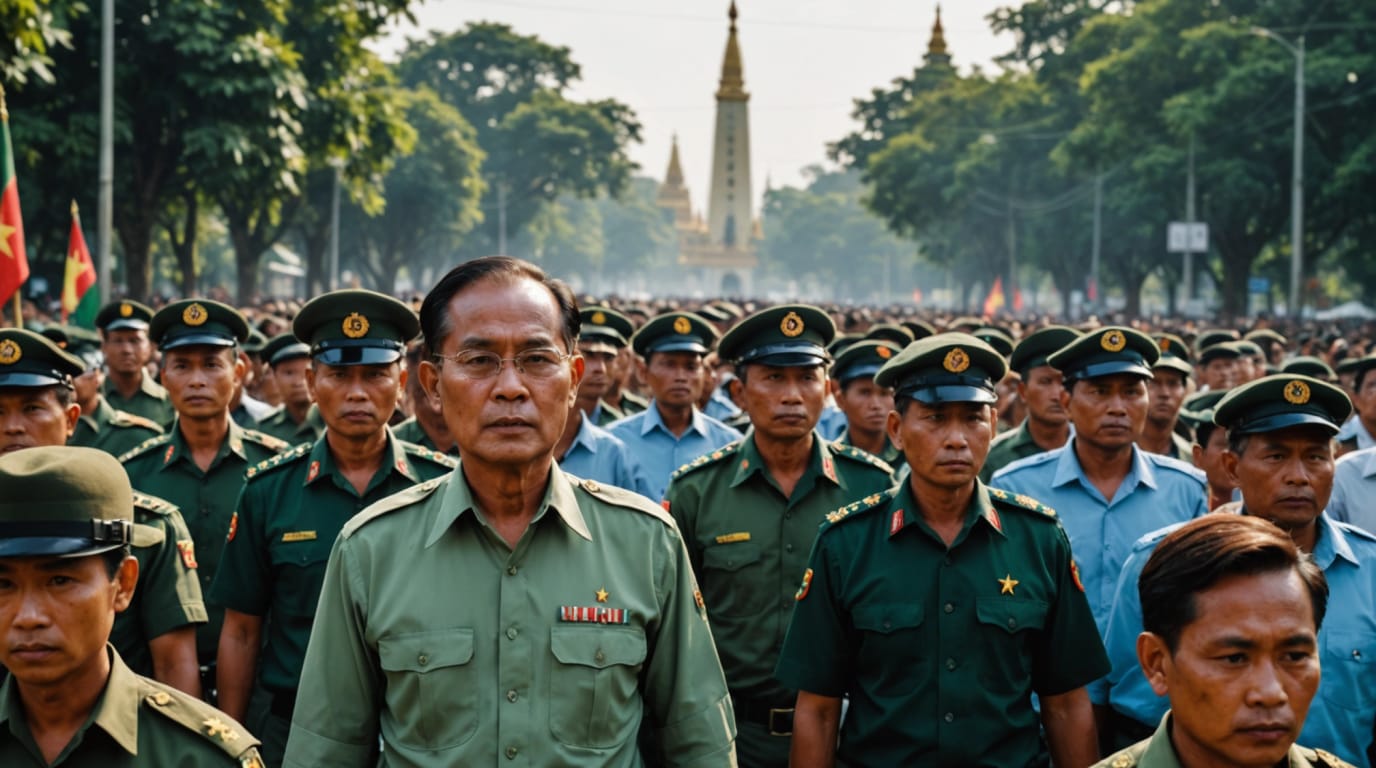
Myanmar's military government has announced plans to hold a general election in December 2025 or January 2026, the first specific timeframe given for polls since the military seized power in a coup in February 2021. The announcement, made by junta chief Min Aung Hlaing, comes as the country remains embroiled in a civil war, with the military struggling to maintain control and facing widespread resistance. The proposed election has been met with skepticism and criticism, with many viewing it as a sham to legitimize the junta's rule.
A Nation in Turmoil
Since the coup that ousted the elected civilian government led by Aung San Suu Kyi, Myanmar has been in a state of turmoil. The coup triggered mass protests, which were met with brutal repression by the military. The situation quickly escalated into an armed rebellion, with various anti-junta groups emerging across the country.
The conflict has resulted in a dire humanitarian crisis. More than 6,000 civilians have been killed and over 3.5 million people have been displaced. Human rights organizations have documented widespread human rights violations by the military, including torture, arbitrary arrests, sexual violence, and indiscriminate attacks on civilians. The junta has been accused of committing war crimes and crimes against humanity.
The economy has also been severely affected by the conflict, natural disasters, and the junta's policies. Myanmar's GDP is expected to contract by 1% in the fiscal year ending March 2025. High inflation, shortages of raw materials, and inadequate electricity supply are further hindering economic activity.
The Promise of Elections
Despite the ongoing conflict and widespread criticism, the junta has repeatedly vowed to hold elections. Min Aung Hlaing stated that 53 political parties have already submitted their lists to participate in the election. However, critics argue that the election will be neither free nor fair. Dozens of political parties have been banned, and many key political stakeholders, including the National League for Democracy (NLD), have been excluded.
The junta has lost control over large parts of the country, and it was only able to conduct a full, on-the-ground census in 145 out of 330 townships to prepare voter lists. This raises serious questions about the legitimacy and representativeness of the planned election.
Many pro-democracy groups and ethnic organizations view the election as a ploy by the junta to maintain its grip on power through proxies. They fear that the election will further entrench military rule and marginalize ethnic minorities. Some resistance groups have indicated they will actively disrupt the junta-orchestrated elections.
International Response
The international community has largely condemned the coup and the junta's actions. The Association of Southeast Asian Nations (ASEAN) has taken a harder line towards the junta than it did towards previous military governments in Myanmar, excluding the regime from summits and ministerial meetings due to its failure to implement the Five-Point Consensus agreed upon in April 2021.
Several countries, including the United States, the European Union, the United Kingdom, and Canada, have imposed sanctions on the junta and its leaders. However, these measures have not been effective in halting the violence or forcing the junta to cede power. A UN report revealed that the junta has imported arms and materials worth at least $1 billion since seizing power.
Some countries, including China, Russia, India, and Thailand, have maintained ties with the junta, providing it with arms, economic support, and diplomatic cover. This has undermined international efforts to isolate the regime and hold it accountable for its actions.
The international community's response to the humanitarian crisis in Myanmar has also been criticized as inadequate. Millions of people are in need of assistance, but access to affected areas is often restricted by the junta.
Uncertain Future
The announcement of elections in December 2025 or January 2026 has done little to ease the crisis in Myanmar. The country remains deeply divided, and the conflict is likely to continue, regardless of whether the elections take place.
The junta's attempt to hold elections is seen by many as a desperate effort to legitimize its rule and gain international recognition. However, without genuine dialogue and participation from all stakeholders, the elections are unlikely to resolve the crisis or bring about lasting peace and stability.
The international community faces a difficult challenge in Myanmar. While sanctions and condemnation are important, they have not been sufficient to change the junta's behavior. A more comprehensive and coordinated approach is needed, including increased humanitarian assistance, stronger diplomatic pressure, and support for the pro-democracy movement and ethnic organizations.
The future of Myanmar remains uncertain. Whether the country will descend further into chaos or find a path towards a more inclusive and democratic future depends on the actions of the junta, the resistance movement, and the international community.


