Myanmar Junta Chief Visits Thailand Amid Earthquake Recovery Efforts
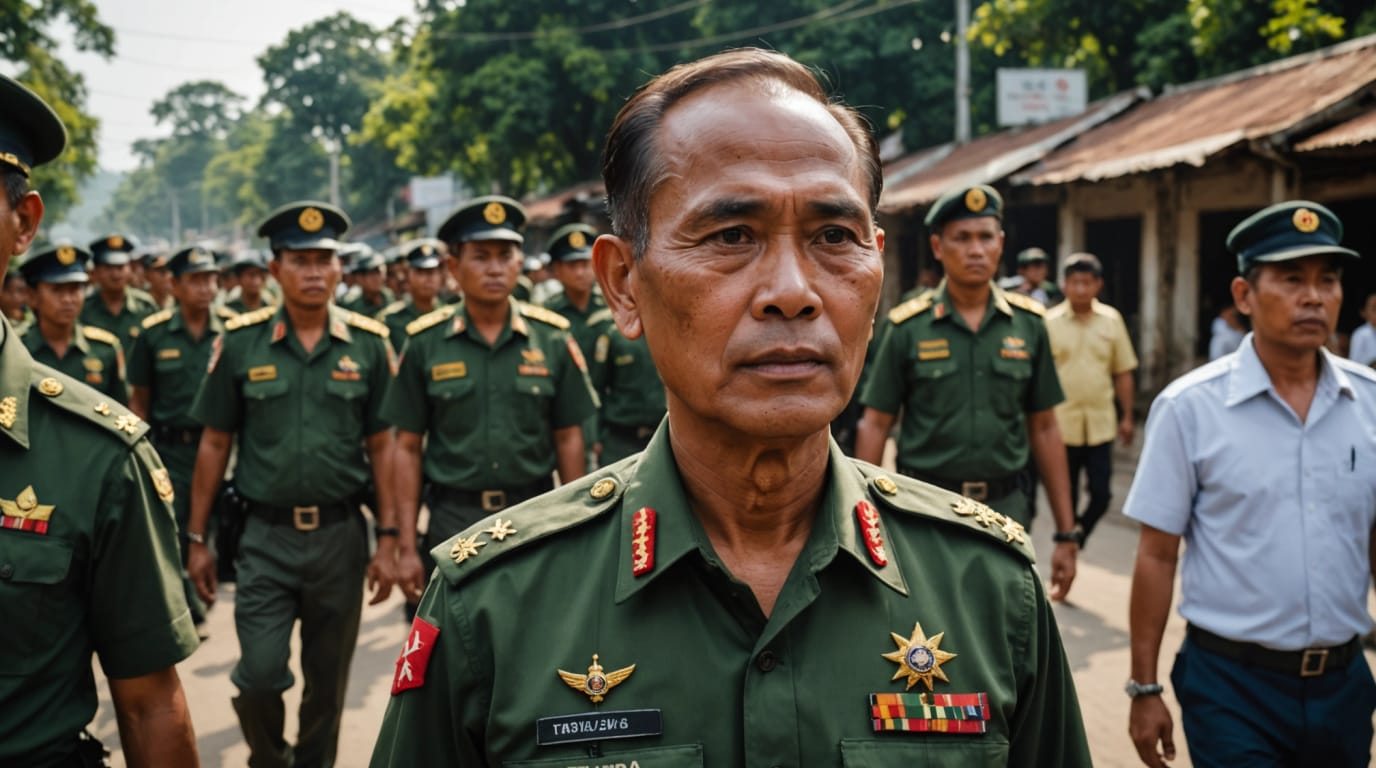
BANGKOK – Myanmar's junta leader, Senior General Min Aung Hlaing, arrived in Bangkok on Thursday for a regional summit, just days after a devastating earthquake struck his country, killing thousands and leaving a trail of destruction. The visit, while drawing condemnation from some quarters, highlights the complex geopolitical landscape of Southeast Asia and the delicate balance between international isolation and regional engagement in the wake of both natural disaster and political upheaval.
Earthquake Devastation and International Response
On March 28, 2025, a powerful 7.7 magnitude earthquake struck central Myanmar, near the city of Sagaing. The quake, the strongest to hit the region in over a century, was followed by a series of aftershocks, compounding the damage and hindering rescue efforts. The impact was widespread, with significant damage reported in Mandalay, Naypyidaw, and surrounding regions. As of April 4, the death toll had climbed to over 3,100, with more than 4,500 injured and hundreds still missing.
The earthquake also had a significant impact in Thailand, particularly in Bangkok, where a 33-story skyscraper under construction collapsed, resulting in numerous casualties. The tremors were felt strongly throughout the city, causing widespread panic and disruption.
In the wake of the disaster, the international community has mobilized to provide assistance. The United Nations has estimated that over 28 million people in Myanmar are in need of humanitarian aid. The Myanmar junta has made a rare request for international assistance, signaling the severity of the situation. However, access to affected areas remains a challenge, with the junta limiting foreign journalists' access and ongoing conflict hindering rescue and aid delivery efforts.
Junta Leader's Visit to Bangkok
Despite the ongoing crisis in his country, Senior General Min Aung Hlaing proceeded with his planned visit to Bangkok for the Bay of Bengal Initiative for Multi-Sectoral Technical and Economic Cooperation (BIMSTEC) summit. The visit, his first to Bangkok since the 2021 coup, has drawn criticism from human rights groups and opposition groups, who argue that it legitimizes the junta and undermines efforts to restore democracy in Myanmar.
The shadow National Unity Government (NUG), formed by elected lawmakers who were barred from taking their seats after the coup, condemned Min Aung Hlaing's inclusion in the summit, stating that he lacks the legitimacy to represent Myanmar.
However, the visit also presents an opportunity for dialogue and engagement. On the sidelines of the summit, Min Aung Hlaing held bilateral meetings with Thai Prime Minister Paetongtarn Shinawatra and Indian Prime Minister Narendra Modi. Discussions focused on disaster relief, transnational crime, and regional cooperation.
Complex Relations Between Myanmar and Thailand
The relationship between Myanmar and Thailand is complex and multifaceted, shaped by a long history of cooperation, conflict, and cultural exchange. The two countries share a 2,401-kilometer border and have close ties in areas such as trade, investment, and labor migration. Thailand is a key export market for Myanmar, and a significant number of Myanmar migrants work in Thailand.
In recent years, the relationship has been strained by the political turmoil in Myanmar following the 2021 coup. While the Thai government has maintained a pragmatic approach, engaging with the junta while also expressing concern about the situation, Thai civil society groups have shown strong solidarity with the Myanmar people and the pro-democracy movement.
Thailand has also faced the challenge of managing the influx of refugees and displaced persons from Myanmar seeking safety across the border. Humanitarian assistance for these refugees remains insufficient, and there have been concerns about the forced repatriation of irregular migrants.
Regional Implications and the Role of BIMSTEC
The BIMSTEC summit provides a platform for regional cooperation and dialogue on issues of common concern. The organization, which includes Thailand, Myanmar, India, Bangladesh, Nepal, Sri Lanka, and Bhutan, focuses on technical and economic cooperation in areas such as trade, investment, transport, energy, and tourism.
At the summit, Thai Prime Minister Paetongtarn Shinawatra urged member states to forge a free trade agreement and to cooperate on infrastructure projects, such as a highway connecting Thailand, Myanmar, and India. These initiatives aim to promote economic growth and regional integration, but also face challenges related to political instability and security concerns.
The earthquake in Myanmar has further highlighted the need for regional cooperation in disaster management and humanitarian assistance. The summit provided an opportunity for member states to discuss ways to strengthen their collective response to natural disasters and to provide support to affected communities.
A Balancing Act
Min Aung Hlaing's visit to Thailand underscores the delicate balancing act that regional actors must navigate in dealing with the Myanmar crisis. While the junta faces international condemnation and sanctions, it remains a key player in the region, and engagement is necessary to address issues such as humanitarian assistance, border security, and regional stability.
The visit also highlights the complex interplay between natural disasters and political conflicts. The earthquake has exacerbated the existing humanitarian crisis in Myanmar, making it even more difficult to deliver aid and support to those in need. The junta's response to the disaster has been criticized for its limitations on access and its ongoing military operations in affected areas.
As Myanmar grapples with the aftermath of the earthquake and the ongoing political turmoil, the international community faces the challenge of finding effective ways to support the people of Myanmar while also promoting a return to democracy and respect for human rights. The path forward will require a combination of humanitarian assistance, diplomatic engagement, and pressure on the junta to end the violence and engage in meaningful dialogue with all stakeholders.


