Myanmar Junta Pardons Nearly 5,000 Prisoners Amid New Year Festivities
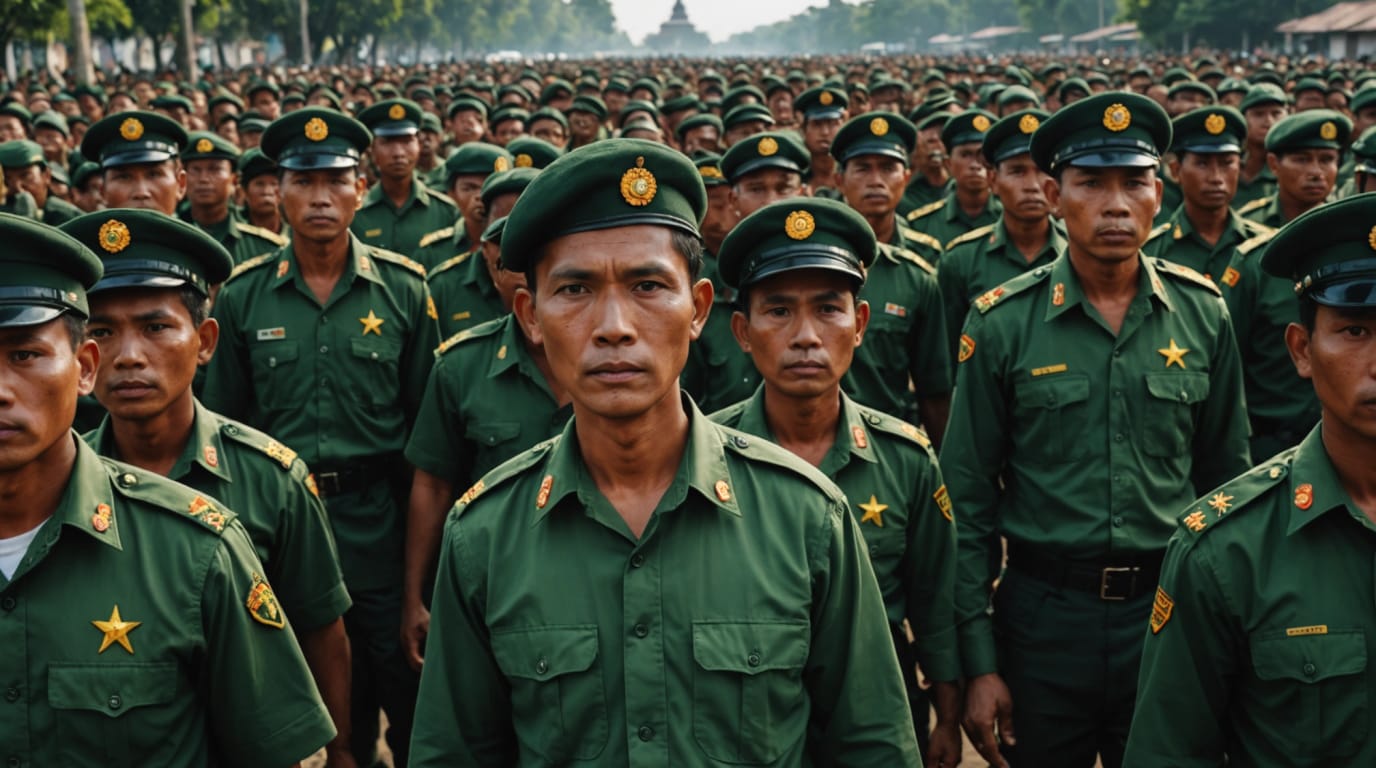
YANGON, Myanmar – Myanmar's military government announced Thursday the release of nearly 5,000 prisoners as part of a new year amnesty, a move that comes as the country remains embroiled in a multi-faceted civil war following the 2021 coup. While the junta claims the pardons are a gesture of compassion and a chance for prisoners to participate in "state-building," it remains unclear how many of those released were political detainees imprisoned for opposing the army's rule.
The announcement, made via state-run media, stated that Senior General Min Aung Hlaing, head of the ruling military council, pardoned 4,893 prisoners. Additionally, 13 foreign nationals will be released and deported. The amnesty coincides with Myanmar's traditional new year celebrations, a period typically marked by mass pardons.
Amnesty Details and Exclusions
According to the announcement, prisoners convicted of serious crimes such as murder and rape, as well as those jailed under various security acts, were excluded from the amnesty. Those released will be required to serve the remainder of their original sentences in addition to any new sentence if they violate the law again. While the exact number of political prisoners included in the release remains unknown, the Assistance Association for Political Prisoners (AAPP), an independent organization, reported that 22,197 political detainees, including ousted civilian leader Aung San Suu Kyi, were still in detention as of last Friday. Many political detainees have been held on charges of incitement, a broadly defined offense frequently used to arrest critics of the regime.
Reactions and Concerns
News of the amnesty drew mixed reactions. Families of prisoners gathered outside Insein Prison in Yangon, hoping to welcome released loved ones. However, civil rights groups expressed skepticism, noting that the junta has arrested thousands of protesters and activists since the 2021 coup, which derailed Myanmar's democratic transition and plunged the nation into conflict. The amnesty is viewed by some as a superficial attempt by the junta to improve its image on the international stage, particularly as junta chief Min Aung Hlaing is reportedly scheduled to meet with Malaysian Prime Minister Anwar Ibrahim in Bangkok.
Myanmar's Ongoing Crisis
Myanmar has been in turmoil since the military seized power in February 2021, overthrowing the elected government of Aung San Suu Kyi. The coup triggered widespread protests and a civil disobedience movement, which the military responded to with brutal force. The country is now embroiled in a civil war, with various armed groups fighting against the junta. The conflict has displaced hundreds of thousands of people and created a severe humanitarian crisis.
ASEAN's Role and Diplomatic Efforts
The Association of Southeast Asian Nations (ASEAN) has been attempting to mediate a solution to the crisis in Myanmar, but with limited success. ASEAN has barred junta officials from its summits due to the lack of progress on a peace plan. However, some ASEAN members, like Malaysia, continue to engage with the junta in an effort to promote dialogue and humanitarian assistance. Anwar Ibrahim, the Malaysian Prime Minister, has stated his intention to discuss the safety of Malaysian humanitarian teams dispatched to Myanmar following last month's earthquake.
Uncertainty and the Future
The release of prisoners, while welcomed by some, does little to address the underlying causes of the crisis in Myanmar. The country remains deeply divided, and the military shows no sign of relinquishing power. The future of Myanmar remains uncertain, with the ongoing civil war and the continued detention of political prisoners casting a long shadow over the nation. The international community continues to call for a return to democracy and an end to the violence, but a resolution to the conflict appears distant.


