Myanmar Military Airstrike Kills 14 at Buddhist Monastery, Deepening Civilian Toll
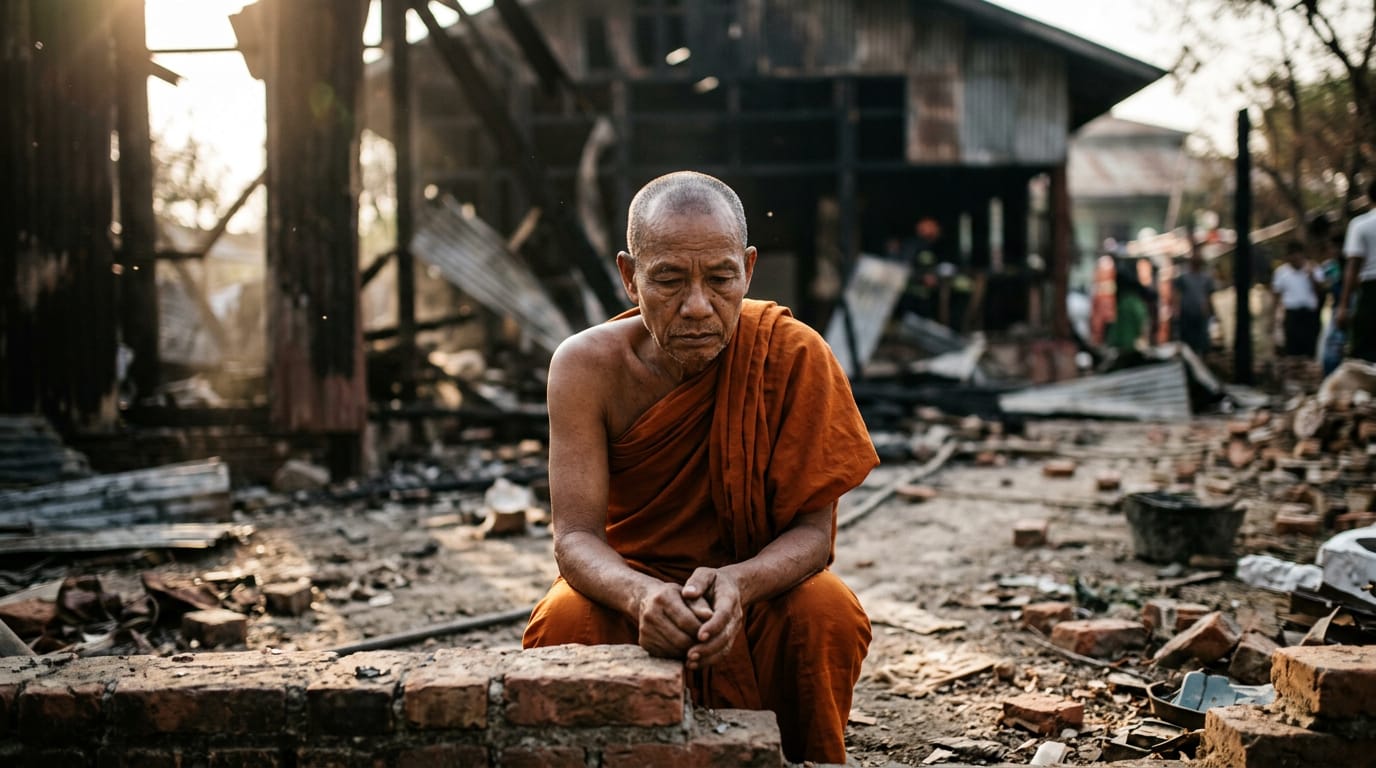
A Myanmar military airstrike on a Buddhist monastery in the central Sagaing region on Friday, August 21, 2026, killed at least 14 people and injured nearly 20 others who were attending a week-long meditation retreat. The deadly assault in Swel Le Oh village marks another grim chapter in the escalating conflict, highlighting the military's increasing reliance on aerial bombardment in areas populated by civilians, even those considered sanctuaries. The incident has drawn renewed attention to the severe human cost of the ongoing civil war that has plagued the nation since the 2021 military coup.
The Deadly Attack on a Sanctuary
The attack unfolded around 9 a.m. local time when a Myanmar military fighter jet reportedly dropped two bombs, approximately 15 minutes apart, directly on the monastery compound in Swel Le Oh village, Myaung township. This village is located about 75 kilometers (45 miles) west of Mandalay, the country's second-largest city. At the time of the strike, more than 100 individuals were present at the monastery, participating in a meditation retreat during Buddhist Lent.
An opposition group, the Civil Defense and Security Organization of Myaung Township (CDSOM), and local residents confirmed the death toll, which includes three women. One villager, who spoke anonymously due to fears for their safety, reported that their mother-in-law was among those killed. The second bomb dropped also damaged a nearby house. Following the devastating strike, residents quickly buried the victims before fleeing to a neighboring village in search of safety. The military junta has not yet commented on this specific incident, though it has historically asserted that it only targets legitimate military objectives, often accusing resistance forces of being terrorists.
A Disturbing Pattern of Civilian Targeting
This airstrike is not an isolated incident but rather fits into a "disturbing pattern" of indiscriminate attacks by the Myanmar military, also known as the Tatmadaw, against civilian populations and infrastructure since the February 2021 coup. The coup overthrew the democratically elected government, plunging the nation into widespread unrest and triggering a civil war. In response, pro-democracy forces and various ethnic armed organizations have taken up arms against the junta, leading to a protracted and brutal conflict.
The Sagaing region, where the monastery is located, has emerged as one of the areas most severely affected by the conflict, bearing the brunt of the highest number of airstrikes and civilian fatalities nationwide. It is also recognized as a stronghold of armed resistance, leading the military to intensify its aerial bombardments against local People's Defense Forces (PDFs). United Nations investigators have documented a "sustained campaign of deliberate attacks on civilians," which includes airstrikes on homes, schools, hospitals, religious buildings, and camps for displaced persons. Reports indicate a sharp increase in the military's reliance on air power, even utilizing low-cost aircraft such as motorized paragliders and drones, making it harder for civilians to anticipate and flee attacks. This shift in tactics has resulted in an alarming rise in civilian casualties.
The Devastating Human Cost of Prolonged Conflict
The civil war in Myanmar has exacted an immense humanitarian toll on its population. Since the 2021 coup, thousands of civilians have been killed. While exact figures vary, some reports indicate that between 6,000 and 9,147 civilians have been killed by security forces. The overall death toll directly attributed to the conflict since January 2021 is estimated to exceed 100,000 people.
Beyond the immediate fatalities, the conflict has created a severe displacement crisis, with an estimated 3.2 to 5.2 million people internally displaced within Myanmar. The widespread violence has also severely disrupted access to essential services and resources, exacerbating a dire humanitarian situation. As of 2025, between 18.6 million and 19.9 million people—nearly a third of Myanmar's population—are in urgent need of humanitarian assistance. Food insecurity is rampant, with one in four civilians experiencing it, and about half the population living below the poverty line. The denial of humanitarian aid by the military junta has further compounded the suffering, potentially amounting to war crimes and crimes against humanity.
International Condemnation and Calls for Accountability
The international community has consistently condemned the ongoing violence and human rights abuses perpetrated by the Myanmar military. The United Nations and numerous countries have expressed grave concerns over the indiscriminate attacks on civilians. UN-appointed investigators have meticulously documented evidence of deliberate attacks on civilians, including those against schools and hospitals, identifying these actions as potential war crimes and crimes against humanity. These investigations aim to preserve evidence for future prosecutions to hold individual perpetrators accountable.
Despite international pressure and sanctions, including those targeting individuals and entities involved in supplying jet fuel to the military, the junta has largely disregarded calls for an end to the violence. The UN Security Council, despite divisions among its members, has issued condemnations and urged the military to cease attacks and respect human rights. However, tangible progress in de-escalating the conflict and ensuring accountability has been insufficient. The military's continued targeting of civilian sites, including places of worship like the Buddhist monastery in Sagaing, underscores the urgent need for a more robust international response to protect the vulnerable populations of Myanmar.
The airstrike on the Buddhist monastery serves as a stark reminder of the brutal realities faced by millions in Myanmar. As the conflict grinds on, the military's unchecked use of air power against civilian areas continues to inflict immense suffering and destabilize an already fragile nation. Without a concerted effort from the international community to enforce accountability and protect civilians, the humanitarian crisis and cycle of violence are poised to deepen, leaving a lasting legacy of devastation.