Myanmar's Endless Crisis: Five Years After Coup, Nation Remains Gripped by Conflict and Despair
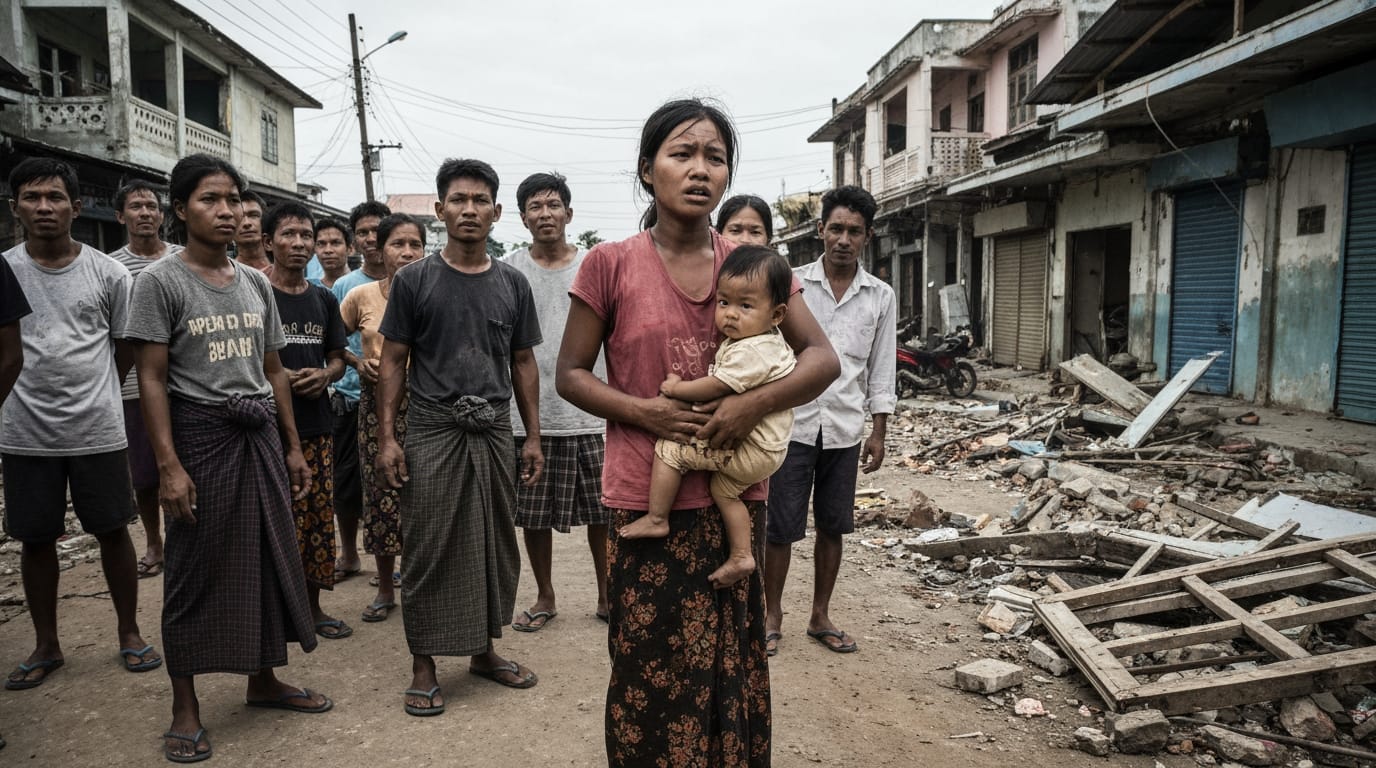
Five years after the military seized power in a coup d'état on February 1, 2021, Myanmar remains engulfed in a brutal civil war, with no clear end in sight. The initial military takeover, which ousted the democratically elected government led by Aung San Suu Kyi, has plunged the Southeast Asian nation into a profound humanitarian crisis, economic collapse, and widespread violence, fundamentally altering the lives of millions and transforming the country's political landscape. What began as peaceful protests against the return to military rule has escalated into a nationwide armed resistance, challenging the junta's control across significant swathes of the country.
A Nation in Turmoil: Five Years of Military Rule and Sham Elections
The fifth anniversary of the 2021 coup underscores a grim reality for Myanmar: the military, known as the Tatmadaw, has cemented its control through repression, yet faces an increasingly unified and determined opposition. The coup was justified by the military on unsubstantiated claims of widespread fraud in the November 2020 general election, which saw Aung San Suu Kyi's National League for Democracy (NLD) win by a landslide. This action immediately triggered mass demonstrations and a nationwide Civil Disobedience Movement (CDM), which was met with a violent crackdown by security forces.
In a move widely dismissed by the international community as a legitimizing facade, the junta recently held elections in late 2025 and early 2026. These elections were conducted in three phases between December 28, 2025, and January 25, 2026, within areas under military control. Opposition parties were banned, voting did not occur in many conflict-affected regions, and reports of coerced voting were widespread. The military-backed Union Solidarity and Development Party predictably claimed a landslide victory, a result that UN Human Rights Chief Volker Türk stated only exacerbates violence and social division, failing to respect fundamental human rights. Countries including Australia, the United Kingdom, Canada, and New Zealand have rejected the validity of these elections, and even the Association of Southeast Asian Nations (ASEAN) refused to send election observers.
The military's campaign to suppress dissent has included widespread aerial attacks, with 2025 being recorded as the deadliest year for such attacks since the coup. Amnesty International reported that the junta has resorted to evasive shipping tactics, using "ghost ships" that turn off location-tracking systems, to import over 109,000 tonnes of aviation fuel in 2025 – a 69% increase over the previous year – to fuel its air assault on civilians.
Deepening Humanitarian Catastrophe and Human Toll
The human cost of the ongoing conflict is catastrophic and continues to mount. Since the coup, nearly 6,800 civilians have been killed, and over 22,000 individuals remain arbitrarily detained by the junta. The crisis has triggered massive internal displacement, with more than 3.6 million people forced to flee their homes, contributing to a broader humanitarian catastrophe where nearly 22 million people are in urgent need of assistance. In July, 26-year-old activist Ma Wutt Yee Aung died in Insein prison due to reported lack of medical treatment for injuries sustained from torture, highlighting the severe conditions for detainees.
Human rights organizations, including Amnesty International, Fortify Rights, and Human Rights Watch, have documented widespread repression and abuses by the military, including war crimes and crimes against humanity. These abuses include torture of detainees, indiscriminate attacks on civilians, and the deliberate obstruction of humanitarian aid. In March 2025, following a devastating earthquake, the junta reportedly intensified attacks instead of facilitating relief efforts, and obstructed access to aid in opposition-held areas. Over 15 million people currently face acute food insecurity, with Rakhine State particularly affected, and critical services like healthcare continue to collapse, exacerbating malnutrition and preventable diseases. The conflict in Myanmar has been rated as the second deadliest in the world, with women and children often the primary victims.
The Resilient Resistance: From Civil Disobedience to Armed Struggle
The military's actions sparked a nationwide resistance movement that has evolved from peaceful protests into an armed struggle. The National Unity Government (NUG), formed by ousted lawmakers, supports various rebel groups, including the People's Defense Forces (PDFs) and numerous ethnic armed organizations (EAOs). These resistance forces have made significant territorial gains, particularly since late 2023, challenging the Tatmadaw's control. Some estimates suggest that the NUG and EAOs now control almost 60% of Myanmar's territory, although this largely comprises sparsely populated borderlands. Across the country, 95 towns have reportedly fallen to opposition groups.
The "Spring Revolution," as the resistance movement is often called, has fostered unprecedented cooperation between Bamar-majority forces and ethnic organizations, bridging historical divides in their common fight against the junta. However, the resistance also faces challenges, including fragmentation and a need for more unified governance in liberated areas. Despite these hurdles, the popular uprising is widely regarded as the most sustained and geographically widespread in Myanmar's modern history.
Economic Collapse and International Indecision
Five years of military rule and civil war have devastated Myanmar's economy, reversing a decade of gradual progress. The national currency, the kyat, has plummeted, weakening from approximately 1,500 kyat to the U.S. dollar before the coup to 7,000 kyat by mid-2024. This drastic devaluation, combined with rampant inflation where prices have doubled and fuel costs have surged fivefold, has placed immense pressure on ordinary citizens. The military government has imposed strict controls on foreign currency withdrawals and imports, further stifling trade and business.
Beyond the formal economy, the chaos has fueled the proliferation of illicit operations, including trafficking, scam centers, unregulated resource extraction, and drug production, which are often run by global criminal syndicates and rely on forced labor.
The international response to the crisis has been mixed and largely ineffective. While many countries have condemned the coup and the junta's violence, concrete actions to pressure the military have been limited. ASEAN's "Five-Point Consensus" from April 2021 has made little progress, and the UN Security Council remains largely deadlocked, with China and Russia often opposing stronger measures. There have been calls for increased accountability, including a request by the International Criminal Court's Office of the Prosecutor in November 2024 for an arrest warrant for Senior General Min Aung Hlaing for crimes against humanity related to the Rohingya. Yet, a coordinated, long-term international justice strategy remains elusive.
A Bleak Horizon, A Resilient People
As Myanmar marks five years under military rule, the situation on the ground remains dire. The country is locked in a violent stalemate, with the junta struggling to control vast areas but maintaining its grip on major population centers through brutal tactics. The humanitarian crisis deepens daily, and the economy continues its freefall. Despite the overwhelming challenges, the people of Myanmar, through their diverse resistance movements and unwavering determination, continue to strive for a future built on democracy and human rights. The international community faces renewed calls to move beyond condemnations and implement more effective strategies to alleviate suffering, hold perpetrators accountable, and support the aspirations of the Myanmar people for a peaceful and democratic nation.


