Myanmar's Junta Leader Poised to Assume Presidency, Solidifying Military's Grip
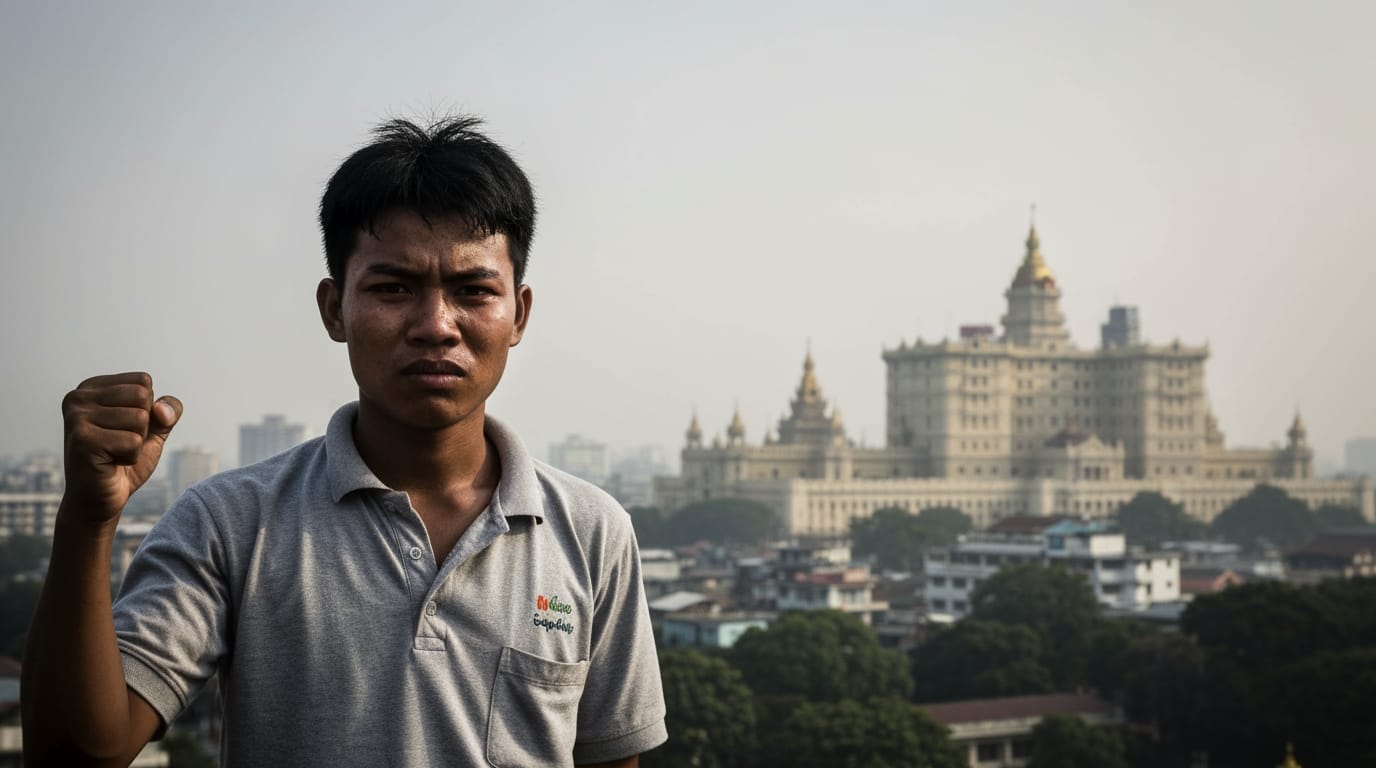
Myanmar's political landscape is undergoing a significant transformation as Senior General Min Aung Hlaing, the leader of the ruling military junta, appears set to transition into a civilian presidential role. This move, widely anticipated by analysts and observers, follows recent elections that saw a military-backed party secure a substantial majority, effectively paving the way for the general to formalize his control over the Southeast Asian nation. The development marks a critical juncture five years after the military seized power in a coup, further entrenching the military's dominance despite widespread internal conflict and international condemnation.
The Formal Pathway to Power
The process to install Senior General Min Aung Hlaing as president has been unfolding within the framework of Myanmar's military-drafted 2008 constitution, which grants the armed forces considerable political power. Recent parliamentary sessions have seen the nomination of Min Aung Hlaing as a vice-presidential candidate. The parliamentary system in Myanmar allows for three vice-presidents to be chosen, one of whom is then elected as president through a vote encompassing both houses of parliament.
Crucially, the military's proxy party, the Union Solidarity and Development Party (USDP), achieved an overwhelming majority in the multi-phased elections held in late 2025 and early 2026. This electoral outcome, which critics have labeled a "sham," secured over 85% of seats in the lower house and approximately 70% in the upper chamber for the USDP. The military leadership has indicated that "leadership changes" in the armed forces are imminent, a necessary step as the constitution requires Min Aung Hlaing to step down from his military post to assume the presidency. Reports suggest that former spymaster General Ye Win Oo, a long-time protégé, has already replaced Min Aung Hlaing as military commander, signaling the impending transition.
The Shadow of the 2021 Coup
Senior General Min Aung Hlaing's trajectory towards the presidency is inextricably linked to the military coup of February 1, 2021. The military, known as the Tatmadaw, deposed the democratically elected government of Aung San Suu Kyi's National League for Democracy (NLD), alleging widespread electoral fraud in the 2020 general election. This claim, however, lacked substantial evidence and was widely dismissed by international observers.
The 2008 constitution, drafted during a previous era of military rule, played a pivotal role in enabling the coup and sustaining military influence. It reserves 25% of legislative seats for unelected military representatives, grants the military control over key ministries, and allows for the appointment of one of the three vice-presidents from whom the president is selected. Furthermore, the constitution contains provisions that allow for the declaration of a state of emergency, a mechanism controversially invoked by the military to justify its takeover. Analysts suggest that Min Aung Hlaing harbored presidential ambitions since at least 2015, and the NLD's landslide victory in 2020 likely spurred his decision to seize power when his political aspirations were seemingly thwarted.
A Nation in Turmoil
The aftermath of the 2021 coup has plunged Myanmar into a profound crisis, characterized by a burgeoning civil war and widespread human rights abuses. The military's seizure of power triggered a nationwide resistance movement that has escalated into armed conflict across the country. The junta has faced significant opposition, struggling to maintain control over large swathes of territory. Reports from early 2024 indicated that the junta governed only 21 percent of Myanmar's territory, while resistance forces and ethnic armed groups held around 42 percent.
The human cost of the conflict has been staggering, with thousands killed and millions displaced. The United Nations estimates that over 3.5 million people have been displaced, and nearly 20 million require humanitarian assistance. The junta's actions, including arbitrary arrests, torture, extrajudicial killings, and indiscriminate attacks on civilians, have been widely condemned as amounting to crimes against humanity and war crimes. In March, the NLD was among over 40 political parties dissolved for failing to register under a new law, further eroding any semblance of democratic space. The international community has responded with sanctions, though many observers note that the response has been uncoordinated, and the military has yet to face significant consequences for its actions.
Cementing Control and Future Outlook
The impending presidency of Senior General Min Aung Hlaing signals a deepening of military control in Myanmar, effectively transforming military rule into a nominally civilian administration under the armed forces' continued guidance. Critics argue that this transition represents a "civilian-clothed dictatorship," where the USDP functions as a political front to legitimize military power.
To further solidify his influence, Min Aung Hlaing established a Union Consultative Council in February, a body with a broad mandate to oversee both the military and the country's administration. Analysts contend that even as president, Min Aung Hlaing is expected to retain full control over both the military and the government, ensuring that the status quo of military dominance endures. This concentration of power, achieved by altering constitutional structures for military advantage, is seen as a deliberate strategy to undermine the rule of law and suppress any genuine democratic transition.
Conclusion
Senior General Min Aung Hlaing's anticipated ascent to the presidency marks a somber milestone for Myanmar, underscoring the military's success in consolidating power despite overwhelming popular resistance and international opprobrium. This transition, orchestrated through manipulated electoral processes and constitutional provisions, casts a long shadow over any aspirations for genuine democracy in the country. As the civil conflict rages on and human rights abuses continue, the international community watches a nation grapple with a future where military rule, albeit in a new guise, appears more entrenched than ever. The path forward for Myanmar remains fraught with challenges, as its people continue to resist and endure under a regime determined to maintain its grip on power.


