Myanmar's Junta Solidifies Grip Through Contested Election
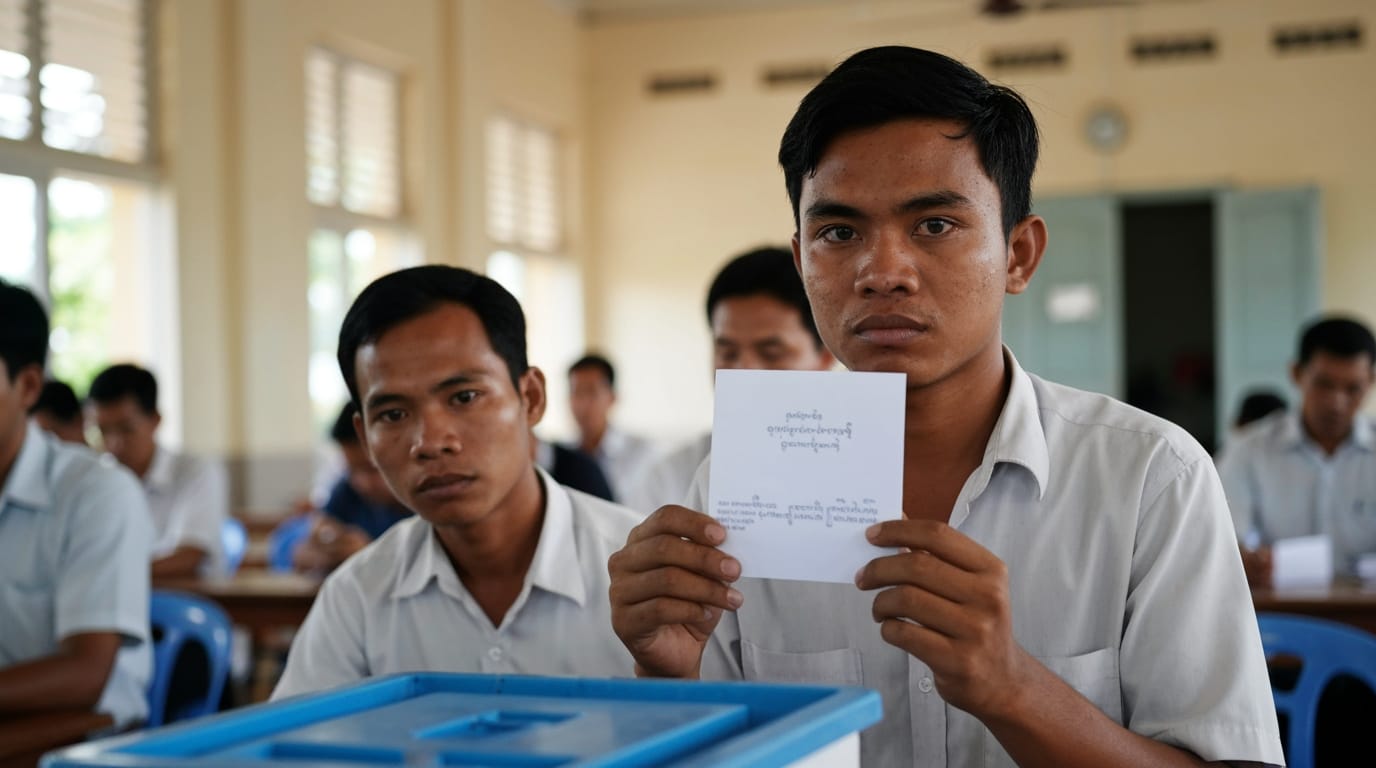
YANGON, Myanmar – Myanmar's military-backed Union Solidarity and Development Party (USDP) stands poised to secure a landslide victory in a multi-phase general election concluding today, January 25, 2026, a vote widely decried by international observers and rights groups as a calculated maneuver to legitimize military rule following the 2021 coup. The election, held amidst a brutal civil war and widespread exclusion of opposition voices, is expected to cement the military's entrenched power, despite fervent resistance across the nation.
The polls, staggered across three phases since December 28, 2025, are the first since the military seized power, ousting the democratically elected government of Aung San Suu Kyi and plunging the nation into a profound political and humanitarian crisis. With the main opposition party banned, its leaders imprisoned or exiled, and significant portions of the country engulfed in conflict, the outcome of this election appears to many as a foregone conclusion, offering little genuine choice for the electorate.
A Contrived Electoral Landscape
The electoral architecture in Myanmar has long favored the military, an advantage now amplified under the current junta. Under the 2008 Constitution, a quarter of all parliamentary seats are reserved for military appointees, effectively granting the armed forces veto power over constitutional changes and a guaranteed influence over legislation. This structural advantage means that even before any ballots were cast, the military and its proxy party, the USDP, had a significant head start. The USDP, largely composed of retired generals, further capitalized on this by fielding the largest number of candidates and already securing a supermajority in parliament from the first two voting phases.
Analysts contend that the very design of the election aims not to reflect the popular will, but to provide a veneer of civilian governance over enduring military control. The USDP was notably the first party to register under the junta's new electoral law in 2023, subsequently dominating campaigning efforts while other parties struggled for visibility or were outright dissolved. This manufactured political environment has led special rapporteurs on human rights in Myanmar, like Tom Andrews, to describe the vote as orchestrated to ensure victory for the military's proxy and "manufacture a facade of legitimacy."
Voting Under the Shadow of War
These elections unfold against the backdrop of a spiraling civil war that has claimed tens of thousands of lives and displaced millions since the 2021 coup. The military junta, despite its claims of returning stability, has presided over an intensification of conflict, marked by a significant increase in airstrikes on civilian areas throughout 2025. Large swathes of the country, particularly those under the control of ethnic armed groups and resistance forces, were excluded from voting entirely, or saw polling severely curtailed.
As of December 2024, the junta reportedly controlled only about 21% of Myanmar's territory, while resistance forces held sway over more than 40%, with remaining areas contested through intense fighting. This volatile security situation led to the cancellation of voting in 65 townships, and partial polls in another 118, illustrating the extent of the military's diminished reach and the deep divisions within the country. The impact on the populace is profound, with communities grappling with displacement, violence, and limited access to humanitarian aid, making participation in the polls an often impossible or perilous undertaking.
A Quest for International Acceptance
For the military junta, these elections represent a critical attempt to gain international recognition and potentially alleviate the sanctions imposed since the coup. Junta leader Min Aung Hlaing has framed the elections as a step towards democracy and stability, a narrative starkly at odds with the reality on the ground. Proponents of the election, such as a USDP candidate in Yangon, argue that after years of hardship, the party offers peace and stability.
However, the international community remains deeply skeptical. The United Nations, human rights experts, and numerous Western governments have unequivocally rejected the election as illegitimate and a sham. The Association of Southeast Asian Nations (ASEAN), of which Myanmar is a member, has called for fair and inclusive elections but notably chose not to endorse the poll or send observers, a significant snub that underscores regional concerns. In contrast, key allies such as China, Russia, and India have expressed support for the election, with China reportedly playing a role in orchestrating a "political off-ramp" for the military to retain power under a civilian guise. This divergent international response highlights the complex geopolitical dynamics at play in Myanmar.
The Shrinking Space for Dissent
The current electoral process starkly contrasts with Myanmar's brief decade of democratic transition. The National League for Democracy (NLD), which won landslides in the 2015 and 2020 elections, was dissolved, and its leadership, including Nobel laureate Aung San Suu Kyi, remains incarcerated or in exile. This purge of opposition has left a severely restricted political landscape, with only 57 parties competing, a significant reduction from previous elections, and only six running nationwide. Election monitoring groups estimate that 57% of the parties from the 2020 general election no longer exist.
Voter turnout in the first two phases hovered around 52-55%, notably lower than the approximately 70% seen in the two preceding elections. Many young people, who were at the forefront of pro-democracy protests following the coup, reportedly chose to boycott the vote, viewing it as an attempt by the military to simply "change their soldier uniforms into civilian ones and to hold onto their power." Critics of the election have faced criminalization, further stifling any genuine dissent or meaningful political competition.
A Future of Enduring Military Influence
As the final phase of voting concludes, the projected victory of the USDP will likely solidify the military's control over Myanmar for the foreseeable future. The elections, presented by the junta as a return to normalcy, are widely interpreted as a strategic move to entrench military rule and legitimize its position, both domestically and on the global stage. The expected ascension of Senior General Min Aung Hlaing to the presidency further underscores the military's intent to maintain direct oversight of the government.
However, this electoral outcome does little to resolve the profound crisis gripping Myanmar. Instead, it risks deepening the civil war and intensifying the struggle between the military and the widespread resistance movement. The international community faces the challenge of how to respond to a government that seeks legitimacy through a process widely condemned as undemocratic, while the people of Myanmar continue their fight for genuine self-determination amidst ongoing conflict and repression.


