NASA Launches SPHEREx Telescope to Map the Cosmos in Unprecedented Detail
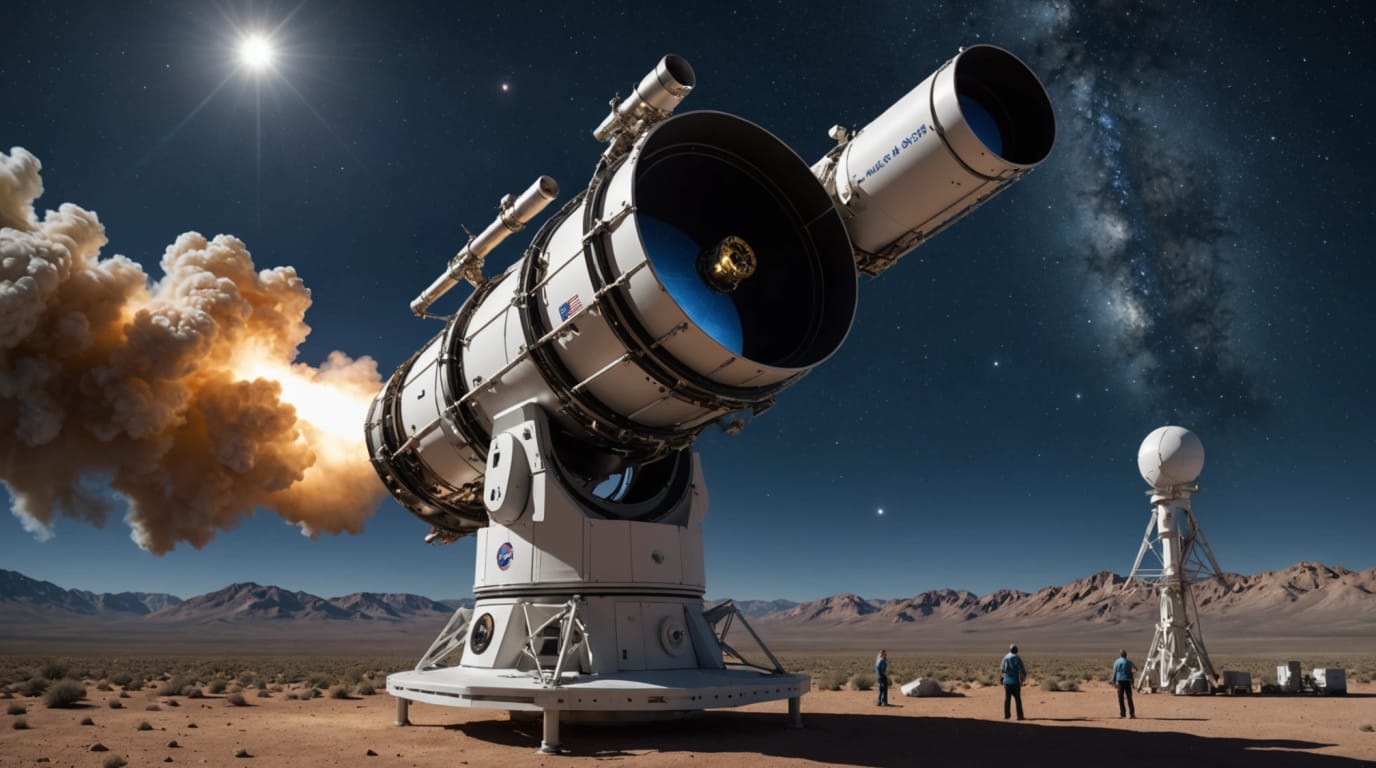
VANDENBERG SPACE FORCE BASE, Calif. – NASA has launched its newest space telescope, the Spectro-Photometer for the History of the Universe, Epoch of Reionization and Ices Explorer (SPHEREx), aboard a SpaceX Falcon 9 rocket. The mission aims to create a comprehensive map of the universe in 102 different colors of infrared light, a feat that promises to unlock secrets about the universe's origins, the formation of galaxies, and the potential for life beyond Earth.
The SPHEREx mission, a two-year endeavor, will survey the entire sky, collecting data on over 450 million galaxies and 100 million stars within our own Milky Way. By observing in a wide range of infrared wavelengths, SPHEREx will provide a unique perspective, revealing details hidden from even the powerful James Webb Space Telescope. Scientists anticipate that this unprecedented survey will revolutionize our understanding of the cosmos.
Unveiling the Universe's Earliest Moments
One of SPHEREx's primary goals is to investigate cosmic inflation, the period of rapid expansion that occurred fractions of a second after the Big Bang, approximately 13.8 billion years ago. This inflationary epoch is believed to have shaped the large-scale structure of the universe we observe today. By mapping the distribution of galaxies across the entire sky, SPHEREx will help scientists constrain the properties of inflation and gain insights into the fundamental physics that governed the universe's birth.
Olivier Doré, a cosmologist at Caltech and NASA's Jet Propulsion Laboratory, emphasized the importance of SPHEREx's spectroscopic capabilities. Spectroscopy, the study of objects based on their colors, will allow SPHEREx to connect large-scale cosmic structures to the physics of the universe's earliest moments. This connection is crucial for understanding how the initial conditions of the universe led to the formation of galaxies and the distribution of matter we see today.
Searching for the Building Blocks of Life
Beyond its cosmological objectives, SPHEREx will also search for water and other molecular compounds, such as carbon dioxide and carbon monoxide, in interstellar molecular clouds. These dense regions of gas and dust are thought to contain frozen reservoirs of water, which are essential for the formation of stars and planets. By studying the composition of these clouds, SPHEREx will provide valuable insights into the origins of life-supporting elements in the universe.
The telescope will study organic ices in space, helping scientists understand how life-forming molecules traveled through the cosmos and seeded planets like Earth. This research could shed light on the processes that led to the emergence of life on our planet and the potential for life to exist elsewhere in the universe. SPHEREx's observations will complement other missions, such as OSIRIS-REx, in tracing the journey of organic materials across the solar system.
Mapping the Milky Way and Beyond
In addition to its extragalactic surveys, SPHEREx will also map the distribution of stars within the Milky Way. This will provide a detailed census of the types of stars that exist in our galaxy and their spatial distribution. By studying the properties of these stars, scientists can learn more about the formation and evolution of the Milky Way.
SPHEREx's all-sky survey will also identify new and interesting objects for further study by other telescopes. This will help to focus the efforts of the astronomical community on the most promising targets for future research. The data collected by SPHEREx will be made publicly available, allowing astronomers around the world to contribute to the analysis and interpretation of the results.
Complementing the James Webb Space Telescope
While the James Webb Space Telescope (JWST) has already revolutionized our understanding of the cosmos with its unprecedented infrared observations, SPHEREx offers a complementary approach. JWST focuses on detailed observations of specific objects, while SPHEREx will provide a wide-field, all-sky survey. This combination of detailed and wide-field observations will provide a more complete picture of the universe.
The James Webb Space Telescope, launched in December 2021, has already made groundbreaking discoveries about the early universe, including the detection of diamond-like carbon dust in the earliest stars and the identification of unusual chemical properties in early galaxies. SPHEREx's all-sky map will provide a valuable context for these discoveries, helping scientists to understand how these early galaxies fit into the overall structure of the universe.
A New Era of Cosmic Discovery
The launch of SPHEREx marks the beginning of a new era of cosmic discovery. By mapping the universe in unprecedented detail, SPHEREx will provide valuable insights into the origins of the universe, the formation of galaxies, and the potential for life beyond Earth. The data collected by SPHEREx will be a valuable resource for astronomers around the world for years to come.
The mission's findings promise to refine our understanding of cosmic inflation, trace the distribution of water and organic molecules in space, and map the structure of the Milky Way. As SPHEREx begins its two-year survey, the scientific community eagerly anticipates the wealth of new data that will undoubtedly reshape our understanding of the universe and our place within it. The secrets of the cosmos are vast, but with SPHEREx now in orbit, humanity has taken another giant leap toward unraveling them.


