NATO Allies Converge in Ankara, Unveiling Billions in Defense Deals Amidst Shifting Global Landscape
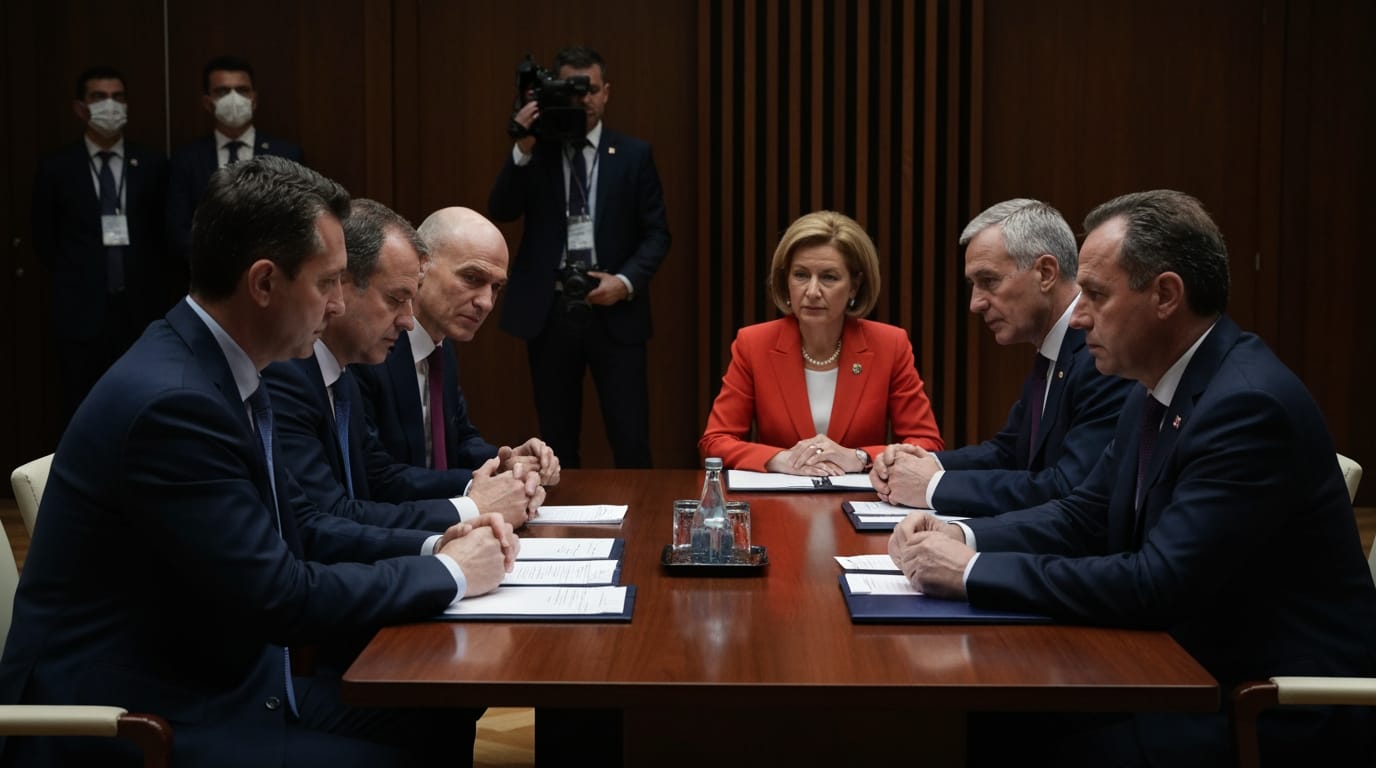
Ankara, Turkey – Leaders and top defense officials from the North Atlantic Treaty Organization (NATO) have converged in Ankara, Turkey, for a pivotal summit set to redefine the alliance's defense posture and unveil billions in new military contracts. The two-day gathering, commencing today, July 7, 2026, aims to underscore NATO's commitment to collective defense, enhance industrial capacity, and solidify long-term support for Ukraine, all while navigating a complex tapestry of geopolitical tensions and evolving threat perceptions.
This summit marks a critical juncture for the 77-year-old alliance, as it confronts heightened global instability ranging from Russia's ongoing conflict in Ukraine to an escalating war involving Iran, alongside persistent hybrid threats and renewed pressure from the United States regarding defense spending. Expected to announce agreements exceeding $10 billion, the Ankara summit is a powerful demonstration of NATO's resolve to translate financial pledges into tangible military capabilities, signaling a strategic recalibration in the face of a more demanding international security environment.
Turkey's Resurgent Strategic Role Amidst Geopolitical Currents
Hosting a NATO summit for the first time in over two decades, Turkey is seizing the opportunity to assert its indispensable strategic value to the alliance. Situated at the crossroads of the Balkans, the Middle East, and the Caucasus, Turkey's unique geographic position makes it a critical bulwark on NATO's southeastern flank, housing the alliance's Allied Land Command headquarters and boasting its second-largest army.
The current geopolitical climate has amplified Ankara's importance. Instability stemming from the Iran war has exposed vulnerabilities along NATO’s southern border, with missile attacks targeting installations like the Incirlik Air Base in Turkey earlier this year. These incidents, coupled with Turkey's proactive role in addressing Black Sea security concerns following Russia's actions in Ukraine, underscore Ankara's efforts to position itself as an active architect, rather than a passive participant, in NATO's strategic planning. This summit serves as a platform for Turkey to showcase its substantial military potential and developed defense industry, aiming to deepen cooperation with individual allies in military technologies.
However, Turkey's relationship with NATO is not without its complexities. Long-standing disputes with Greece over maritime boundaries and energy resources, as well as its exclusion from some key European Union defense initiatives, highlight areas of friction. Despite these challenges, experts note that recent conflicts and shifting defense priorities have generally strengthened ties between Turkey and other NATO allies, recognizing Ankara's vital contributions across the Black Sea, Middle East, and the wider neighborhood.
Billions in Defense Deals to Bolster Alliance Capabilities
A centerpiece of the Ankara summit is the inaugural NATO Summit Defense Industry Forum (NSDIF26), a high-level event specifically designed to showcase transatlantic defense production, investment, and innovation. This forum is expected to be the venue for announcing "tens of billions in new contracts," spanning critical areas such as space and surveillance, integrated air and missile defense, and strike capabilities. NATO Secretary-General Mark Rutte emphasized that these agreements will not only provide essential equipment for deterrence and defense but also stimulate economic growth, foster innovation, and support hundreds of thousands of jobs across the transatlantic community.
A primary driver behind this significant financial outlay is the alliance's commitment to increased defense spending. At last year's summit in The Hague, allies agreed to dedicate 5% of their annual GDP to defense by 2035, a substantial increase from previous guidelines. Secretary-General Rutte has urged member nations to present "clear, concrete, and credible plans" to achieve this target, noting that European allies and Canada are already investing approximately 4% of their GDP in defense and security just one year into the 10-year project. This push for greater investment is partly aimed at appeasing concerns from U.S. President Donald Trump, who has consistently pressed allies to shoulder a larger share of the defense burden. The summit will focus on translating these increased budgets into enhanced industrial production, greater transatlantic co-production, and accelerated adoption of cutting-edge technologies to forge a more robust industrial deterrence for the alliance.
Shifting Black Sea Dynamics and Southern Flank Security
The Ankara summit is also addressing critical regional security challenges, with a particular focus on the Black Sea and NATO's southern flank. Turkey is taking a leading role in a NATO-backed multinational security initiative, known as the "Coalition of the Willing for Ukraine," aimed at supporting Ukraine and strengthening Western influence in the Black Sea region. This initiative includes the establishment of a Maritime Component Command in Istanbul and a Multinational Corps Turkey (MNC-TUR) in Adana. This represents a notable shift in Ankara's long-standing policy of maintaining a delicate balance in the Black Sea and limiting foreign military presence, signifying a more assertive stance in coordinating with NATO allies for regional stability.
The instability in the Middle East, exacerbated by the Iran war, presents another significant concern for NATO. The alliance is reviewing measures to strengthen counterterrorism efforts, enhance maritime security, and improve air and missile defense systems along its southern flank. These discussions aim to secure vital waterways like the Strait of Hormuz and address the growing threat of missile and drone attacks.
Forging Unity Amidst Transatlantic Strains
Beyond defense deals and regional security, the Ankara summit is a crucial test of NATO's ability to maintain unity and cohesion amidst internal disagreements and a rapidly changing global order. Transatlantic relations have been strained by divergent threat perceptions and the U.S. push for European allies to assume greater responsibility for their own defense, a concept shifting from "burden-sharing" to "burden-shifting." European leaders are seeking clarity on potential U.S. military drawdowns and planning to fill resulting capability gaps, recognizing the need to reduce reliance on the U.S.
Despite these tensions, allies are striving to project a united front, focusing on areas where progress and resolve can be clearly demonstrated. Long-term support for Ukraine remains a paramount concern, with allies reaffirming their commitment to continued material assistance and exploring future security arrangements. The summit aims to ensure that political commitments translate into practical military transformation, encompassing industrial production, logistics, ammunition stockpiles, and technological innovation.
A New Chapter for the Alliance
The NATO summit in Ankara represents a significant moment for the alliance, grappling with a confluence of external threats and internal pressures. By focusing on substantial defense investments, bolstering industrial capacity through new deals, and strategically adapting to regional challenges, NATO aims to project strength and resilience. The outcome of these discussions, particularly the tangible defense agreements, will be crucial in demonstrating NATO's capacity to evolve, consolidate its collective defense, and navigate a profoundly uncertain future, with Turkey playing an increasingly central role in this ongoing transformation.


