NATO Bolsters Arctic Security Amid Escalating Geopolitical Tensions Over Greenland
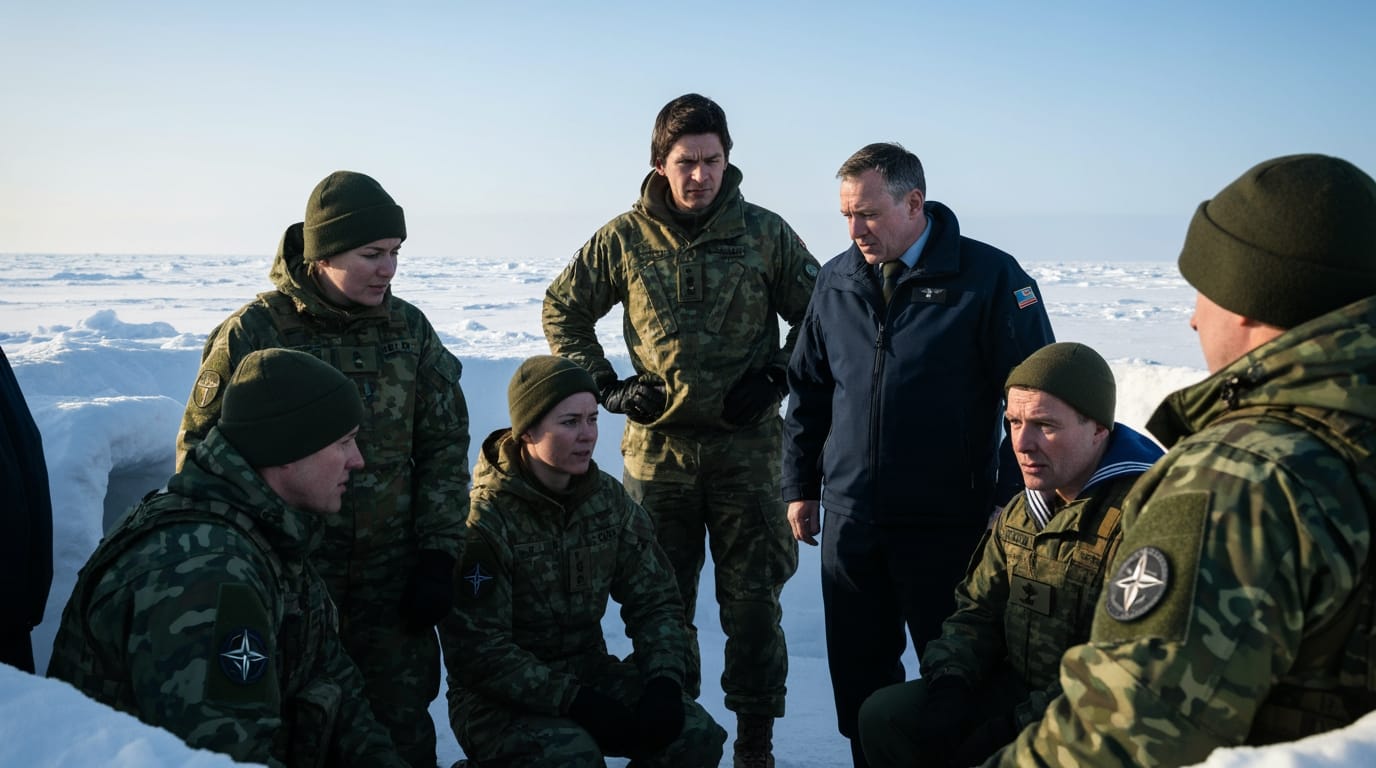
Brussels, Belgium – The North Atlantic Treaty Organization (NATO) is significantly increasing its focus on Arctic security, with Greenland emerging as a central point of geopolitical contention. This strategic pivot comes amid mounting pressure from the United States and growing concerns within the alliance over expanding Russian and Chinese influence in the High North. The region, traditionally characterized by international cooperation, is rapidly transforming into a new arena for global power competition, driven by climate change, resource accessibility, and critical strategic positioning.
The Arctic's New Strategic Frontier
The Arctic, once considered a remote and largely inaccessible frontier, is now at the forefront of international security discussions. Rapid climate change has led to accelerated ice melting, opening new shipping routes, such as the Northwest Passage and the Northern Sea Route, and making previously unreachable vast natural resources—including rare earth elements, oil, and natural gas—more accessible. This transformation has profound economic and military implications, prompting a scramble for influence and control among major global powers. The Arctic is warming at twice the global rate, impacting its unique biodiversity and contributing to rising sea levels, which further complicates the geopolitical landscape. Seven of the eight Arctic nations are NATO members, with Russia being the eighth, underscoring the alliance's inherent stake in the region's stability.
Greenland's Pivotal Role in Global Security
Greenland, an autonomous territory within the Kingdom of Denmark, occupies a critical geostrategic position between North America and the Arctic. Its location is vital for early warning systems against missile attacks and for tracking naval activities in the North Atlantic and Arctic, particularly through the Greenland-Iceland-United Kingdom (GIUK) gap. The United States has maintained a permanent military presence at Pituffik (Thule) Space Base in northwest Greenland since World War II, which remains crucial for ballistic missile early warning, missile defense, and space surveillance operations for both the U.S. and NATO.
Greenland is also home to significant deposits of critical minerals, including an estimated 10% of the world's rare earth element reserves. These resources are essential for modern technologies, from mobile phones and computer chips to electric vehicles and defense systems. The potential to reduce reliance on foreign suppliers, particularly China, for these vital materials further elevates Greenland's strategic economic value.
US Pressure and Allied Concerns
The United States has consistently expressed strong national security interests in Greenland, fueled by concerns over growing Russian and Chinese activity in the Arctic. Former President Donald Trump has repeatedly floated the idea of purchasing Greenland, and more recently, members of his administration have openly suggested that military action remains an option to acquire the territory. White House Press Secretary Karoline Leavitt stated that "utilizing the U.S. military is always an option" to acquire the Arctic territory, while Stephen Miller, Trump's deputy chief of staff, questioned Denmark's right to control Greenland. This rhetoric has sparked alarm among European allies, with Danish Prime Minister Mette Frederiksen warning that any U.S. military action against Greenland would mean "the end of NATO." Other European leaders, including those from France, Germany, Italy, Poland, Spain, and the United Kingdom, have issued a joint statement emphasizing that Greenland belongs to its people and that its future is for Denmark and Greenland to decide. They underscored that security in the Arctic must be achieved collectively within NATO, upholding principles of sovereignty and territorial integrity.
Experts note that while the US maintains a robust presence under existing agreements, the aggressive tone of acquisition attempts risks alienating allies and undermining alliance cohesion. Some analysts suggest that if the US were to pursue military action against Greenland, Denmark might face a dilemma regarding NATO's Article 5, which mandates collective defense against an armed attack on any member.
NATO's Concerted Effort to Fortify the Arctic
In response to these complex dynamics, NATO is intensifying its efforts to reinforce its Arctic flank. Ideas discussed within the alliance include enhancing Arctic surveillance capabilities, increasing defense spending in the region, transferring more military equipment, and conducting expanded military exercises. Denmark is actively leading this charge, recently hosting "Arctic Light," a large-scale military exercise in Greenland involving over 550 personnel from NATO allies such as Norway, France, Germany, and Sweden. This exercise, which includes land, sea, and air components, aims to strengthen Denmark's and NATO's operational readiness in Arctic conditions, showcasing capabilities like maritime interdiction training, air-to-air refueling, and drone operations. The UK is also considering deploying troops to Greenland as part of a potential NATO mission, aligning with US security concerns while respecting Danish sovereignty.
NATO chief Mark Rutte has urged allies to protect the Arctic region, emphasizing collective defense. This increased focus reflects the alliance's recognition of the strategic shifts occurring as polar ice melts and new avenues for Russian and Chinese naval activity emerge. NATO plans to expand its intelligence, surveillance, and reconnaissance capabilities, improve infrastructure and logistics for military mobility, and strengthen its presence with Arctic-capable forces.
Russia and China's Arctic Ambitions
Both Russia and China are actively expanding their footprints in the Arctic, driven by economic interests, strategic access, and military objectives. Russia, possessing the longest Arctic coastline and a powerful Northern Fleet, views the region as crucial to its security calculus and has been investing heavily in military and economic strategies there. China, which declared itself a "Near-Arctic State" in 2018, is pursuing a "Polar Silk Road" initiative and seeks to leverage the region for raw materials and new trade routes.
NATO's Supreme Allied Commander Europe, Gen. Alexus Grynkewich, has highlighted the growing military cooperation between Russia and China in the Arctic, including joint bomber flights and Coast Guard patrols near Alaska. Grynkewich stated that these activities are "not for peaceful purposes," but rather for bathymetric surveys and efforts to counter NATO capabilities. While the Sino-Russian partnership in the Arctic is real, some analyses suggest it remains constrained by diverging priorities and Russia's wariness of Chinese influence, particularly outside the Russian Arctic where it could trigger a stronger NATO response. Nevertheless, the increasing presence and collaboration of these non-NATO powers contribute significantly to the militarization of the Arctic.
Balancing Sovereignty, Security, and Sustainability
The discussions surrounding Arctic security and Greenland underscore a complex balancing act for Denmark, NATO, and the international community. Greenlandic and Danish authorities firmly assert that the island "belongs to its people" and that decisions about its future and resources will be made by Greenlanders. They welcome security cooperation with allies but reject any threats to their sovereignty.
The increasing militarization of the Arctic also raises significant environmental concerns. The fragile Arctic ecosystem is already under immense pressure from climate change, and heightened military activity risks further environmental degradation. Striking a balance between legitimate security needs, economic opportunities, and the imperative to protect the Arctic's delicate environment and the self-determination of its indigenous populations remains a critical challenge for all stakeholders involved. The evolving situation in Greenland reflects a broader shift in global geopolitics, where the Arctic is rapidly becoming a focal point for international cooperation, competition, and potential confrontation.


