Nepal's Crucible Moment: Gen Z Demands Genuine Reform in Landmark Election
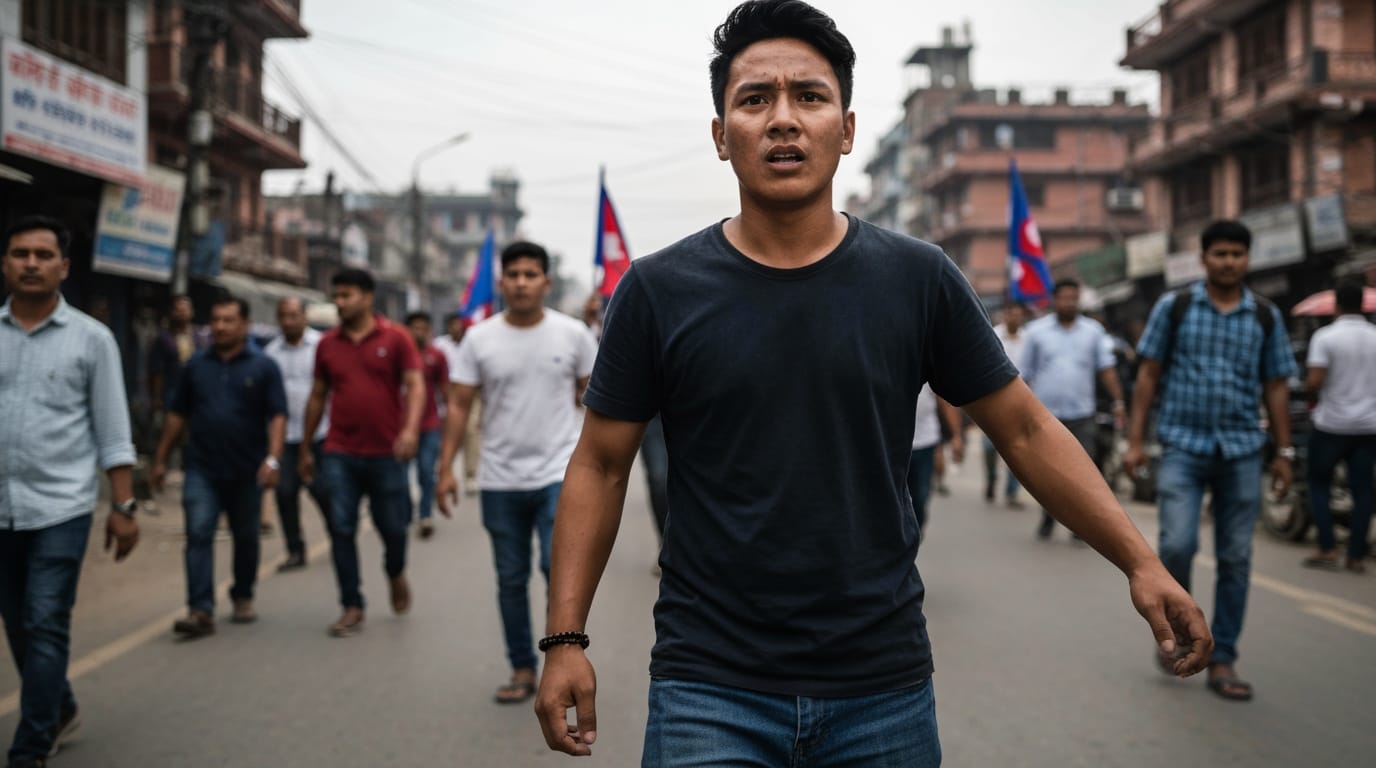
KATHMANDU – Nepal is on the precipice of a pivotal national election on March 5, a vote that arrives not as a routine democratic exercise, but as a direct consequence of a powerful youth-led movement that reshaped the country's political landscape in late 2025. Weeks of fervent protests, initially sparked by a government-imposed social media ban, rapidly escalated into a widespread demand for sweeping political reforms, directly challenging entrenched corruption and chronic instability. With nearly a million new voters, predominantly from Generation Z, poised to cast their ballots, these elections are seen as a critical test of whether the Himalayan nation can translate street activism into substantive, lasting change.
The Spark of Discontent: Gen Z's Uprising
The catalyst for Nepal's recent political upheaval was the government's decision on September 4, 2025, to ban 26 major social media platforms, including Facebook, YouTube, and WhatsApp, citing non-compliance with new regulations. For a digitally native Generation Z, this move was perceived not merely as bureaucratic overreach but as a direct assault on freedom of expression and connectivity. The outrage quickly morphed into large-scale demonstrations across Nepal, predominantly organized by students and young citizens who leveraged platforms like Discord to coordinate their actions.
What began as a protest against a social media ban quickly unearthed deeper public frustrations stemming from pervasive corruption, misgovernance, nepotism, and a lack of accountability within the political establishment. The protests turned deadly, with security forces firing live ammunition, rubber bullets, and tear gas at demonstrators, resulting in 77 fatalities and thousands injured. The unprecedented violence and the scale of the uprising ultimately forced the resignation of then-Prime Minister K.P. Sharma Oli and his coalition government. In an extraordinary move, President Ram Chandra Poudel appointed Sushila Karki, a former chief justice and a non-member of parliament, as interim prime minister, with a mandate to prepare for snap elections and oversee constitutional reforms.
A Generational Shift in the Electorate
The upcoming elections are distinctively marked by the prominent role of Nepal's youth. With approximately 46% of the population under the age of 24, and individuals aged 16 to 40 constituting 40.68% of the country's total demographic, Generation Z represents a formidable and increasingly engaged electoral force. This election cycle has seen a significant surge in the voter base, with nearly one million new voters registered, the vast majority of whom are young people. Estimates suggest between 800,000 and 915,119 first-time voters will participate, potentially altering the electoral arithmetic in closely contested races.
Analysts highlight that this youthful demographic is less bound by traditional party loyalties and is instead driven by merit and the competence of individual candidates. While historically, youth apathy towards formal politics has sometimes led to lower voter turnout, the recent protests have dramatically shifted this perception, transforming it into active engagement. Young Nepalis are increasingly motivated by the belief that their participation is crucial for bringing about meaningful change, challenging the long-standing power dynamics where young people were often mobilized for political campaigns but excluded from leadership roles.
Demands for Reform and Political Promises
At the heart of the Gen Z movement's demands are fundamental calls for an end to corruption, the establishment of good governance, increased accountability from public officials, and the creation of sustainable job opportunities to stem the tide of youth migration. The protests also highlighted a desire for constitutional amendments to address structural flaws in the political system.
In response to this powerful youth mandate, almost all major political parties have adapted their election manifestos, incorporating themes that resonate with Gen Z's grievances. Pledges now frequently include support for young entrepreneurs, job training programs, assurance of internet freedom, and explicit commitments to curb corruption and improve governance. The Rastriya Swatantra Party (RSP), for instance, has promised a "faceless" and "paperless" administration to combat corruption and has championed policies to support the digital lifestyle of young freelancers.
A notable figure in this generational shift is Balen Shah, a former rapper who, after winning the mayoral seat of Kathmandu in 2022, emerged as a unifying national figure following the September protests. Now a prime ministerial candidate for the RSP, Shah embodies the youth's desire for new leadership outside the traditional political establishment, directly challenging long-serving political heavyweights. Despite the inclusion of their demands in party agendas, many young activists remain skeptical, questioning whether these promises will translate into genuine action or merely serve as a superficial appeasement.
The Challenges and the Path Forward
Nepal's democratic journey since the abolition of the monarchy in 2008 has been characterized by chronic political instability, with the country seeing 14 governments and nine prime ministers in just 17 years, and 31 prime ministers in 35 years since the restoration of democracy in 1990. This revolving door of leadership has fueled public disillusionment and hampered consistent policy implementation, contributing to high youth unemployment and significant outward migration for work and education.
Furthermore, structural barriers continue to limit meaningful youth participation in formal politics. Despite their numerical strength, youth representation in the Nepali parliament remains low at 5%, significantly below the global average of 13.5%. Legal provisions, such as minimum age requirements for contesting elections (21 for local, 25 for provincial/federal, and 45 for constitutional committees), further restrict younger individuals from holding office. The entrenched power of older leaders within traditional parties, who often resist handing over leadership, also contributes to this disparity.
These elections are more than just a contest for power; they are a "referendum on legitimacy" for Nepal's political system. The outcome will determine if the country can move towards political renewal, addressing the deep-seated frustrations that ignited the Gen Z movement, or if it will regress into familiar patterns of short-lived coalitions and unmet promises. The choices made by Nepali voters, particularly its dynamic youth, will shape the trajectory of its democratic experiment.
Conclusion
The upcoming elections in Nepal stand as a testament to the transformative power of its youth. Fueled by a raw desire for genuine change and an end to decades of political instability and corruption, Generation Z has forcefully inserted its agenda into the national discourse. While traditional parties have incorporated youth demands into their platforms, the true test lies in whether these pledges will translate into concrete actions and structural reforms that address the core grievances of the populace. As polling day approaches, the eyes of the nation, and indeed the world, are on Nepal, awaiting the verdict on whether the ballot box can truly deliver the systemic changes that the streets demanded. The future of Nepal's democratic stability and its ability to harness the aspirations of its young generation hinge on the integrity and responsiveness of its political leadership in the wake of this landmark election.


