Nepal's Political Earthquake: Ex-Rapper's Party, Buoyed by Gen Z, Secures Landslide Victory
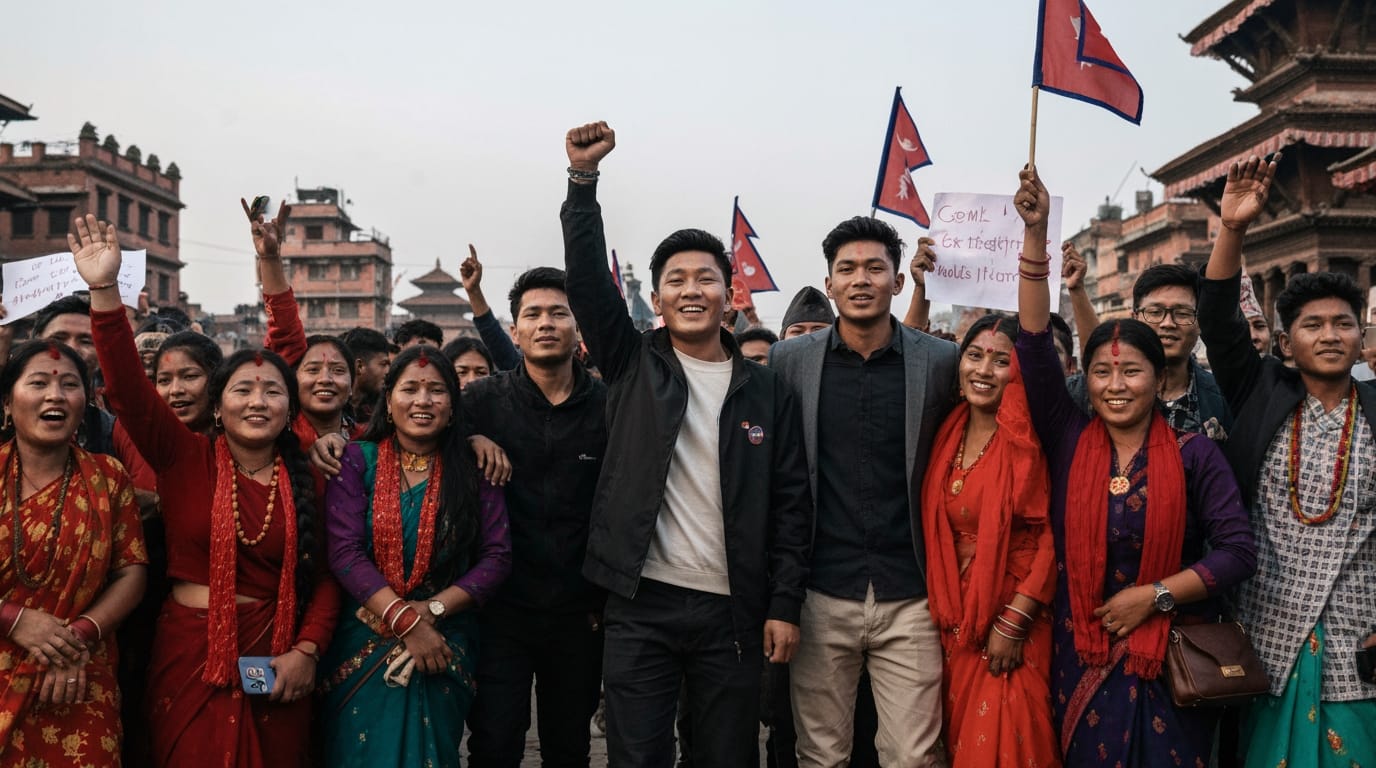
KATHMANDU – A seismic shift has redefined Nepal’s political landscape, as the Rastriya Swatantra Party (RSP), a four-year-old political entity led by former rapper Balendra Shah, secured an overwhelming landslide victory in the parliamentary elections held on March 5, 2026. This unprecedented win, driven significantly by the mobilization of a disillusioned Generation Z electorate, marks a profound rejection of the nation's entrenched political establishment and signals a new era for the Himalayan republic.
The Unlikely Rise of a New Political Force
The Rastriya Swatantra Party, a centrist organization formed in 2022, has rapidly ascended from relative obscurity to becoming Nepal's dominant political power. At its helm is Balendra Shah, a 35-year-old engineer and former rapper, whose politically charged music, critical of corruption and inequality, resonated deeply with a public tired of traditional governance. Shah, known popularly as Balen, had already demonstrated his appeal by winning the Kathmandu mayoral race in 2022, where he earned a reputation as a blunt and confrontational reformer tackling issues like tax evasion and traffic congestion. His success at the municipal level, combined with his direct communication style primarily through online platforms rather than traditional media, positioned him as a relatable and authentic figure for many Nepalis. The RSP’s victory, securing 182 out of 275 seats in the House of Representatives, is the largest majority for any single party in over six decades, fundamentally reshaping a political arena long dominated by coalition governments and established parties.
The Youthquake: Gen Z's Pivotal Role
The RSP's triumph is inextricably linked to the burgeoning political activism of Generation Z. Their involvement follows a series of youth-led protests in September 2025, which erupted over grievances ranging from a social media ban to widespread corruption and economic stagnation, eventually leading to the ousting of the then-government led by former Prime Minister Khadga Prasad Oli. These demonstrations, some of which turned violent and resulted in casualties, highlighted a deep-seated frustration among young Nepalis with the status quo. The RSP effectively capitalized on this discontent, presenting itself as a fresh, digitally savvy alternative to the long-dominant Nepali Congress and the Communist Party of Nepal (Unified Marxist-Leninist).
A significant indicator of this youth engagement was the surge in new voter registrations, with approximately 800,000 individuals signing up to cast ballots, over two-thirds of whom were Gen Z. This demographic proved crucial, seeking leaders who promised tangible change rather than ideological continuity. Figures like Balendra Shah and RSP President Rabi Lamichhane, who secured his Chitwan-2 constituency for the third consecutive time with a substantial margin, embody this new wave of political leadership. Their campaigns resonated with a generation eager for accountability and pragmatic solutions to Nepal's persistent challenges.
A Nation's Discontent Fuels Disruption
Nepal has endured a turbulent political history, marked by 32 government changes over the past 35 years, which has severely hampered investor confidence and economic growth. The recent election was a direct consequence of the youth-led revolt, forcing early polls and placing the issue of political stability and good governance at the forefront. The public's desire for an end to chronic corruption, high unemployment, and the lack of opportunities—factors often forcing young Nepalis to seek prospects abroad—created fertile ground for an outsider party like the RSP.
The outcome saw a dramatic reversal of fortunes for established political giants. The Nepali Congress, once the largest party, was relegated to a distant second place with just 38 seats, while K.P. Sharma Oli's CPN-UML managed only 25. Notably, Shah directly challenged and defeated former Prime Minister Oli in his own constituency, a symbolic victory that underscored the electorate's desire for radical change. This "ballot revolt," as some local media have termed it, signifies a clear mandate for a new direction and a departure from decades of political stagnation.
Implications and Future Challenges
The Rastriya Swatantra Party's landslide victory heralds a potentially transformative, yet challenging, period for Nepal. With Balendra Shah poised to become the youngest Prime Minister in the nation's history, and the first from the southern plains (Madhesh), his administration faces immense expectations to deliver on promises of reform and stability. As a party with relatively shallow political roots and limited experience in national governance, the RSP will need to navigate the complexities of power, including managing potential internal cohesion issues and dealing with a political landscape still populated by experienced, albeit diminished, traditional parties.
Constitutional experts and observers view this outcome as a significant generational shift, a clarion call for change that has materialized into a strong electoral mandate. The challenge for the RSP will be to translate the immense public goodwill and anti-establishment sentiment into effective policy and sustained governance. As newly-elected lawmaker Sisir Khanal from the RSP remarked, "The mandate has made us very responsible." The world will be watching to see if this "victory of hope and change" can indeed usher in an era of genuine progress and political stability for Nepal.
A Mandate for Change
The 2026 Nepali parliamentary election will be remembered as a pivotal moment, illustrating the profound impact of youth mobilization and the electorate’s yearning for a break from the past. The Rastriya Swatantra Party's ascent, propelled by the energy and demands of Generation Z, underscores a global trend of anti-establishment sentiment and a desire for leaders perceived as untainted by traditional political baggage. This election has not only installed a new political party into power but has also delivered a powerful message: the voice of a new generation in Nepal is clear, insistent, and capable of reshaping the nation's destiny. The true test now lies in transforming this overwhelming mandate for change into sustainable governance that addresses the core issues facing the Nepali people.


