Netherlands Embraces Rare Minority Government Amidst Political Reshuffle
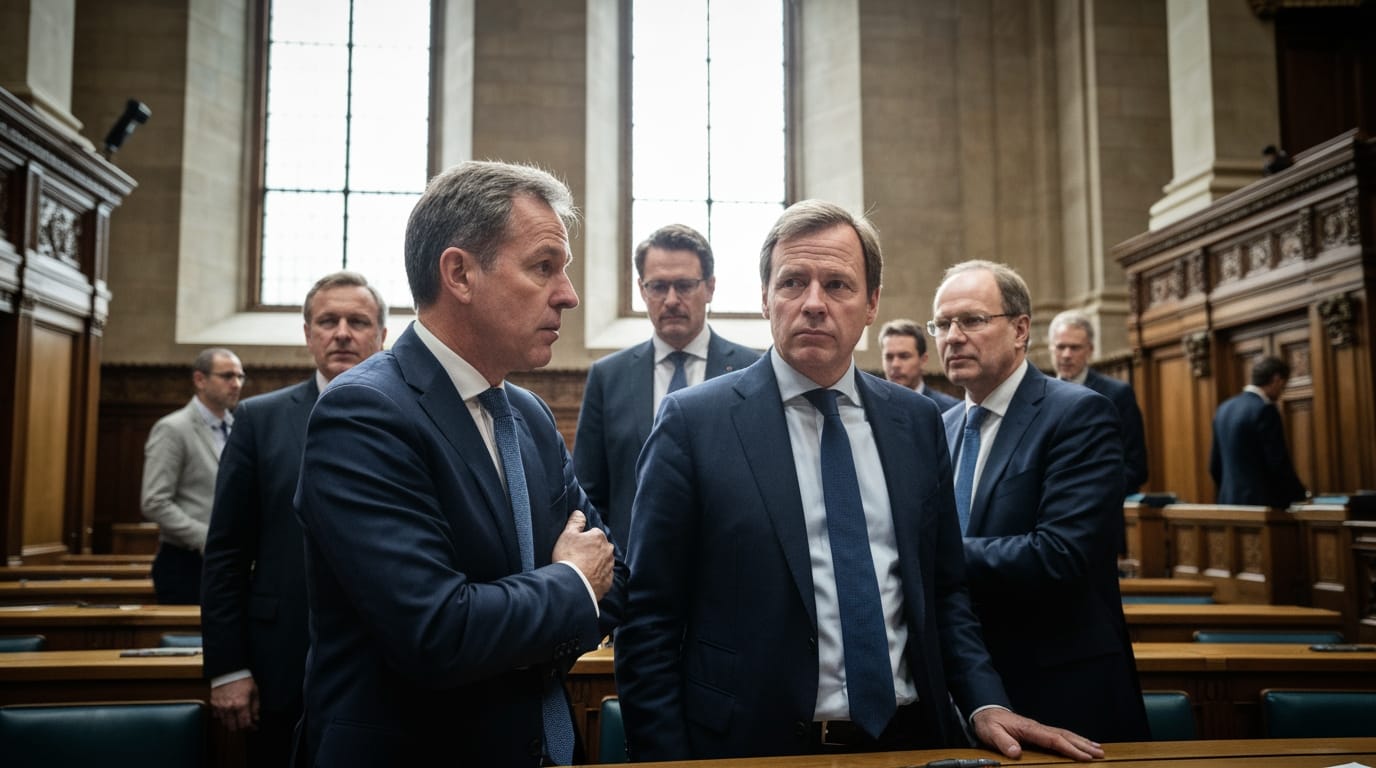
THE HAGUE, NETHERLANDS – After months of intricate negotiations and a recent snap election, the Netherlands is poised to inaugurate a rare minority government, charting a new course for its famously consensus-driven political landscape. A coalition agreement has been reached between the centrist, pro-European Democrats 66 (D66), the right-wing liberal People's Party for Freedom and Democracy (VVD), and the Christian Democratic Appeal (CDA), signaling a decisive shift from the country's recent tumultuous political history. D66 leader Rob Jetten is expected to become the next Prime Minister, leading a cabinet that will command 66 of the 150 seats in the lower house of parliament and rely on ad-hoc support from opposition parties to pass legislation.
This development marks a significant departure from the traditional Dutch model of broad majority coalitions, introducing an era where flexibility and cross-party cooperation will be paramount for effective governance. The formation process, which commenced after national elections on October 29, 2025, concluded relatively swiftly, in just over 90 days, setting a stark contrast to the drawn-out political deadlocks that have plagued the nation in recent years. The incoming government faces the immediate challenge of proving its ability to navigate a fragmented parliament and deliver on key policy promises, all while operating without a built-in parliamentary majority.
A New Political Compact Takes Shape
The nascent coalition, comprising D66, VVD, and CDA, represents a centrist-right alignment that will endeavor to govern without a fixed majority in the House of Representatives. With only 66 seats, the incoming cabinet falls 10 seats short of the 76 required for a majority, necessitating constant negotiation and compromise with other parliamentary factions on a bill-by-bill basis. This configuration is unusual for the Netherlands, a nation accustomed to stable, multi-party majority governments.
At the helm is Rob Jetten, the 38-year-old leader of D66, who is widely expected to assume the premiership. His potential elevation would make him one of the youngest and the first openly gay Prime Minister in Dutch history, representing a generational and cultural shift in national leadership. The VVD, previously the party of long-serving Prime Minister Mark Rutte, and the CDA, a traditional force in Dutch politics, join D66 in this political experiment. The leaders of the three parties have been diligently working out the financial details of their agreement, with expectations that the full coalition accord could be presented to the public by the end of January 2026, and the new cabinet sworn in by King Willem-Alexander around February 23.
The decision to form a minority government was not taken lightly, with D66 leader Jetten acknowledging it was "not an easy decision" but expressing confidence in the ability to secure support for "good proposals" from other parties. CDA leader Henri Bontenbal described the move as "the new political reality," signaling a potential for a shift towards a more flexible and less adversarial political culture.
Echoes of Past Instability: The Schoof Cabinet's Demise
The formation of this new minority government is largely a direct consequence of the instability that plagued the preceding administration. The Dutch parliamentary elections of October 2025 were triggered by the collapse of the "Schoof cabinet" in June 2025, which had governed for less than a year. This four-party coalition, formed after the November 2023 elections, included Geert Wilders' far-right Party for Freedom (PVV), the VVD, the center-right New Social Contract (NSC), and the Farmer-Citizen Movement (BBB).
The Schoof cabinet, led by technocratic Prime Minister Dick Schoof, ultimately fractured over disagreements on migration policy, a contentious issue that had been central to the coalition's initial agreement, titled "Hope, Courage and Pride." Geert Wilders, whose PVV had emerged as the largest party in the 2023 election, pulled his party from the coalition, expressing frustration over the slow pace of enacting stricter asylum legislation. This internal strife within the right-leaning coalition highlighted the profound challenges of governing with disparate ideological priorities, especially on emotionally charged issues like immigration. The collapse of the Schoof cabinet underscored the difficulties inherent in coalition governance in a highly fragmented political landscape, where a single party rarely achieves an outright majority.
Navigating the Numbers Game: Challenges and Opportunities
The prospect of a minority government introduces a unique set of challenges and opportunities for Dutch politics. Without a guaranteed majority, the new government will be forced to engage in continuous dialogue and negotiation across the political spectrum. Each piece of legislation will require careful crafting to garner sufficient support, transforming every parliamentary vote into a potential test of the government's stability. This could lead to a more fluid political process, where legislation is shaped by broader consensus rather than strict party lines. However, it also carries the risk of parliamentary gridlock and governmental instability, particularly on contentious issues.
For Prime Minister-designate Rob Jetten and his cabinet, the ability to build bridges and forge temporary alliances will be crucial. This dynamic could empower smaller parties and the opposition, as their votes become essential for passing any measure. The necessity for ad-hoc support may foster a new culture of political cooperation, potentially moving away from the animosity that characterized some previous political periods. Conversely, opponents could leverage their swing votes to extract concessions or obstruct the government's agenda, leading to legislative delays or even early elections if crucial bills repeatedly fail.
While specific policy details of the D66-VVD-CDA agreement are yet to be fully revealed, the shift in coalition partners suggests a different policy emphasis compared to the previous administration. The previous government's focus on restrictive migration measures, building more houses, improving purchasing power, and flexibility for farmers, analyzed by the CPB (Dutch Bureau for Economic Policy Analysis), yielded projected economic growth and poverty reduction. The new coalition will likely outline its priorities in areas such as public safety and economic stability, reflecting the diverse platforms of the participating parties.
A New Chapter for Dutch Democracy
The formation of a minority government in the Netherlands signifies a new and potentially transformative chapter in its democratic tradition. For a nation where political stability has historically been derived from broad, multi-party alliances, this configuration demands a different approach to governance. The D66, VVD, and CDA coalition, under the anticipated leadership of Rob Jetten, embarks on a path that requires constant negotiation, strategic compromise, and a robust capacity to build consensus.
The success of this rare political experiment will hinge on the parties' ability to maintain unity within the coalition, effectively engage with the opposition, and deliver tangible results for the Dutch populace. As the Netherlands steps into this uncharted territory, the world will be watching to see how this dynamic government navigates its inherent challenges, shapes its policy agenda, and ultimately redefines the contours of modern Dutch politics. The outcome will not only impact the daily lives of Dutch citizens but could also offer valuable lessons for other European democracies grappling with fragmented political landscapes.


