New Era Dawns: Prime Minister Burnham Set to Refocus UK's Global Role Through a Domestic Lens
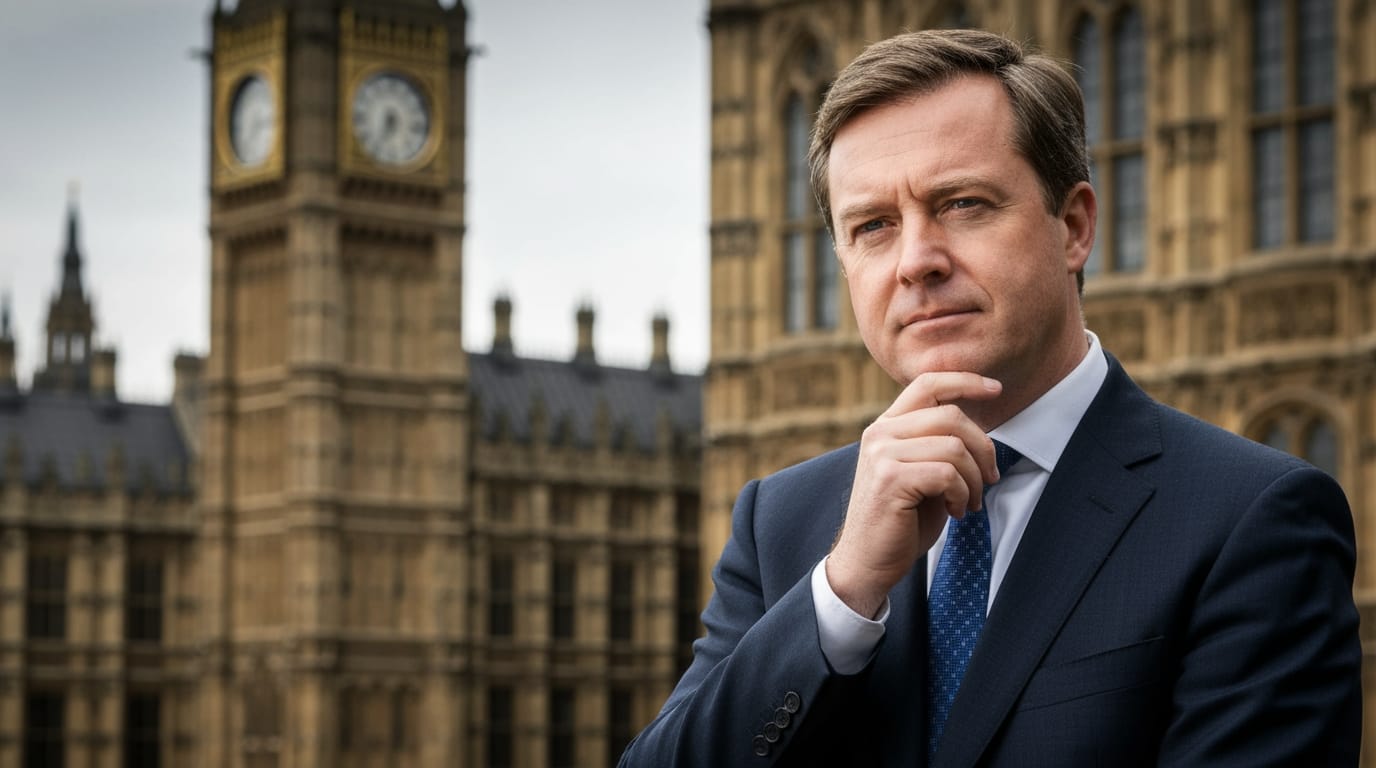
With Andy Burnham poised to assume the premiership, the United Kingdom anticipates a significant recalibration of its international posture, signaling a potential shift from traditional diplomatic grandstanding to a foreign policy explicitly tethered to the economic and social well-being of its domestic communities. Burnham, whose political identity has been forged in the crucible of Greater Manchester's regional leadership, is expected to champion a "place-rooted internationalism," where global engagement is measured by its tangible benefits to British towns and cities. This approach, dubbed the "Makerfield Test," suggests that international decisions will increasingly be scrutinized for their direct impact on job creation, living standards, and economic resilience across the UK.
The "Makerfield Test": A New Internationalism Rooted in Home
Andy Burnham's ascendancy to Prime Minister marks a pivotal moment for British foreign policy, largely shaped by his decade as Mayor of Greater Manchester. His philosophy, often referred to as "Manchesterism," posits that international events and global forces directly impact local outcomes, making the traditional separation between domestic and foreign policy increasingly obsolete. Consequently, Burnham is anticipated to apply a "Makerfield Test" to the UK's global engagements, prioritizing initiatives that demonstrably improve life for communities across the nation. This includes fostering economic security, driving reindustrialization, and creating high-skilled jobs, aiming to connect global strategy with domestic renewal.
This isn't to say Burnham advocates for isolationism; rather, his vision is for a pragmatic internationalism that leverages global cooperation to serve national interests. His focus on domestic concerns, such as devolution and public service control, suggests that foreign policy will be viewed through a lens that seeks to bolster these internal priorities. While traditionally less vocal on foreign affairs, his leadership is expected to infuse a sense of purpose into the UK's global role, ensuring that every diplomatic endeavor and international partnership yields palpable advantages for the British people. This could translate into "friendshoring" critical supply chains and seeking international partners who align with the UK's economic resilience objectives.
Redefining European Ties: Beyond Brexit Rhetoric
A key area where Prime Minister Burnham's influence is expected to be felt profoundly is in the United Kingdom's relationship with the European Union. A vocal Remainer during the 2016 referendum, Burnham has consistently expressed a long-term aspiration for the UK to rejoin the EU "in his lifetime." However, he has also pragmatically stated that he will not "re-run the referendum now," recognizing the political divisiveness of such a move, particularly in Leave-supporting constituencies like Makerfield.
Instead of immediate re-entry, Burnham is projected to pursue a strategy of seeking a "closer relationship" with European countries and aiming to "consolidate the progress made" on existing negotiations. This nuanced approach suggests a focus on deeper economic and regulatory cooperation where mutual benefits are clear. Notably, his ambitions for greater "sovereign capabilities" in critical technologies such as AI and quantum computing, and his desire for "100 percent national ownership of critical tech infrastructure," closely mirror the EU's drive for "strategic autonomy." This convergence could pave the way for enhanced collaboration with Brussels on critical minerals, cloud storage, payment systems, and even participation in EU defense funding schemes like SAFE. Furthermore, areas such as illegal migration, economic security, societal resilience, and the alignment of agri-food rules and electricity markets are likely to become focal points for renewed engagement. The postponement of the planned EU-UK summit indicates his intent to carefully re-evaluate the UK's negotiating stance and prepare a tailored approach.
Navigating Global Powers: Shifts with the US, Middle East, and China
Under Prime Minister Burnham, the UK's relationship with global superpowers is also anticipated to undergo strategic adjustments. While maintaining the "special relationship" with the United States, there are indications of a desire for a more balanced partnership. Burnham's team has expressed intentions to make the UK's AI policy "less US-centric," aiming for greater domestic ownership of data centers, signaling a move towards reducing reliance on American technological dominance. His past criticisms of former President Donald Trump have been more pronounced than his predecessor's, yet he has also acknowledged the need to engage with US leadership pragmatically. On defense, Burnham maintains unwavering support for Ukraine and NATO, echoing the current government's stance, and backs increased defense spending. However, he views such expenditure as an "industrial opportunity" to generate UK jobs and investment, underscoring his domestic-first approach.
In the Middle East, Burnham is expected to usher in a tougher stance on the Israel-Palestine conflict. He has publicly apologized for Labour's initial response to Israel's military actions in Gaza, asserting that the party "didn't get it right." He has pledged to exert more pressure on the Israeli government, potentially through sanctions and restrictions on trade with illegal settlements. Burnham was also an early advocate for a ceasefire in October 2023, preceding his predecessor by several months, and pushed for formal recognition of a Palestinian state.
Regarding China, Burnham's approach is expected to be predominantly economic, rather than overtly critical. He has not been an outspoken critic of Beijing, suggesting a focus on trade and investment opportunities. However, his premiership will need to carefully navigate the complex strategic challenges presented by China, balancing global cooperation and sustainability with the risks of dependency and potential de-industrialization, particularly as the UK seeks to revitalize its own industrial base.
Rebuilding Whitehall and Forging Economic Resilience
Central to Prime Minister Burnham's ability to implement his foreign policy agenda will be the revitalization of the Foreign, Commonwealth and Development Office (FCDO). The FCDO has experienced periods of upheaval, including mergers and budget cuts, which have reportedly impacted morale and operational capacity. Burnham will need to dedicate significant effort to strengthening this department to ensure it can effectively support his vision for a place-rooted internationalism. The continuity provided by retaining National Security Adviser Jonathan Powell, initially appointed by his predecessor, could offer some stability during this transition. Given Burnham's deep focus on domestic matters, it is anticipated that he may appoint a highly experienced and senior Foreign Secretary to manage high-profile diplomatic engagements, allowing him to dedicate more personal attention to his ambitious home agenda.
Burnham's industrial policy, which champions "reindustrialization" and supports British-based suppliers through public procurement, will inevitably intertwine with his foreign policy. His drive to foster "world-beating British manufacturers" and service providers at the forefront of new technologies, exporting globally, will necessitate robust international partnerships and strategic trade relationships. The UK's upcoming G20 presidency in 2027 presents a timely opportunity for Burnham to articulate this vision of international economic cooperation, emphasizing how global collaboration can directly benefit populations worldwide, particularly within his framework of the "Makerfield Test." This holistic approach seeks to ensure that the UK's engagement on the world stage is not merely about influence, but about delivering tangible, positive outcomes for its citizens.
In conclusion, Andy Burnham's premiership is poised to usher in a distinctive era for the United Kingdom's international role. While acknowledging existing global commitments, his foreign policy will likely be characterized by a pragmatic, domestically-focused lens, emphasizing direct benefits for British communities. This "Makerfield Test" approach will guide efforts to recalibrate relationships with the European Union, navigate complex dynamics with the United States and China, and assert a more decisive stance on issues like the Israel-Palestine conflict. Successfully embedding this place-rooted internationalism will require not only diplomatic skill but also significant internal reforms to Whitehall and a strategic integration of industrial and technological ambitions with the UK's global outreach. The challenge for Prime Minister Burnham will be to convincingly demonstrate that a foreign policy starting at home can still project power and influence effectively on the global stage.


