New Trilateral Defense Pact: India Monitors Shifting Regional Dynamics
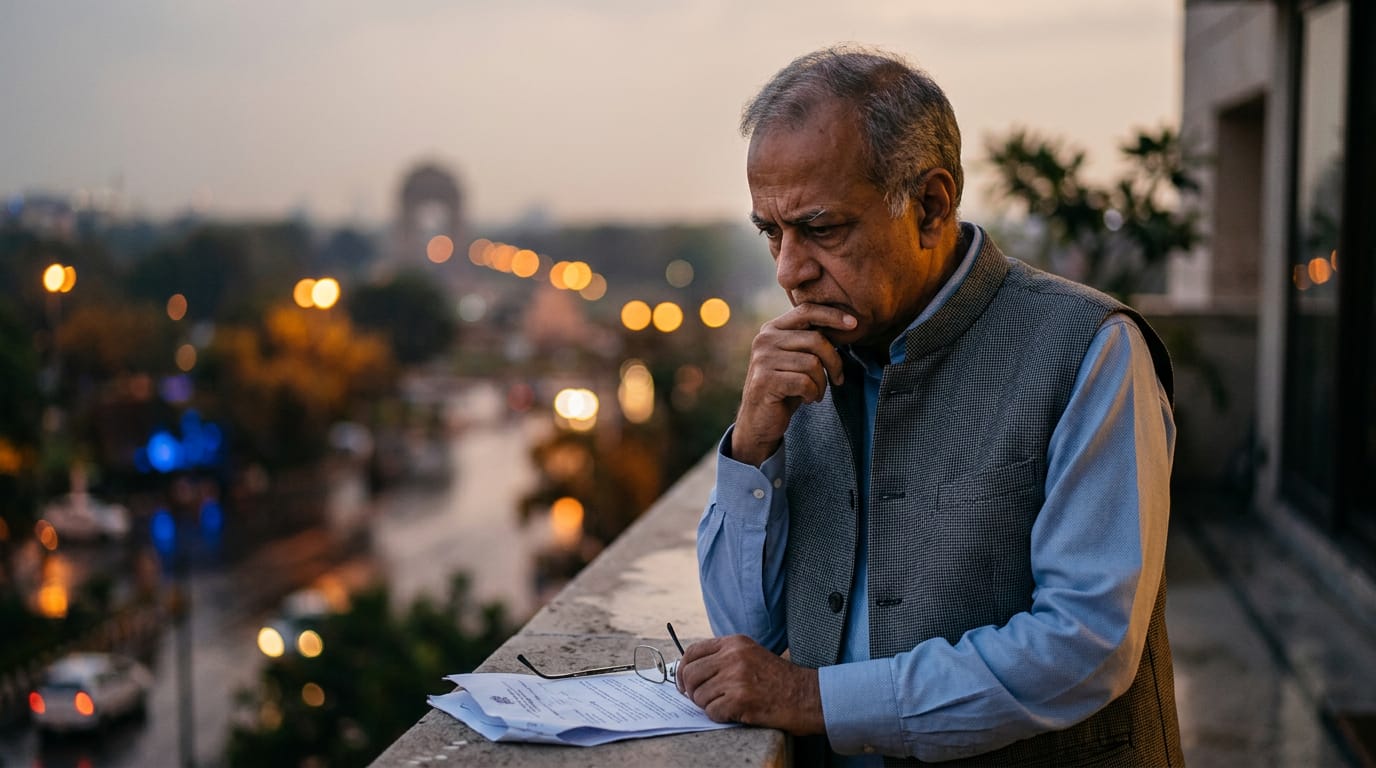
Mecca, Saudi Arabia – A newly forged trilateral defense agreement between Saudi Arabia, Pakistan, and Turkey, signed in the holy city of Mecca on August 7, 2026, has signaled a significant realignment in West Asian security architecture, prompting careful observation from New Delhi. Dubbed the "Mecca Joint Defence Agreement" (MJDA), the pact enshrines a mutual defense clause, declaring that an armed attack against any one of the three signatory nations will be treated as an attack against all. While proponents assert the agreement aims to bolster collective deterrence and promote regional stability, its strategic implications for India, particularly concerning its long-standing rivalry with Pakistan and its extensive interests in the Middle East, are under intense scrutiny.
The accord, formalized at Mecca's Al-Safa Palace, carries considerable religious and diplomatic symbolism, elevating its perceived stature beyond a conventional military alliance. It is described as an extension of a prior Strategic Mutual Defence Agreement between Saudi Arabia and Pakistan, signed in September 2025, which also contained a collective security clause. The MJDA pledges enhanced defense cooperation across all domains, potentially encompassing joint military exercises, troop training, defense technology collaboration, and intelligence sharing.
The Alliance Unveiled: Objectives and Members
The Mecca Joint Defence Agreement unites three influential Muslim-majority nations – Saudi Arabia, a key regional power and custodian of Islam's holiest sites; Pakistan, a nuclear-armed state with a substantial military; and Turkey, a NATO member with a burgeoning defense industry and strategic ambitions spanning Europe, the Middle East, and Central Asia. The official joint statement emphasized that the pact's primary objective is to strengthen collective deterrence against aggression and foster peace, security, and stability in the region, rather than targeting any specific country.
Notably, analysts highlight the absence of a confirmed extended nuclear deterrence from Pakistan to its new partners, nor is there an immediate establishment of a unified joint command structure. This suggests that while the agreement carries significant symbolic weight, its practical operationalization will evolve over time. The timing of the agreement is also seen by some as a response to perceived shifts in the global security landscape and a re-evaluation of external security dependencies, particularly in West Asia.
This trilateral agreement is distinct from the broader Islamic Military Counter Terrorism Coalition (IMCTC), also initiated by Saudi Arabia in 2015, which comprises 43 Muslim-majority states and focuses on counter-terrorism efforts across ideological, communicative, financial, and military domains. While Pakistan's former army chief, General Raheel Sharif, served as the first commander of the IMCTC, the Mecca Joint Defence Agreement represents a more tightly-knit mutual defense pact among a select group of nations.
India's Strategic Calculus and Regional Interests
For India, the emergence of the Mecca Joint Defence Agreement presents a complex strategic challenge that warrants careful diplomatic maneuvering. New Delhi has officially reacted with caution, stating that it would study the implications of such strategic mutual defense pacts for its national security and regional and global stability. A primary concern for India revolves around the potential for long-term diplomatic and security challenges, especially given Pakistan's historical stance and its declared policy of zero tolerance against cross-border terrorism.
India maintains critical strategic and economic interests across the Middle East. The region is vital for India's energy security, provides crucial maritime and coastal security, and ensures unimpeded access to international shipping routes in the Arabian Sea, Red Sea, and Persian Gulf. Furthermore, nearly 10 million Indian expatriates reside in the Gulf region, contributing substantially to India's economy through remittances. India's foreign policy in the region has been characterized by "multi-alignment," fostering strong, simultaneous ties with diverse players, including the United States, United Arab Emirates, Israel, and Saudi Arabia, alongside its long-standing engagement with Iran.
Potential Implications and Evolving Dynamics
The core concern for India is that the new pact could enable Pakistan to project its strategic rivalry with India onto a broader regional stage, linking South Asian dynamics with those of the Middle East. This potential shift in the strategic map, even if geographical realities remain unchanged, requires India to consider new dimensions in its security planning. Pakistan, facing its own economic and political challenges, views this agreement as an opportunity to solidify its strategic relationship with Saudi Arabia, secure deeper military cooperation, and potentially gain economic and diplomatic benefits, thus elevating its external standing.
However, some analysts suggest that India should avoid overstating the threat posed by the new alliance. They argue that India's substantial economic power, advanced technological base, robust defense capabilities, and growing global influence make it too large and strategically important to be fundamentally redefined by any regional alliance. Furthermore, the signatory nations – Saudi Arabia, Pakistan, and Turkey – each possess distinct strategic priorities. While Pakistan's primary security focus remains India and the Kashmir issue, Turkey faces challenges related to Syria, Kurdish groups, and the Eastern Mediterranean, and Saudi Arabia is preoccupied with Iran and the Houthi conflict. These varied interests mean the pact may not automatically coalesce into an anti-India military bloc.
Navigating the Future: India's Diplomatic Path
In response to these evolving regional dynamics, India is expected to continue its pragmatic and autonomous foreign policy approach. Diplomatically, New Delhi will likely aim to preserve its strong bilateral ties with Saudi Arabia, preventing any situation where Riyadh might feel compelled to choose sides. This involves sustained engagement with all regional partners and emphasizing India's role as a stabilizing force that prioritizes multipolarity, economic integration, and strategic autonomy.
Strategically, India may accelerate its investments in defensive capabilities, particularly in counter-drone and air-defense systems, to counter any potential threats that might emerge from heightened regional military cooperation. Furthermore, New Delhi is expected to expand its practical security partnerships with other nations like Israel, France, the United Arab Emirates, and Oman, forging alliances based on shared interests rather than ideological blocs.
The Mecca Joint Defence Agreement undoubtedly marks a new chapter in West Asian security. While its long-term impact on regional power balances and India's strategic landscape will continue to unfold, New Delhi is poised to navigate these developments with a blend of measured diplomacy, strategic foresight, and continued emphasis on its comprehensive national strength. The challenge for India will be to ensure that the evolving regional architecture does not become a conduit for externalizing its historical rivalries, but rather serves to reinforce its position as a major global player.


