New U.S. Dietary Guidelines Spark Outcry, Experts Decry "Inverted" Pyramid Recommendations
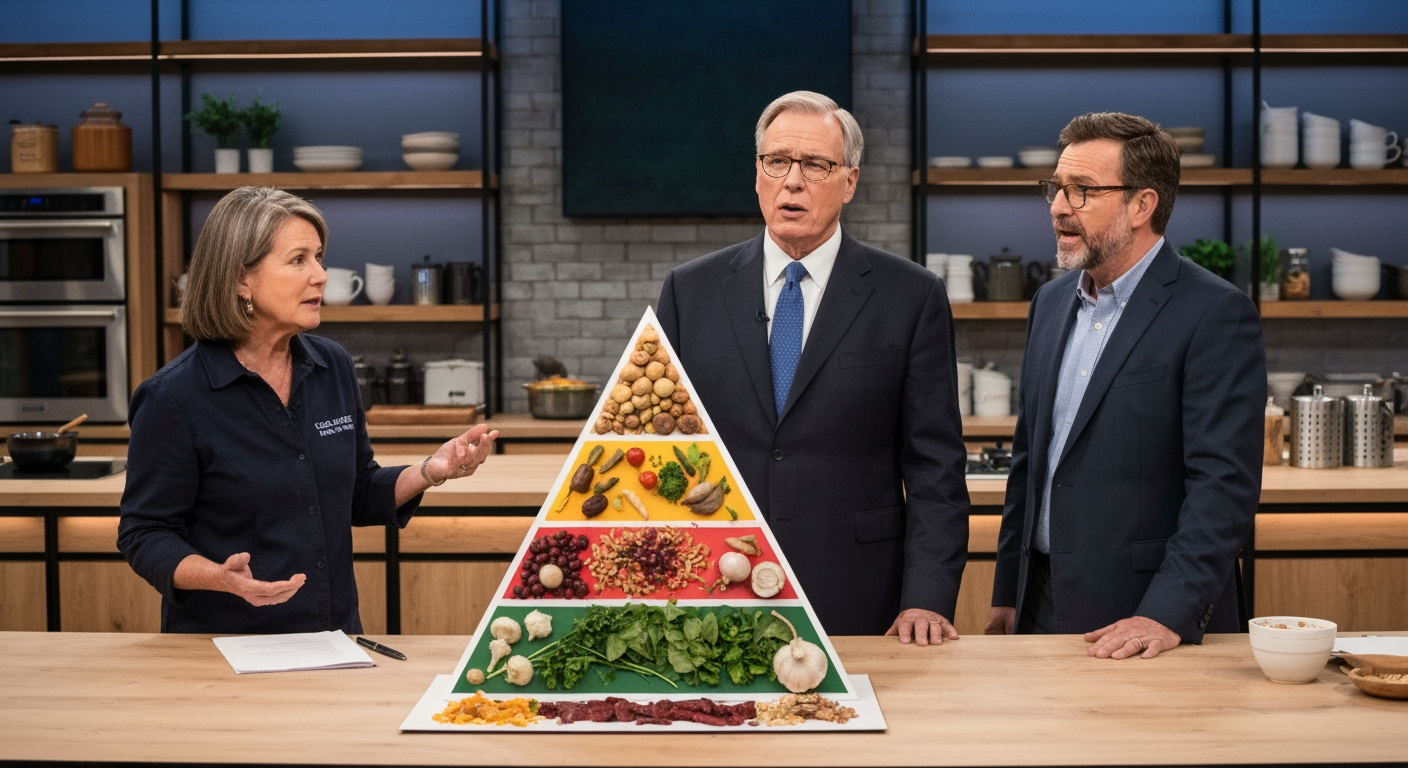
Washington D.C. — The U.S. government's recently unveiled 2025-2030 Dietary Guidelines for Americans, featuring a striking "inverted food pyramid," have ignited a firestorm of criticism from nutrition experts who argue the new visual representation contradicts established science and could exacerbate public health challenges. Released on January 7, the guidelines aim to reset federal nutrition policy, prioritizing "real food" but drawing significant concern over its emphasis on meat and full-fat dairy at the expense of other food groups.
The Controversial Inversion: Prioritizing Protein and Fat
The new guidelines represent a substantial shift from previous iterations like MyPlate, which used a plate graphic to illustrate balanced meals. Instead, the Department of Health and Human Services (HHS) and the Department of Agriculture (USDA) have reintroduced a pyramid, albeit an inverted one. This new visual places meat and full-fat dairy, along with olive oil and vegetables, at the broad top of the triangle, while grains and fruits appear at the bottom. This arrangement suggests these top-tier foods are the most significant components of a healthy diet, a visual interpretation that many dietitians immediately questioned.
Critics argue that this visual hierarchy sends a confusing message, particularly concerning saturated fats. While the written guidelines maintain the long-standing recommendation that no more than 10 percent of daily calories should come from saturated fats, the prominence of red meat, full-fat milk, and cheese in the visual pyramid may lead the public to believe these limits have been relaxed. This potential for misinterpretation is a major point of contention, with some experts fearing that individuals may ignore the detailed text and focus solely on the graphic. Additionally, for the first time since their inception in 1980, the guidelines do not set daily limits for alcohol consumption, an omission that has also drawn concern from health organizations.
A Shifting Landscape of Dietary Advice: From Pyramid to Plate and Back
The history of U.S. dietary guidelines is marked by continuous evolution and frequent controversy. The first Food Guide Pyramid, introduced by the USDA in 1992, promoted a diet rich in grains, vegetables, and fruits, with moderate amounts of protein and dairy, and minimal fats and sweets. However, this early pyramid faced criticism for its broad categories and lack of specificity, particularly regarding carbohydrate quality. In 2011, the USDA replaced the pyramid with MyPlate, a simpler, plate-shaped graphic designed to encourage a variety of foods, including fruits, vegetables, whole grains, lean meats, and low-fat or fat-free dairy products.
MyPlate was lauded by some for its user-friendliness and focus on portion control, though it also had its detractors. Despite its aims for clarity, a 2022 study revealed that a significant portion of Americans were unfamiliar with MyPlate, indicating a challenge in public uptake and understanding. Harvard researchers, while initially supportive of MyPlate, later developed their "Healthy Eating Plate," which offered more specific recommendations, such as distinguishing between healthy and unhealthy fats, limiting refined grains, and cutting back on red and processed meats. The continuous adjustments highlight the inherent difficulty in translating complex nutritional science into easily digestible public health messages.
The Science and the Standoff: Conflicting Messages and Public Health Goals
The latest guidelines emphasize a return to "real food" and a significant reduction in ultra-processed foods, refined grains, and added sugars, a stance largely supported by health professionals. However, the increased prominence of protein, including red meat and full-fat dairy, has raised questions about the scientific basis for these recommendations. Some experts suggest that while increased protein intake is a focus, the guidelines do not adequately distinguish between different protein sources, potentially leading to increased consumption of red meat, which has been linked to negative health outcomes when consumed in excess.
The American College of Cardiology's Prevention of Cardiovascular Disease Section's Nutrition & Lifestyle Work Group, for instance, acknowledges the new guidelines confront the crisis of diet-driven chronic diseases by stressing the removal of added sugars and highly processed foods. However, they also highlight the new recommendations regarding protein and fat as areas requiring careful consideration.
Industry Influence and Public Health Implications
A significant concern permeating the discussion around the new dietary guidelines is the potential for industry influence. Historically, U.S. dietary recommendations, including the original Food Pyramid and MyPlate, have been criticized for being overly influenced by the agriculture industry. Allegations suggest that the 2025-2030 guidelines may continue this trend. Reports indicate that several of the scientific experts involved in developing the new guidelines had recent financial relationships with the beef, dairy, or pork industries, raising questions about potential conflicts of interest. The National Cattlemen's Beef Association and the National Pork Producers Council have reportedly "welcomed" the new recommendations.
These guidelines carry substantial weight, governing what is served in schools and to the military, and influencing federal food assistance programs. With more than 70% of American adults classified as overweight or obese, and nearly one in three adolescents facing prediabetes, the nation is in the midst of a health crisis largely linked to diet and lifestyle. Nearly 90% of U.S. healthcare spending is directed toward treating chronic diseases, many of which are preventable and tied to food choices. Critics argue that if the new guidelines encourage higher consumption of certain foods without sufficient scientific backing, it could undermine efforts to combat these pervasive health issues.
Conclusion: Navigating the Complexities of Public Nutrition
The introduction of the "inverted food pyramid" in the 2025-2030 Dietary Guidelines marks a pivotal moment in American nutrition policy, prompting a robust debate among health professionals and the public. While the emphasis on whole, nutrient-dense foods and the reduction of ultra-processed items are generally lauded, the visual representation and specific recommendations surrounding protein and fat have generated considerable apprehension. The ongoing challenge for public health authorities remains to provide clear, evidence-based, and unbiased dietary guidance that effectively empowers Americans to make choices conducive to long-term health, free from conflicting messages or perceived industry influence. The impact of these new guidelines on the nation's health will be closely watched as they begin to shape food policies and individual eating habits across the country.
Related Articles


The Plague: A Medieval Scourge Transformed by Modern Medicine
The specter of the Black Death, a disease that ravaged continents and claimed tens of millions of lives in the Middle Ages, continues to loom large in humanity's collective memory. In the 14th century, this terrifying...


A Spreading Scourge: How Conflicts in Congo, Sudan, and Yemen Fuel a Global Health Crisis
Geneva, Switzerland – Ongoing conflicts in the Democratic Republic of Congo (DRC), Sudan, and Yemen are precipitating a catastrophic collapse in public health, transforming these war-torn nations into breeding grounds...