Nigeria Grapples with Treason Charges as Six Stand Accused in Alleged Plot to Overthrow President Tinubu
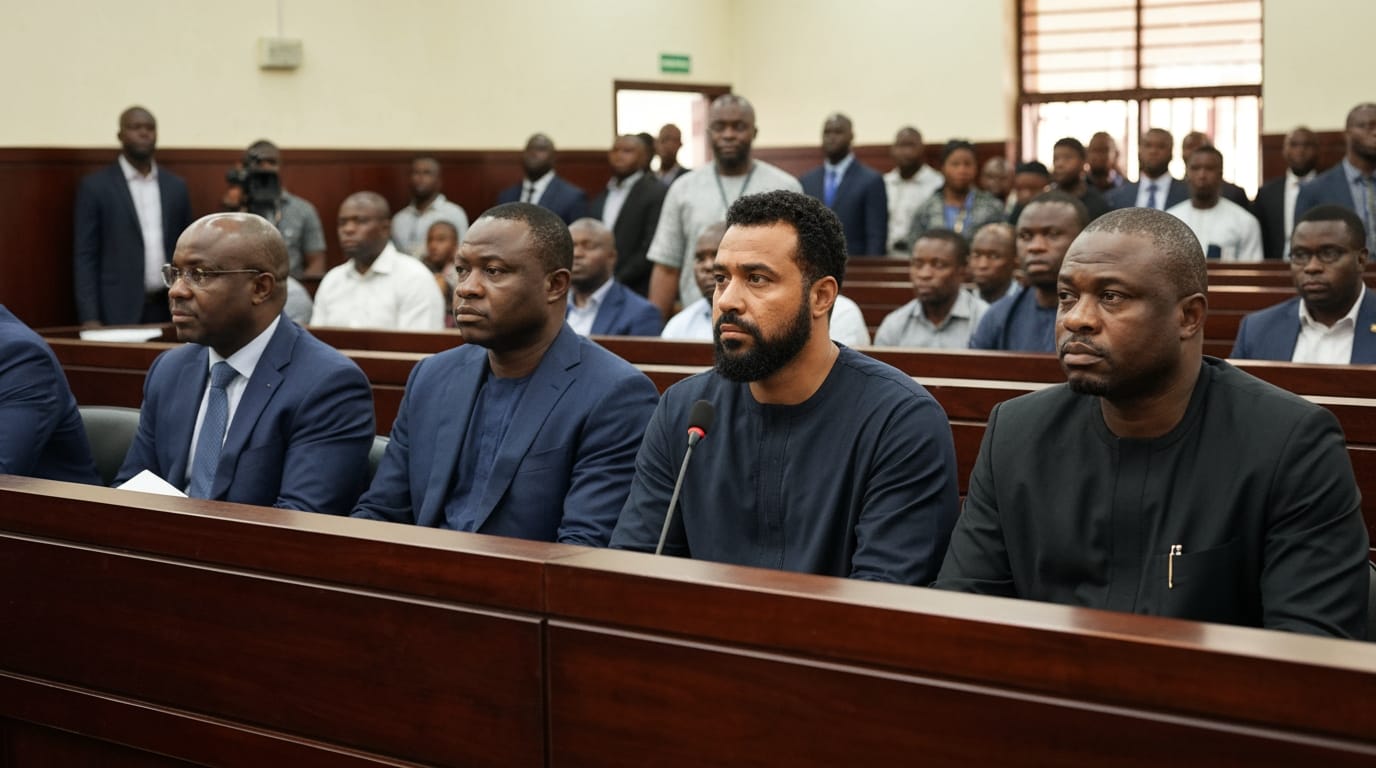
Abuja, Nigeria – In a development sending ripples through Nigeria's political landscape, authorities have brought charges of terrorism and treason against six individuals, including a retired major general and a serving police inspector, for allegedly plotting to overthrow President Bola Tinubu. The accusations, contained within a 13-count charge sheet, mark a serious challenge to the nation's democratic stability and underscore the persistent threat of political upheaval in the region. This dramatic turn of events comes as Nigeria, Africa's most populous nation, navigates a complex period of economic strain and heightened security concerns, set against a backdrop of recent military takeovers in neighboring West African countries.
The Allegations: A Conspiracy Against the State
The charges, filed by the Nigerian government, accuse the six individuals of conspiring "to levy war against the state to overawe the president of the Federal Republic." While a charge sheet seen by The Associated Press on Tuesday identified six individuals as being in custody, a seventh suspect, former Bayelsa state Governor Timipre Sylva, is reportedly still at large and stands accused of concealing the alleged plot. Investigations into the alleged conspiracy reportedly commenced in early 2026, following a covert intelligence operation that initially identified 40 suspects, including senior military officers, a police officer, and civilians.
Sources suggest the alleged plotters originally aimed to disrupt President Tinubu's inauguration in May 2023 but deferred their plans due to insufficient funds and logistical hurdles. The conspiracy was reportedly reactivated in 2025, with nearly N1 billion allegedly transferred in multiple tranches by former Governor Sylva to accounts operated by a Bureau De Change, purportedly to finance the operation. This detailed account of the alleged scheme highlights a calculated and persistent effort to destabilize the government, drawing in both retired and active security personnel, as well as civilian actors. The precise roles of each of the charged individuals in the extensive 13-count charge sheet are expected to emerge as legal proceedings commence.
Treason Under Nigerian Law: A Grave Offence
The gravity of the current charges is underscored by Nigeria's stringent laws against treason. Under Sections 37 and 38 of the Criminal Code, treason is broadly defined as levying war against the state with the intent to intimidate or overawe the President or a State Governor. This also extends to individuals who conspire to commit such acts, regardless of whether they are within or outside Nigeria. The law explicitly states that the offense applies to both citizens and residents of Nigeria and carries the severe punishment of death.
Legal interpretations clarify that "levying war" does not necessarily require actual fighting or the use of sophisticated military-grade weapons; an assemblage of persons with the common purpose of intimidating government officials is sufficient. The emphasis is on the intent and the concerted effort to use force for a treasonable goal. Conspiracy to commit treason is distinguished from general conspiracy charges to ensure precision in prosecution, requiring evidence of an overt act towards levying war. The legal process for these charges is rigorous, demanding strong evidence to prove intent and specific actions aimed at undermining the state's authority.
A Shadow of History: Nigeria's Enduring Struggle with Coups
The alleged plot resurrects painful memories of Nigeria's turbulent past, marked by frequent military interventions. The nation experienced five coups in the 20th century, with military rule dominating from 1966 to 1999, save for a brief democratic interlude. While Nigeria has enjoyed an unbroken democratic stretch since 1999, the recent surge in coups across West and Central Africa, including in Benin and Guinea-Bissau, casts a long shadow. Experts attribute these regional destabilizations to a confluence of factors, including disputed elections, constitutional crises, persistent security challenges, and widespread youth discontent.
Nigeria's history is replete with instances of coup attempts, both successful and failed. Notable figures like Major Chukwuma Nzeogwu, who led the first military coup in 1966, and later leaders such as Murtala Muhammed and Sani Abacha, all played significant roles in shaping the nation's political trajectory through force. The outcomes of these power struggles often ranged from execution to exile, highlighting the high stakes involved in challenging the state. The present charges serve as a stark reminder of this complex historical legacy and the continuous imperative to safeguard democratic institutions.
A Nation Under Pressure: The Current Political and Economic Climate
President Bola Tinubu assumed office in May 2023 following elections that, while broadly confirming expectations regarding regional vote distribution, were not without allegations of irregularities and protests from opposition parties. His presidency has been characterized by a determined effort to implement significant reforms aimed at revitalizing the economy, including the controversial removal of fuel subsidies and consolidation of the exchange rate regime. While these measures align with international recommendations, they have also resulted in severe short-term economic hardship for many Nigerians, manifesting as slow economic growth, sharp increases in consumer prices, a weaker currency, and pervasive insecurity.
These economic challenges have contributed to a noticeable decline in political stability, with Nigeria recently identified among the biggest losers in political stability in sub-Saharan Africa. Reports cite a weakening currency, rising inflation, and the exit of foreign businesses as contributing factors. Concerns have also been voiced by political observers about a perceived erosion of democratic balance, the suppression of opposition voices, and a drive towards political dominance without sufficient restraint. In October of the previous year, President Tinubu undertook a sweeping shake-up of the military leadership, a move reportedly aimed at bolstering national security in the face of escalating threats. The President has consistently articulated a commitment to prioritizing political stability, peace, and security, alongside regional economic integration, as foundational pillars of his administration.
Looking Ahead: The Path to Justice and Stability
The charging of six individuals in connection with an alleged plot to overthrow President Tinubu underscores the Nigerian government's resolve to counter any threats to its constitutional order. This case will undoubtedly be closely watched, both domestically and internationally, as it progresses through the courts. The outcome could have profound implications for public trust in government institutions, the stability of Nigeria's nascent democracy, and its broader role within a West African region increasingly grappling with political instability. As the legal proceedings unfold, the nation remains vigilant, hoping that justice will prevail and further solidify the foundations of its democratic governance.


