Nigerian Military to Court-Martial Officers Over Alleged Coup Plot Against Tinubu Administration
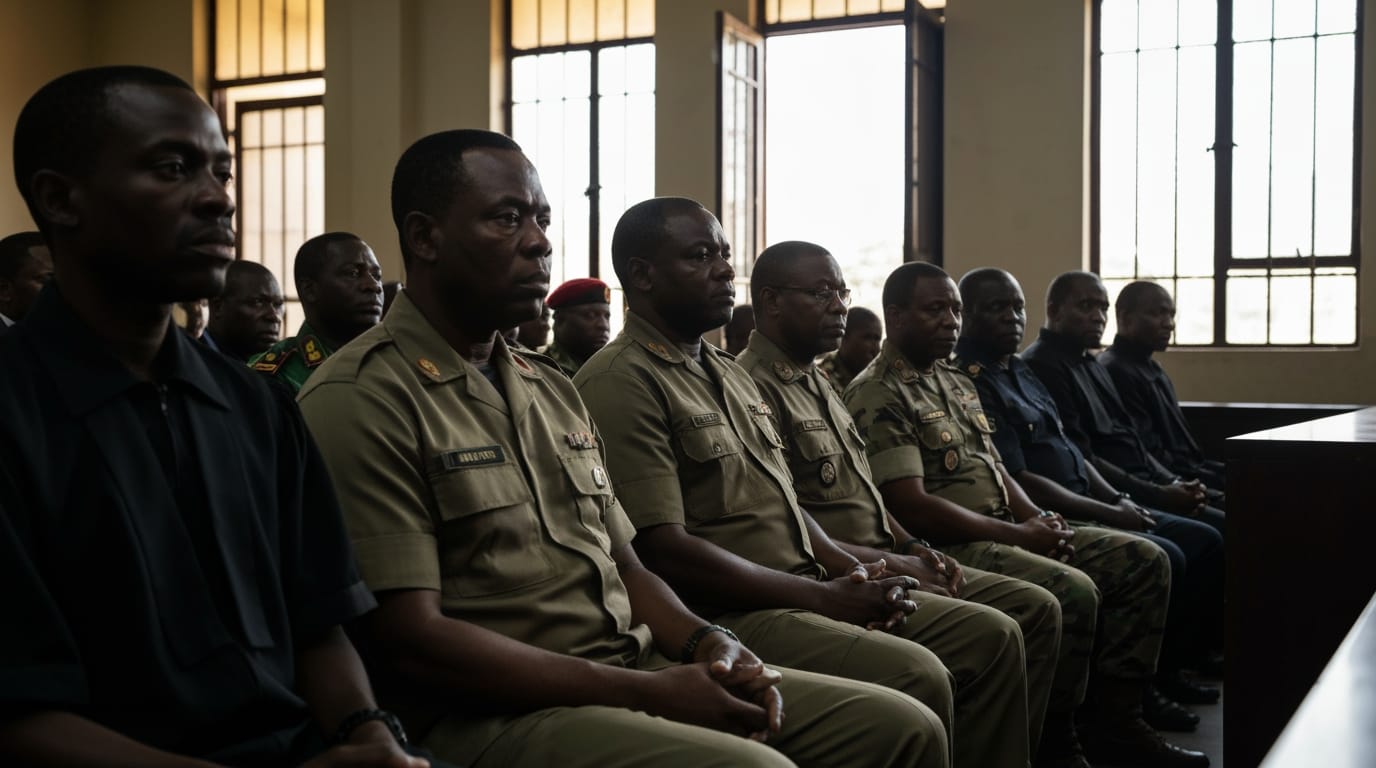
Abuja, Nigeria – The Nigerian military has officially confirmed that several of its officers will face trial for their alleged involvement in a plot to overthrow the government of President Bola Ahmed Tinubu. This significant announcement, made on Monday, January 26, 2026, marks a stark shift from earlier official denials, acknowledging a substantial threat to Nigeria's quarter-century of uninterrupted democratic rule. Investigations, which began following arrests in October 2025, have concluded, with findings pointing to a credible conspiracy to destabilize the West African nation.
Confirmation and the Gravity of Allegations
The Armed Forces of Nigeria (AFN) declared that those officers identified as having a case to answer will be formally arraigned before appropriate military judicial panels. Major General Samaila Uba, spokesperson for the Defence Headquarters, stated that the findings revealed a "number of officers with allegations of plotting to overthrow the government," conduct he described as "inconsistent with the ethics, values and professional standards required of members of the Armed Forces of Nigeria." While the exact number of officers to be tried was not immediately specified, earlier reports indicated that at least 16 officers were initially arrested. These individuals, ranging in rank from captain to brigadier general, were reportedly drawn from the Nigerian Army, Navy, and Air Force, with a majority from the Army. The charges they face, pertaining to an attempt to violently overthrow a democratically elected government, are considered treasonous offenses under Nigerian law, carrying severe penalties that can range from life imprisonment to the death penalty.
Unraveling the Conspiracy
The current confirmation brings into focus events from late September and October 2025. Reports of a potential coup plot first surfaced in late September 2025, leading to the cancellation of Nigeria's Independence Day military parade scheduled for October 1, 2025. While initial military statements downplayed the arrests of 16 officers in October 2025, attributing them to "issues of indiscipline and breaches of service regulations," ongoing investigations have now unveiled the true nature of the alleged offenses.
Details emerging from the investigation suggest a meticulously planned operation. The alleged plot involved officers, reportedly of "northerner extraction," led by Brigadier General Musa Abubakar Sadiq. There are also allegations of financial backing from former governor and petroleum minister Timipre Slyva. The conspirators reportedly intended to carry out their plot on October 25, 2025, with objectives including the assassination of President Tinubu and several other high-ranking government officials. In a swift response to the uncovered threat, President Tinubu undertook a significant reshuffle of the nation's top military brass on October 18, 2025, including the promotion of General Olufemi Oluyede to chief of defence staff. This reshuffle underscored the seriousness with which the administration viewed the intelligence of internal threats.
A Nation's Stance Against Military Intervention
Nigeria, Africa's most populous nation, carries a complex history marked by several military takeovers. From its independence in 1960 until 1999, the country endured a protracted period of military rule, punctuated by five successful coups and numerous attempts. The transition to civilian rule in 1999 ushered in an era of sustained democracy, making any threat of military intervention a deeply unsettling prospect for citizens and the international community.
The current situation also unfolds against a backdrop of increasing political instability in the wider West African region, where a string of recent military coups has undermined democratic institutions in several neighboring countries. Nigeria, as a regional leader, has often championed democratic governance and stability, even deploying its armed forces to help quell attempted putsches in other nations. The alleged internal plot, therefore, represents not only a domestic challenge but also a crucial test of Nigeria's commitment to constitutional order and its influence as a democratic bulwark in a volatile region.
The Road Ahead: Military Justice and Democratic Safeguards
The impending court-martial proceedings will be conducted in accordance with the Armed Forces Act and other applicable service regulations. Nigeria's military justice system, a legacy of British colonial rule, operates under a distinct set of laws and procedures, with trials often presided over by panels of military officers. The Defence Headquarters emphasized that these measures are "purely disciplinary and form part of ongoing institutional mechanisms to preserve order, discipline, and operational effectiveness within the ranks." The military's public commitment to professionalism, loyalty, and respect for constitutional authority highlights its intention to reinforce internal discipline and safeguard the integrity of the institution.
These trials are poised to send a strong message within the armed forces about adherence to the chain of command and loyalty to the constitution. The outcome will have significant implications for Nigeria's political landscape, potentially reinforcing public confidence in the durability of its democratic institutions and the rule of law. It also serves as a critical reminder of the constant vigilance required to protect civilian governance from internal and external threats, particularly in a region prone to political upheavals.
In conclusion, the decision to court-martial officers implicated in an alleged coup plot underscores Nigeria's firm resolve to defend its democratic gains. While the trials will navigate complex legal and military procedures, their overarching purpose is clear: to uphold constitutional governance, maintain discipline within the armed forces, and send an unequivocal message that any attempt to subvert the will of the people through undemocratic means will be met with the full force of the law. The nation now watches as these proceedings unfold, hopeful that justice will be served and that this chapter will strengthen the foundations of its enduring democracy.


