Nigeria's Evolving Insurgency Corridor Threatens National Stability, Regional Security
Abuja, Nigeria – Nigeria faces an escalating and increasingly complex security challenge as a new "insurgency corridor" emerges, shifting the battleground from its traditional northeastern strongholds to encompass wider swathes of the North West and North Central regions. This perilous expansion is marked by the infiltration of an al-Qaeda-affiliated group, Jama'at Nasr al-Islam wal Muslimin (JNIM), alongside a deepening alliance between ideological militants and local criminal networks, exploiting Nigeria's vast ungoverned spaces and porous borders. The evolving threat necessitates a multi-pronged response from Abuja, as the nation grapples with the humanitarian fallout and the intricate dynamics of regional instability.
The Widening Net of Insurgency
For over a decade, Nigeria has battled the insurgency primarily in its North East, confronting Boko Haram and its splinter faction, the Islamic State West Africa Province (ISWAP). However, the threat landscape has significantly diversified and expanded. Recent developments indicate the emergence of JNIM, an influential militant organization from the Sahel, which began establishing a presence in Nigeria around 2024-2025. JNIM, a merger of several al-Qaeda-linked factions formed in 2017, has solidified its power in Mali, Burkina Faso, and Niger, and now views Nigeria as a new frontier.
The group's entry into Nigeria has been opportunistic, leveraging existing vulnerabilities. It has forged alliances with local actors, notably the Lakurawa—a nomadic Fulani militia that transitioned from community defense to predatory extremism with jihadist leanings. JNIM has also reportedly sought connections with Ansaru, an al-Qaeda-aligned splinter group of Boko Haram, known to operate from northwestern forests like Kainji National Park. These partnerships have significantly blurred the lines between religiously motivated insurgency and criminal banditry, making it increasingly difficult for security forces to distinguish between ideologically driven violence and purely mercenary activities. This amalgamation of threats allows JNIM to infiltrate without immediate large-scale confrontations, gradually embedding itself within local power structures and criminal enterprises.
Exploitation of Ungoverned Spaces and Porous Borders
A critical factor enabling the expansion of this insurgency corridor is Nigeria's extensive network of ungoverned forest areas and poorly monitored borders. The country shares over 4,000 kilometers of land borders with four Francophone neighbors—Benin, Niger, Chad, and Cameroon—many of which are themselves grappling with severe security challenges. Despite the existence of thousands of official entry points, nearly 2,000 are reportedly unmanned, creating significant security loopholes that armed groups readily exploit for transit, smuggling, and weapon trafficking.
Forests have become strategic assets for these groups, serving as hideouts, training grounds, and launchpads for attacks. Sambisa Forest, long the symbolic and operational heartland for Boko Haram and ISWAP, is now complemented by other critical forest corridors. The Kamuku Forest along the Kaduna–Niger–Zamfara Axis has evolved into a major banditry and kidnapping corridor, facilitating attacks on highways, rail lines, and rural communities. Similarly, Falgore Forest, situated between Kano and the troubled North-West belt, is increasingly used as a transit and hideout zone. Other notorious forest strongholds include Rugu Forest along the Katsina–Zamfara Axis, Kuyanbana Forest in Zamfara, and Alawa Forest in Niger state, all instrumental in mass kidnappings, village raids, and extortion. These forests, often remote and difficult to access, provide ideal sanctuaries where the state's authority is minimal or absent.
Abuja's Multi-faceted Counter-Insurgency Strategy
In response to the evolving threat, the Nigerian government has initiated several strategic operations and policy adjustments. Recognizing that military force alone is insufficient, the approach integrates kinetic operations with efforts to secure ungoverned spaces and address root causes.
One key initiative is Operation Savannah Shield, a new joint military offensive launched in February 2026 in the North Central region. This operation targets terrorist networks, kidnapping syndicates, and armed groups operating across Kwara State and contiguous areas of Niger State. The mission aims to reclaim contested forest corridors, reinforce deterrence, and prevent the North Central region from becoming a secondary theater of entrenched insurgent activity. The success of this operation hinges on sustained operational persistence, accurate intelligence, and robust civilian-military coordination.
Parallel to military offensives, Nigeria has also deployed over 7,000 forest guards across seven vulnerable states. This initiative seeks to reclaim forests from criminal exploitation by inserting terrain specialists into a broader national security strategy. Conceived as a federally coordinated, intelligence-led, and professionally trained force, these forest guards are tasked with denying insurgent groups the space, finance, legitimacy, and movement they require to thrive.
Furthermore, Operation Safe Corridor, a program coordinated by the Nigerian Armed Forces, continues its efforts to rehabilitate and reintegrate former insurgents. This initiative encourages defections by offering an alternative path for those willing to abandon violence, thereby weakening insurgent networks. The program includes rigorous screening, ideological reorientation, psychological counseling, literacy and civic education, and vocational training in various skills. Participants, primarily from Boko Haram and ISWAP, are then handed over to their respective state governments for reintegration.
The critical need for enhanced border security has also been highlighted. Military leaders, including the Chief of Defence Staff, have advocated for fencing Nigeria's borders and implementing strengthened surveillance mechanisms to curb the cross-border movement of armed criminals. With nearly 2,000 unmanned entry points, the call for improved border control underscores a vital aspect of national security.
Humanitarian Crisis and Regional Implications
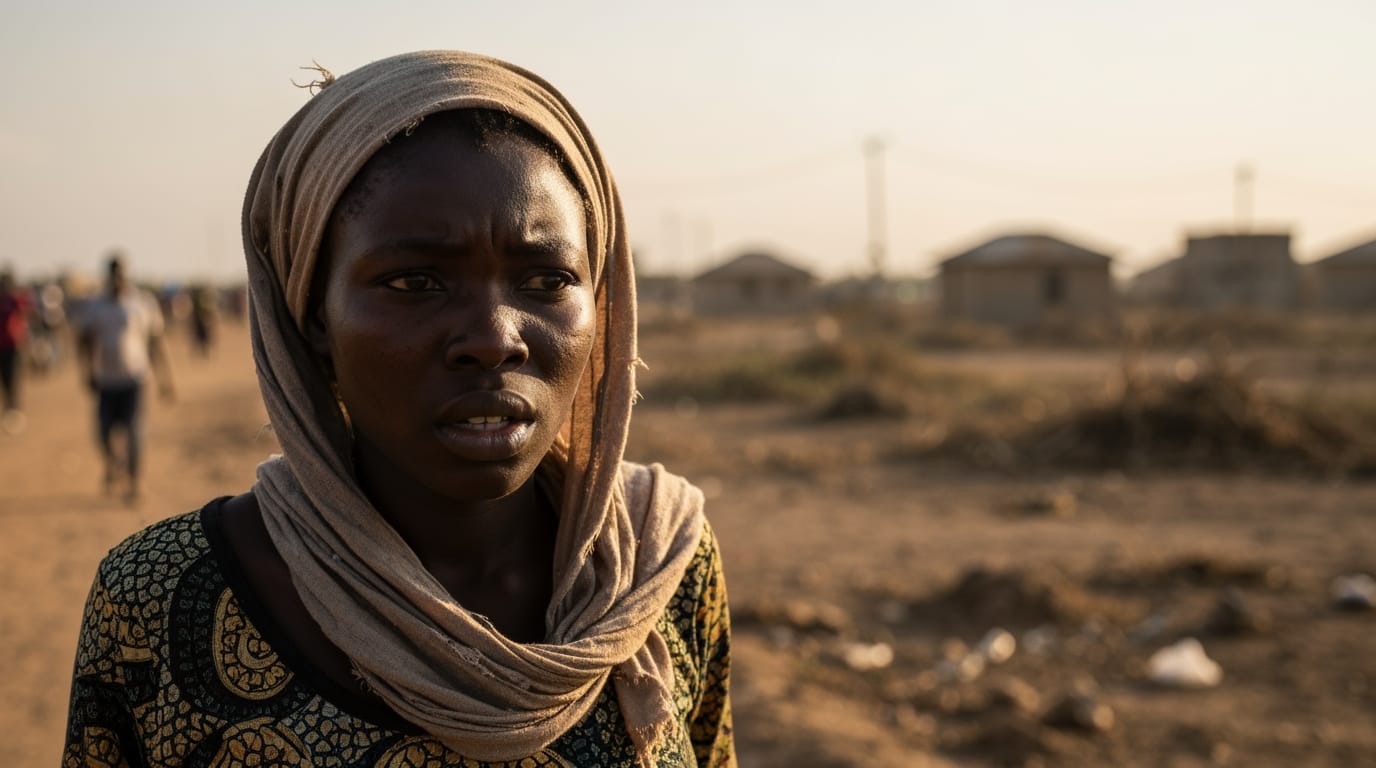
The expansion of insurgency and banditry has dire humanitarian consequences. According to the Minister of Humanitarian Affairs and Poverty Alleviation, over 6.7 million Nigerians are currently displaced and living in various Internally Displaced Persons (IDP) camps and host communities across the country. While not all displacements are directly attributable to insurgency, the activities of terrorist and criminal networks significantly worsen humanitarian conditions in already fragile communities, creating vulnerable routes for criminal networks.
The emergence of JNIM in Nigeria also carries significant regional implications. The group's established presence in the Sahel means that instability in Nigeria is now more closely linked to the broader security dynamics of West Africa. JNIM's calculated approach of building alliances, providing rudimentary governance in controlled areas, and exploiting local grievances poses a systemic threat that transcends national borders. The interconnectivity of these threats underscores the need for robust regional cooperation and sustained international support to stabilize the Sahel and prevent further spillover into Nigeria.
The evolving insurgency corridor presents a formidable challenge to Nigeria's stability and development. The infiltration of new militant groups, the blurring lines between terrorism and criminality, and the strategic exploitation of ungoverned spaces demand a comprehensive and adaptive response. While ongoing military operations and rehabilitation programs demonstrate Abuja's commitment, long-term stability will necessitate sustained economic development, stronger regional coordination, and improved governance in vulnerable communities to truly dismantle these burgeoning corridors of instability.


