Niger's Military Leader Solidifies Power with Extended Presidency
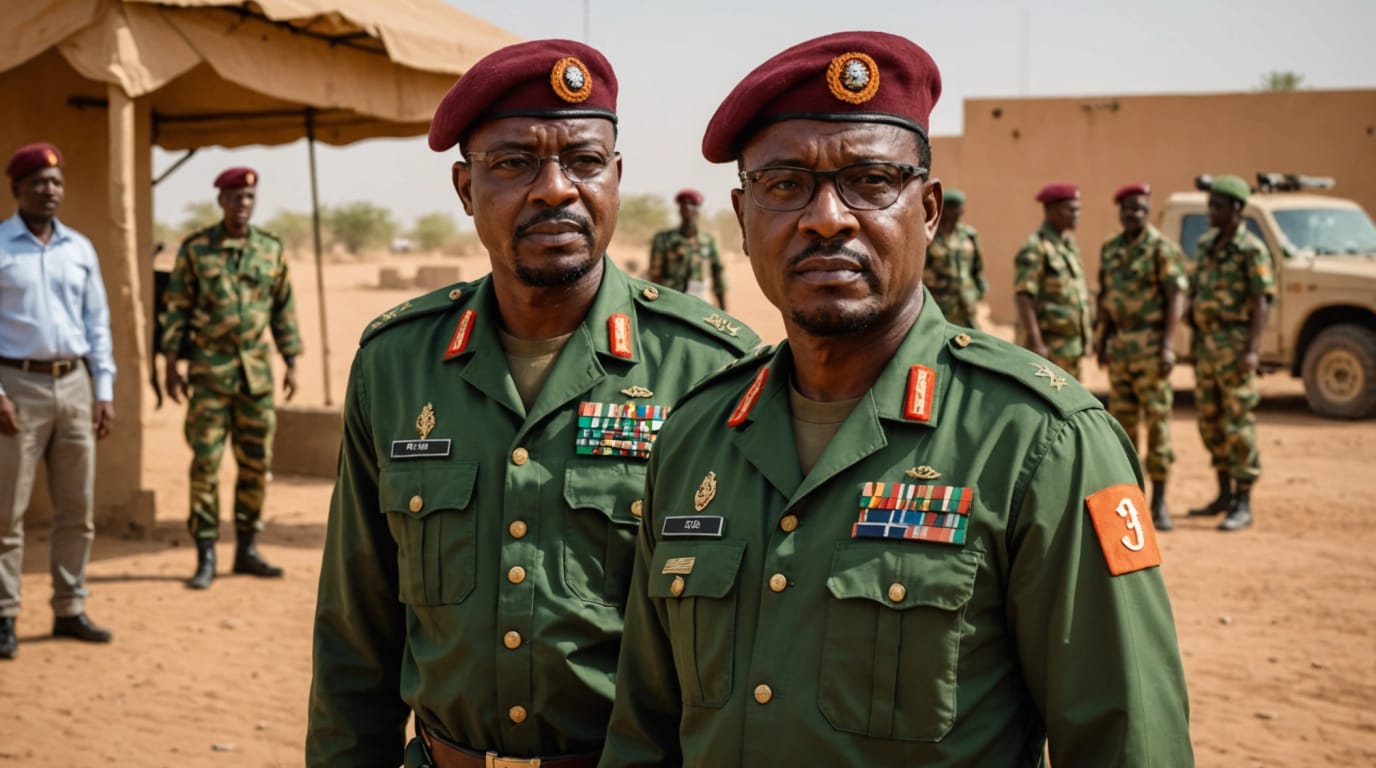
NIAMEY, Niger – Abdourahamane Tchiani, the leader of Niger's military junta, was officially sworn in as the country's transitional president on Wednesday, cementing his grip on power for a five-year term. The move defies regional and international pressure for a swift return to democratic governance after the coup that ousted democratically elected President Mohamed Bazoum in July 2023.
A Five-Year "Flexible" Transition
The swearing-in ceremony, held in the capital city of Niamey, marks the beginning of a new chapter for Niger under a charter that replaces the nation's constitution. Tchiani, who led the coup as commander of the presidential guard, has also been promoted to the rank of army general, further solidifying his authority. According to government officials, the five-year transition period is "flexible" and can be extended depending on the security situation, the progress of reforms, and the agenda of the Confederation of Sahel States. This confederation includes Mali and Burkina Faso, also governed by military leaders following coups.
The decision to extend the transition period has drawn criticism from various quarters. The Economic Community of West African States (ECOWAS) had previously rejected the junta's initial proposal for a three-year transition, deeming it unacceptable and threatening military intervention to restore democracy. In response, Niger, along with Mali and Burkina Faso, withdrew from ECOWAS, protesting the sanctions imposed by the bloc.
Consolidating Power and Shifting Alliances
Since seizing power, Tchiani's government has taken steps to consolidate its control. All political parties have been dissolved, effectively silencing opposition voices. The junta has also severed ties with traditional Western partners, including the United States and France, while strengthening its relationship with Russia. This shift in alliances has seen Russia providing military equipment and personnel to Niger.
The new charter also addresses the presence of foreign forces on Nigerien territory. It stipulates that the establishment of foreign military bases requires authorization by referendum, following consultation with the people. However, an exception is made in cases of "proven emergency," allowing the president to grant authorization by decree after consulting with the Refoundation Advisory Council, provided that the duration does not exceed the time necessary to stabilize the situation.
Security Concerns and Civil Liberties
The military junta initially justified the coup by citing rising insecurity due to jihadist violence. However, critics argue that the situation has worsened under the junta's rule. Insurgent and militia violence has intensified, particularly in the southwest of Niger, and the state's control is diminishing.
Furthermore, concerns have been raised about the restriction of civil liberties. Media freedom has been curtailed, and peaceful dissent has been suppressed. Former President Bazoum and his wife remain arbitrarily detained, and legal proceedings have been initiated against Bazoum to lift his presidential immunity so he can be prosecuted for alleged crimes.
Regional Implications and International Response
Niger's extended military rule has broader implications for the Sahel region and West Africa as a whole. It follows a troubling trend of prolonged military transitions in Mali and Burkina Faso, raising concerns about the future of democracy in the region. The inability of ECOWAS to enforce its democratic protocols has weakened the organization's regional influence.
The international community is recalibrating its approach to the situation in Niger. While ECOWAS has lifted sanctions, the United States has ended its military cooperation arrangement with Niger, ordering US troops to depart. Russia, on the other hand, has stepped up its engagement, providing diplomatic and security support to the junta.
A Bleak Future for Democracy?
The swearing-in of Abdourahamane Tchiani as transitional president for a five-year term casts a shadow over the prospects for a swift return to democratic rule in Niger. The junta's consolidation of power, the restriction of civil liberties, and the deteriorating security situation raise serious concerns about the future of the country.
While the junta maintains that the extended transition period is necessary to address the country's challenges, critics argue that it is simply a means for the military to entrench its rule. The coming years will be crucial in determining whether Niger can return to a path of democratic governance or whether it will remain under military control for the foreseeable future. The situation in Niger reflects a broader trend in West Africa, where military coups and prolonged transitions are undermining democratic progress and creating a fragile political landscape.


