Niger's Three-Year Military Rule: A Nation Grapples with Deepening Instability and an Uncertain Future
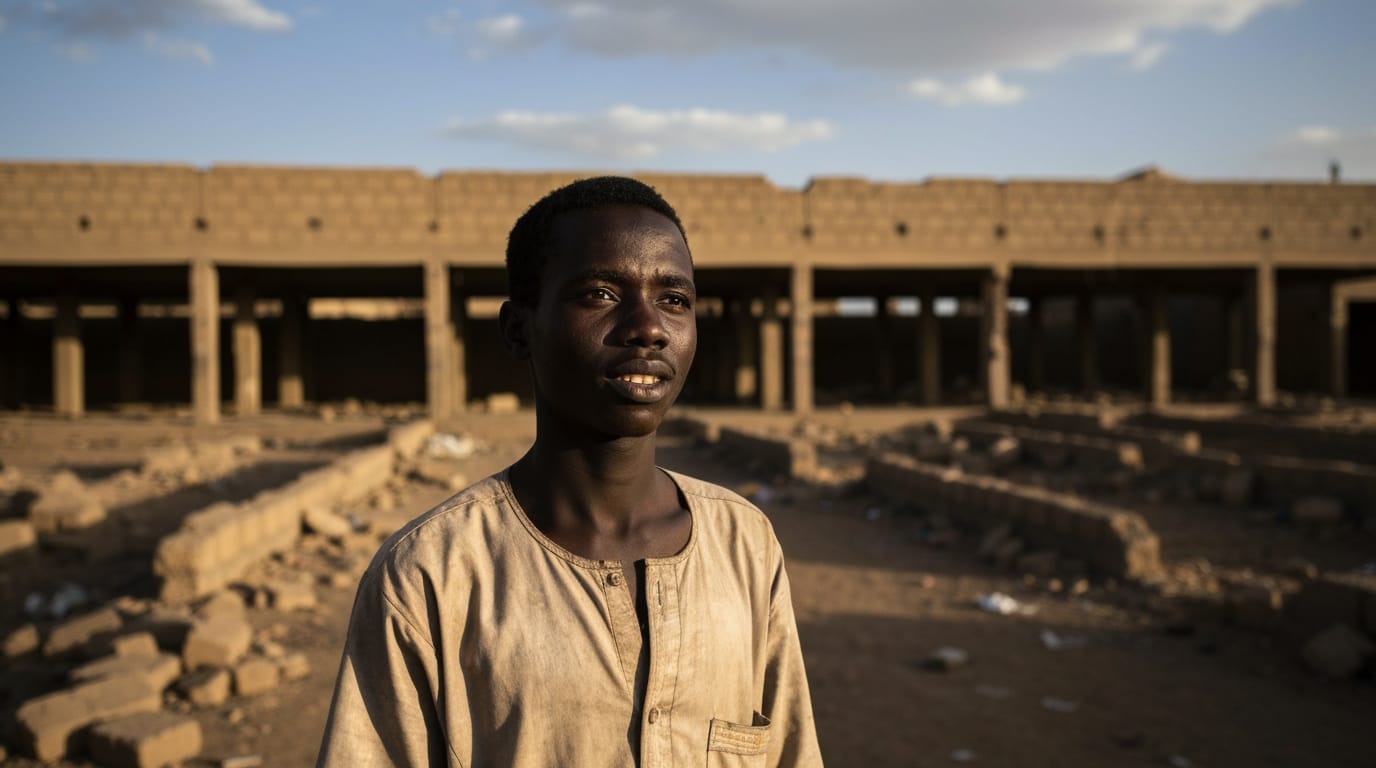
Three years after the July 26, 2023, military coup, Niger finds itself mired in a complex web of political repression, economic hardship, and persistent insecurity, far from the stability its military leaders promised. The overthrow of the democratically elected government of President Mohamed Bazoum ushered in an era marked by international isolation, a humanitarian crisis, and a significant geopolitical realignment away from traditional Western allies towards new partnerships. As the junta, led by General Abdourahamane Tchiani, consolidates its power, the West African nation faces an increasingly precarious future with no clear path to civilian rule.
The Coup and its Immediate Fallout
The military takeover in July 2023 saw the presidential guard detain President Mohamed Bazoum, with General Tchiani subsequently declaring himself the new leader. This abrupt seizure of power triggered swift and stringent reactions from regional and international bodies. The Economic Community of West African States (ECOWAS) condemned the coup, imposing comprehensive economic and financial sanctions, including border closures, suspension of financial transactions, and a halt to electricity supply. ECOWAS initially issued an ultimatum threatening military intervention to restore constitutional order, a move supported by then-newly elected Nigerian President Bola Ahmed Tinubu. However, this threat was not acted upon, allowing the junta to solidify its grip. The sanctions, intended to pressure the military authorities, instead brought Niger's economy to a virtual standstill, severely impacting its already vulnerable population. Retail food prices in Niamey's markets surged by an average of 75% during the six months of the embargo. Niger, one of the world's poorest countries, heavily relies on food imports, and these disruptions led to soaring prices and shortages. The suspension of Nigerian power, which accounted for 70% of Niger's electricity consumption, caused widespread blackouts, further hindering businesses and daily life.
Shifting Alliances and Growing Isolation
In response to regional pressure, Niger, alongside military-led Mali and Burkina Faso, announced its withdrawal from ECOWAS in early 2024, a move that became effective in January 2025. This decision allowed the junta to circumvent ECOWAS's demands for a rapid transition to civilian rule, potentially enabling them to remain in power for a longer duration, as initially suggested by a proposed three-year transition period. The coup also initiated a significant pivot in Niger's international relations. The junta demanded the withdrawal of French troops, who had been present for years to combat Islamist extremism, and abrogated security agreements with European partners. By December 2023, France completed the withdrawal of its military forces, creating a security vacuum in the Sahel. Similarly, the junta called for the departure of U.S. military units, describing their presence as "illegal" and prompting concerns about the future of counterterrorism efforts in the region.
Concurrently, Niger has fostered closer ties with Russia, mirroring a trend seen in neighboring Mali and Burkina Faso. Historically, Niger and Russia had limited contact, but following the 2023 coup, Russia emerged as the new government's preferred military partner. In November 2024, Niger's mining minister invited Russian firms to invest in its uranium and other natural resources, amid deteriorating relations with France. Rosatom, Russia's state nuclear energy corporation, was reportedly exploring opportunities to take over uranium facilities previously held by the French company Orano. This shift was further solidified by Russia appointing its first permanent ambassador to Niger in over three decades in January 2026. However, this new alignment is not without its complexities. In early 2026, Niger's military-led government abruptly ended intelligence cooperation agreements with both Russia and Turkey, citing poor performance of surveillance systems and operational setbacks. Despite this, Niger continues to expand military-industrial ties with Moscow, including signing a regional agreement with Mali and Burkina Faso in early 2025 for satellite-based telecommunications and surveillance services from Russia's Roscosmos.
A Deepening Humanitarian Crisis
The political instability and international sanctions have severely exacerbated an already fragile humanitarian situation in Niger. The country faces a multidimensional crisis driven by extreme climate events, growing insecurity, rapid population growth, and chronic poverty. As of September 30, 2024, Niger recorded 507,000 internally displaced persons (IDPs), a 12% increase from the previous year, with Tillabéri and Diffa regions most affected. By December 31, 2024, the number of displaced persons, primarily due to conflict, rose to 929,247. This figure further increased to 938,000 by September 30, 2025. Severe flooding has also intensified the crisis, impacting over 1.4 million people nationwide and damaging thousands of classrooms, further disrupting education for an estimated 330,000 children.
The crisis has led to a significant increase in humanitarian needs, with an estimated 4.5 million people requiring assistance in 2024. The sanctions imposed after the coup hindered the delivery of crucial humanitarian aid, with vital supplies, including nutritional and medical provisions, being held up at borders. This situation pushed over 3 million Nigeriens, already grappling with food insecurity before the coup, into a more dire state, with children facing severe risks of malnutrition. Humanitarian partners reached 3 million people across at least one sector by September 2024, but funding remained a significant challenge, with only 45% of the required funding reported. By December 2025, 3 million people were in need of humanitarian aid, with 984,366 forcibly displaced persons. The education sector remains particularly affected, with over 10% of the country's schools non-functional due to insecurity.
A Precarious Economy and Uncertain Political Path
Economically, Niger has experienced significant turbulence since the coup. The 2023 national budget saw a 40% reduction due to the "heavy sanctions imposed by international and regional organisations," leading to a substantial drop in both external and internal revenue. The sanctions also prevented Niger from accessing the regional financial market to finance its budget. Project work, such as the Kandadji dam, came to a halt. While GDP growth was initially projected to reach 6% in 2023, it was expected to fall to 2.3% if sanctions continued. Following the lifting of ECOWAS sanctions on February 24, 2024, economic activity is expected to resume, with GDP growth projected to recover significantly to 12.8% in 2024, making it one of Sub-Saharan Africa's fastest-growing economies. This recovery is anticipated to be driven by the agricultural sector, the initiation of oil exports from the Niger-Benin pipeline, and the resumption of general trade. The nationalization of the Somair uranium mine in June 2025 and the invitation for Russian investment in its natural resources signal a strategic economic shift away from former colonial powers.
Despite the economic shifts, the junta has provided no clear roadmap for a return to civilian rule. While General Tchiani stated in August 2023 that they would restore civilian rule within three years, no specific details were provided, and former President Bazoum remains under arbitrary detention. The absence of a concrete transition plan and the dissolution of democratic institutions suggest a prolonged period of military governance. In May 2026, the adoption of a five-year transitional presidency, framed around a "Refoundation Charter," effectively institutionalizes military authority and embeds Niger into an emerging anti-Western security architecture alongside Mali and Burkina Faso. This charter allows for the extension of the transition depending on the "security situation," providing a justification for indefinite military rule.
Human Rights Under Siege
Under military rule, Niger has witnessed a severe deterioration of its human rights situation and a systematic dismantling of democratic institutions. Human Rights Watch reported in July 2026 that the junta has intensified repression, dissolving all political parties and several independent unions, suspending numerous civil society groups, and detaining journalists under a broad cybercrime law. Political opponents have been stripped of their nationality, and the junta has criminalized consensual same-sex relations. The arbitrary detention of former President Bazoum, his wife, and other political figures continues to draw international condemnation, with the United Nations Working Group on Arbitrary Detention declaring their detentions arbitrary and calling for their release. In March 2026, a new criminal procedure code was adopted, setting pretrial detention in terrorism cases at 12 months, renewable once, raising concerns about due process. The authorities have also suppressed criticism by stripping exiled opposition figures of their Nigerien citizenship.
The security situation has also continued to worsen, with Islamist armed groups linked to Al Qaeda and the Islamic State repeatedly carrying out deadly attacks, particularly in the western Tillabéri region. Niger's security forces have responded with abusive counterinsurgency operations, including a military drone strike in January 2026 that killed at least 17 civilians. Niger's withdrawal from the International Criminal Court (ICC) in June 2026, following its exit from ECOWAS, reflects a broader effort by the junta to limit avenues for regional and international accountability.
Conclusion
Three years into military rule, Niger remains caught in a state of profound instability. The initial promises of improved security and economic conditions have largely given way to entrenched authoritarianism, widespread humanitarian suffering, and ongoing violence. While the lifting of ECOWAS sanctions offers a glimmer of economic recovery, the lack of a genuine commitment to democratic transition, coupled with the suppression of human rights and shifting geopolitical allegiances, paints a challenging picture for the nation. Niger's future hinges on the junta's willingness to engage in a credible process of returning to civilian governance and addressing the fundamental needs of its populace, which currently faces an uncertain path forward amidst escalating internal and external pressures.


