North Korea Escalates Tensions with Fresh Ballistic Missile Launches, Rejects Overtures for Dialogue
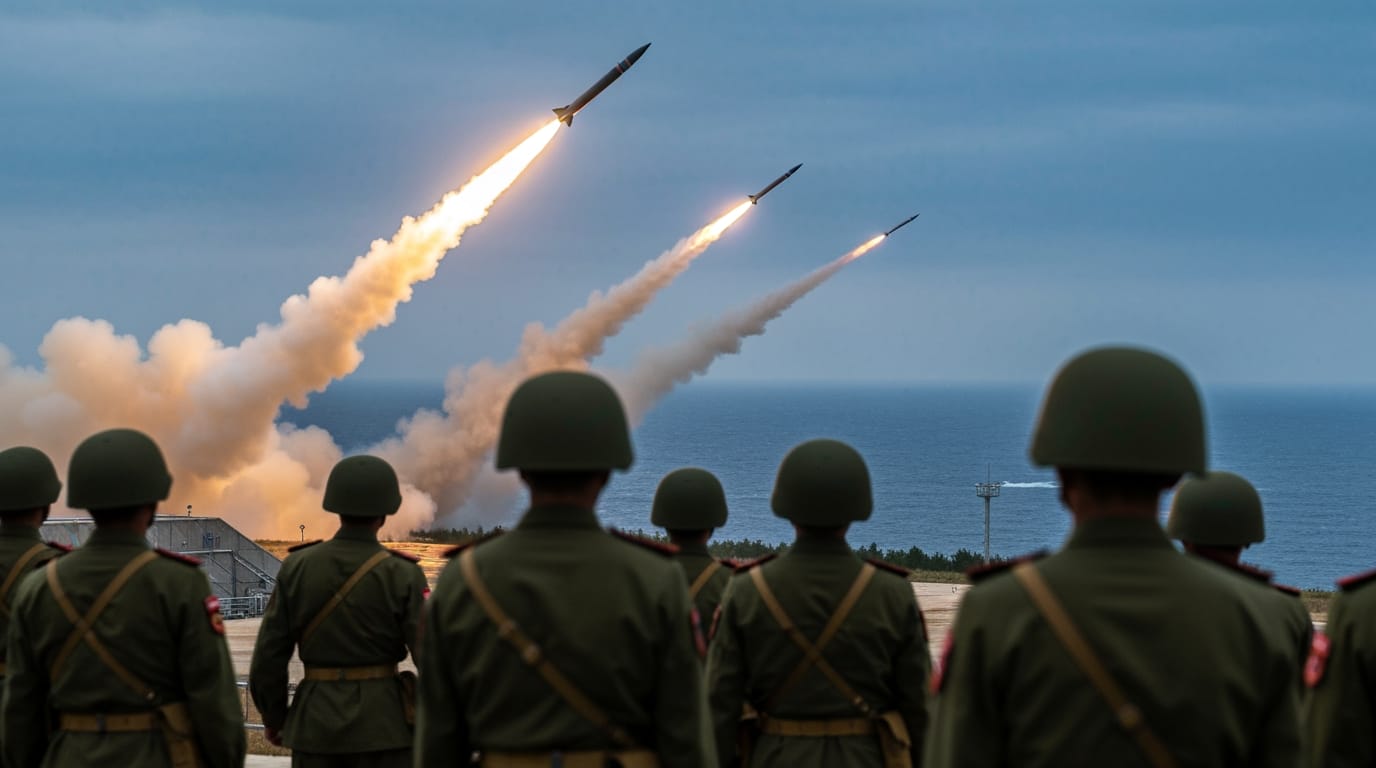
North Korea has launched multiple ballistic missiles towards its eastern waters in a series of tests, including a barrage fired on Wednesday, April 8, 2026, further heightening tensions on the Korean Peninsula. These provocations come amidst explicit rejections from Pyongyang of any prospects for improved relations with Seoul, casting a long shadow over regional stability and posing a renewed challenge to international diplomatic efforts. The latest missile firings underscore a persistent pattern of weapons development and defiance that has characterized the reclusive state's foreign policy for decades.
A Renewed Barrage of Provocations
The recent missile activities began on Tuesday, April 7, 2026, when South Korea's military detected the launch of an unidentified projectile from near North Korea's capital region. While details of this initial launch remained under analysis, South Korean media indicated that the projectile, likely a ballistic missile, displayed abnormal development in its early stages and disappeared from radar, suggesting a possible failure. This was swiftly followed by a more significant event the next day, Wednesday, April 8, when North Korea fired several short-range ballistic missiles from its eastern coastal Wonsan area. These missiles flew approximately 240 kilometers (150 miles) before splashing down in the East Sea (also known as the Sea of Japan).
South Korea's Joint Chiefs of Staff (JCS) promptly condemned the launches as provocative acts and violations of United Nations Security Council resolutions, emphasizing that such actions undermine peace and stability on the Korean Peninsula. In response, Seoul announced it has bolstered its surveillance posture and is closely coordinating with the United States to analyze the specifics of the launches. The back-to-back missile tests occurred just hours after a senior North Korean official delivered harsh criticisms against Seoul's expressed hopes for warmer ties, clearly articulating Pyongyang's lack of intention to engage in dialogue. This exchange included a statement from Jang Kum Chol, first vice minister at Pyongyang's Foreign Ministry, who declared South Korea would remain the North's "most hostile enemy state." This rhetoric followed South Korean President Lee Jae Myung's expression of regret over civilian drone flights into North Korea, a gesture that Kim Yo Jong, sister of North Korean leader Kim Jong Un, had initially praised for its "honesty and courage" but coupled with renewed threats should such flights recur.
Decades of Accelerated Missile Development
North Korea's ballistic missile program dates back to 1984, but the pace and sophistication of its tests have significantly accelerated under the leadership of Kim Jong Un. The country has developed and tested a diverse array of missile types, ranging from short-range ballistic missiles (SRBMs) and intermediate-range ballistic missiles (IRBMs) to intercontinental ballistic missiles (ICBMs), cruise missiles, and submarine-launched ballistic missiles (SLBMs). Pyongyang has also made claims of testing hypersonic weapons, though their actual capabilities remain debated.
A notable trend in recent years has been North Korea's focus on enhancing the range, mobility, survivability, and secrecy of its missile launch operations. This includes a strategic shift towards solid-fueled missile technology, exemplified by systems such as the Hwasong-18 ICBM tested in 2023, the Hwasong-19, and the Hwasong-16B IRBM, which was reportedly tested in 2024 and again in early 2025. Solid-propellant missiles offer significant operational advantages, as they are easier to move and conceal, and can be launched with minimal preparation time compared to their liquid-fueled counterparts. In a further display of its commitment to advanced weaponry, North Korea reportedly conducted a ground test in early April 2026 of a "newly upgraded" solid-propellant rocket motor. This motor, claimed to be 20% more powerful than a predecessor revealed in September 2025, is primarily intended for use as the first stage of an ICBM and could enable the delivery of heavier payloads, including multiple warheads, a capability Pyongyang has been seeking to develop since 2021. This relentless pursuit of advanced missile capabilities, alongside its nuclear program, forms a core component of North Korea's national security strategy, aiming to deter perceived external threats and project its military prowess.
International Condemnation and Stalled Diplomacy
The recurring missile launches consistently draw strong condemnation from the international community, particularly from South Korea, Japan, and the United States. These nations frequently engage in joint military exercises, which North Korea, in turn, often cites as justifications for its own weapons tests, creating a cycle of escalating tensions. International bodies, such as the G7 group of leading industrial nations and the United Nations Security Council, have repeatedly called for North Korea to cease its provocative actions and comply with UN resolutions prohibiting its ballistic missile and nuclear programs.
However, efforts to impose unified and robust responses through the UN Security Council have frequently encountered obstacles. Both China and Russia, permanent members of the council, have often opposed stricter measures against Pyongyang, citing concerns over unilateral sanctions and blaming U.S.-led military drills for fueling the tensions. This division within the Security Council complicates the international response, allowing North Korea to continue its weapons development largely unchecked by unified global pressure. Japan, a close neighbor, has expressed particularly strong concerns, with its officials stating that North Korean missiles are "more threatening than ever" due to their trajectories and flight times, which increasingly pose risks to international civil aviation and maritime traffic.
Underlying Motivations: Deterrence, Leverage, and Survival
North Korea's consistent missile testing is driven by a complex mix of motivations. At its core is a perceived need for self-defense and deterrence against what it views as hostile policies and military threats from the United States and its allies. The development of sophisticated missile and nuclear capabilities is seen as an essential guarantee for the survival of the Kim regime. Furthermore, these tests serve as a critical means for Pyongyang to advance its military technology, continuously refining its ability to deliver both conventional and nuclear payloads across varying ranges, including intercontinental reach.
Beyond military imperatives, missile launches frequently serve as a tool for political leverage on the global stage. By demonstrating its growing military might, North Korea aims to command attention, extract concessions, and ultimately compel the international community to recognize its status as a nuclear-armed state. Domestically, the development and display of powerful weaponry play a crucial role in bolstering national pride and solidarity, reinforcing the legitimacy of Kim Jong Un's leadership amidst an often isolated and economically struggling populace. The recent outright rejection of dialogue with South Korea, despite Seoul's stated desire for improved relations, further suggests that Pyongyang views its current military trajectory as non-negotiable and intends to continue its path of self-reliant defense.
An Uncertain Path Forward
The latest series of ballistic missile launches by North Korea, coupled with its firm dismissal of diplomatic overtures from the South, signifies a deepening chasm in inter-Korean relations and a persistent challenge to regional and global security. The ongoing cycle of weapons development, testing, and international condemnation shows no immediate signs of abating, maintaining a state of elevated tension on the Korean Peninsula. With denuclearization talks largely stalled and diplomatic pathways fraught with mutual distrust, the international community continues to grapple with the unpredictable nature of North Korea's actions and the ever-present threat posed by its expanding arsenal. The path forward remains unclear, with the specter of further provocations looming over any prospects for lasting peace and stability in Northeast Asia.


