North Korea Test-Fires Two Submarine-Launched Strategic Cruise Missiles in Eastern Waters
The dual launches demonstrate advances in low-altitude sea-based strike capabilities that regional militaries find harder to detect and intercept before impact.
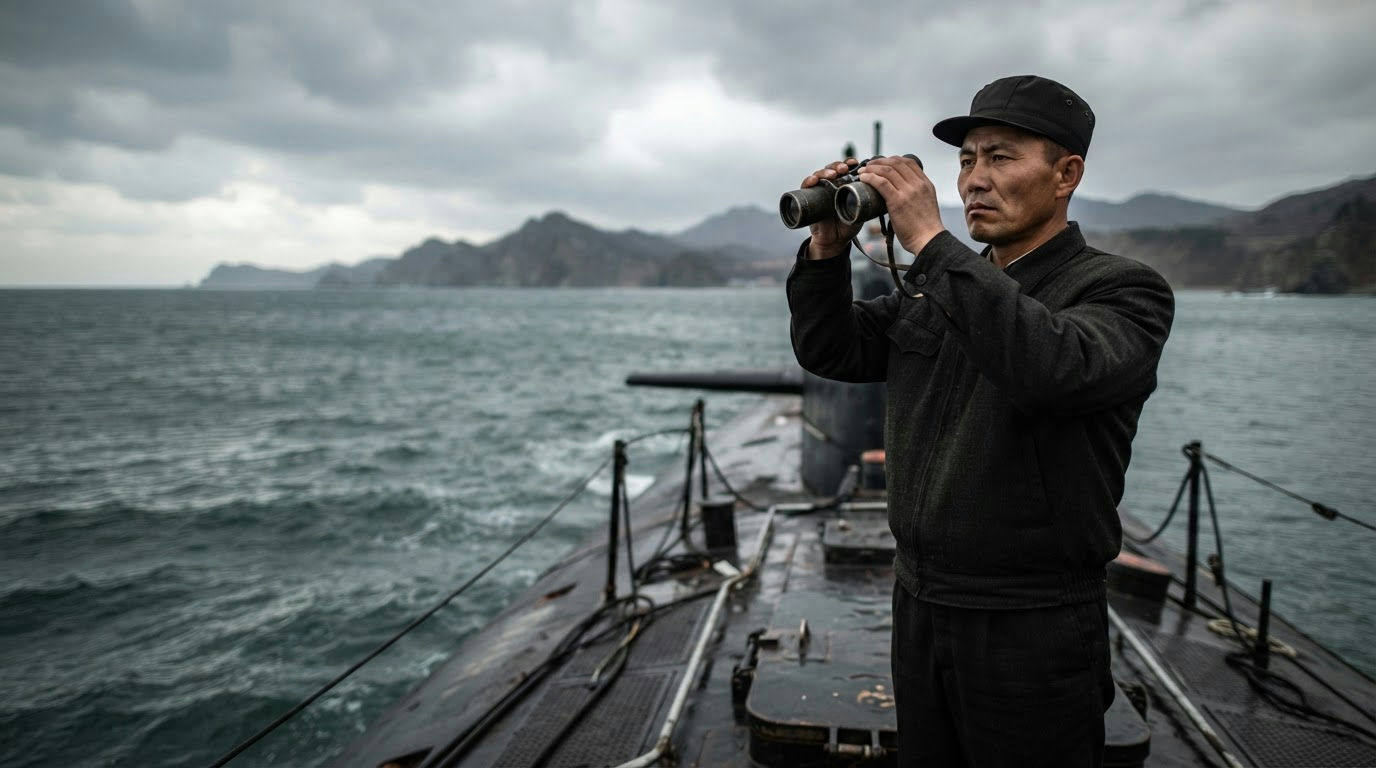
North Korea test-fired two types of submarine-launched strategic cruise missiles in its eastern waters on Wednesday, Oct. 14, 2026. State media announced the event on Thursday, reporting that senior military officials observed the tests at sea.
South Korea's Joint Chiefs of Staff monitored the missiles from pre-launch through their terminal flight phases. The military assessed that crews launched one missile from a vertical launch system and fired the second from a torpedo tube.
State media photographs showed one missile exiting the water vertically and another emerging at roughly a 45-degree angle. The Korean Central News Agency did not release flight distances, altitudes, or speeds. The agency also did not confirm whether launches occurred from an operational submarine or a submerged test barge.
South Korean military analysts said photos indicated the launches likely involved the Hero Kim Kun Ok, a modified submarine unveiled in September 2023. Shin Jong-woo of the Korea Defence and Security Forum stated that the tests indicate North Korea is running combat system checks before operational deployment.
Hong Min of the Korea Institute for National Unification assessed that testing dual launch angles carries tactical value. Hong noted vertical launch systems let missiles climb steeply and extend flight range while reducing warning times. North Korea designated the weapons as strategic, indicating systems built to deliver nuclear warheads.
The Korean Central News Agency stated that the test inspected underwater combat systems, trained naval crews, and demonstrated war deterrence reliability. The state outlet maintained that the launches had no adverse impact on the security of neighboring countries.
South Korea's military and regional analysts expressed concern over submarine-launched cruise missile capabilities. Low-altitude flight profiles combined with submerged launches significantly complicate early detection and interception. The launch followed North Korean tests of intermediate-range and hypersonic weapon systems on Sept. 20 and Oct. 3.
North Korea previously tested submarine-launched cruise missiles off its eastern coast in January 2024, firing its Pulhwasal-3-31 missile. Cross-border tensions recently worsened following diplomatic freezes and disputes along the Demilitarized Zone, where a landmine explosion injured South Korean soldiers.
Leader Kim Jong Un visited a newly established military museum showcasing intercontinental ballistic missiles on Oct. 11. South Korean analysts expect North Korea to test submarine-launched ballistic missiles next as it pursues nuclear-powered submarines with extended underwater endurance.