North Korea Threatens Response to US Carrier Deployment in South Korea
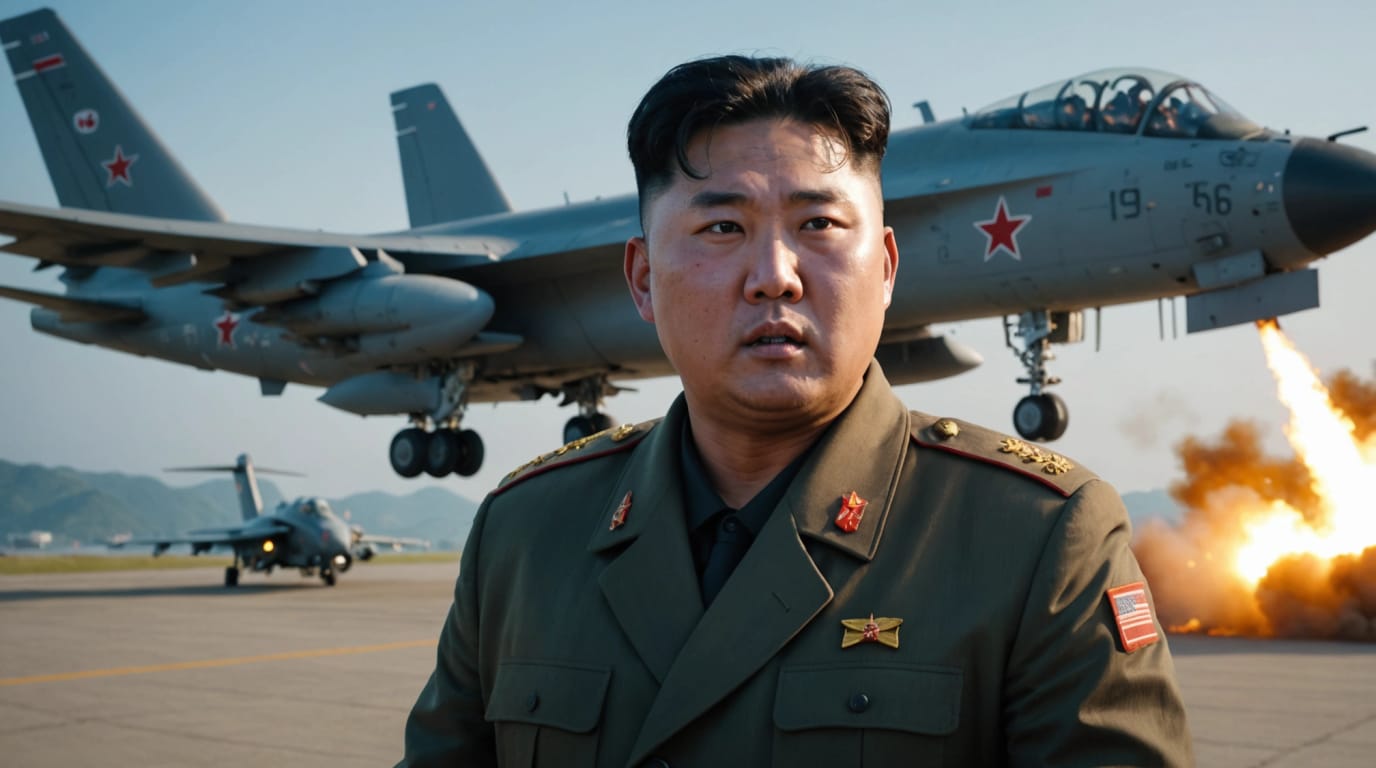
Tensions on the Korean Peninsula escalated sharply this week as North Korea, through a statement by Kim Yo Jong, the sister of leader Kim Jong Un, condemned the United States for what it described as "political and military provocations." The condemnation comes in response to the arrival of the USS Carl Vinson, a U.S. Navy aircraft carrier, in South Korea. Pyongyang warned of potential further missile tests and actions that could threaten regional security, raising concerns about a return to heightened instability in the area.
Kim Yo Jong's Warning
Kim Yo Jong, a prominent figure in the North Korean regime, issued a statement carried by state media, accusing the U.S. of displaying a "most hostile and confrontational will" through the deployment of the USS Carl Vinson and other military assets, as well as the execution of joint military drills with South Korea. She stated that North Korea is "seriously considering" measures to increase actions that could threaten the security of its enemies at a strategic level. This suggests the possibility of further weapons testing, potentially including missiles designed to reach the U.S. mainland or American military bases in the region.
US-South Korea Joint Military Exercises
The arrival of the USS Carl Vinson in Busan on Sunday is the latest in a series of temporary deployments of U.S. strategic assets intended to demonstrate the strength of the U.S.-South Korean alliance and enhance the interoperability of their combined forces. The U.S. and South Korea have been conducting joint military exercises, which North Korea routinely condemns as rehearsals for invasion. These exercises, including the upcoming "Freedom Shield" drills, involve thousands of troops and simulate various scenarios, including responses to North Korean attacks.
North Korea's Military Actions
North Korea views the presence of U.S. military assets in South Korea as a direct threat to its security and has often responded with missile tests. Just four days before the carrier's arrival, North Korea conducted cruise missile tests, marking its fourth missile launch event this year. Kim Jong Un has also emphasized the need for the military to be fully prepared to use nuclear weapons. In the past, North Korea has reacted to similar deployments with shows of force, including the launch of ballistic missiles and other military actions.
Impact on Diplomacy
The heightened tensions come at a time when there have been some signals of potential renewed diplomacy. U.S. President Donald Trump has indicated a willingness to reach out to Kim Jong Un to revive denuclearization talks. However, North Korea has not directly responded to these overtures and alleges that U.S.-led hostilities have intensified since Trump's return to office in January. Experts suggest that Kim Jong Un may be prioritizing his country's growing cooperation with Russia, particularly in providing weapons and troops for the war in Ukraine, and may not be inclined to engage in diplomacy with the U.S. until he believes this cooperation is no longer sustainable.
South Korea's Response
South Korea's Defense Ministry has responded to Kim Yo Jong's warning with a statement emphasizing its readiness to repel any provocations from North Korea, based on its strong military alliance with the U.S. The ministry dismissed Kim Yo Jong's statement as "sophistry" aimed at justifying North Korea's nuclear development and future provocations. South Korea remains committed to strengthening its defense capabilities and working closely with the U.S. to deter North Korean aggression.
The situation on the Korean Peninsula remains volatile, with the potential for further escalation. North Korea's threats and military actions, combined with the U.S. and South Korea's commitment to joint military exercises and displays of force, create a complex and unpredictable environment. The international community will be closely watching developments in the coming weeks and months, hoping to prevent a return to the heightened tensions and instability that have characterized the region in the past.


