North Korea's 9th Party Congress Convenes, Kim Jong Un Emphasizes Economy and Elevated National Standing
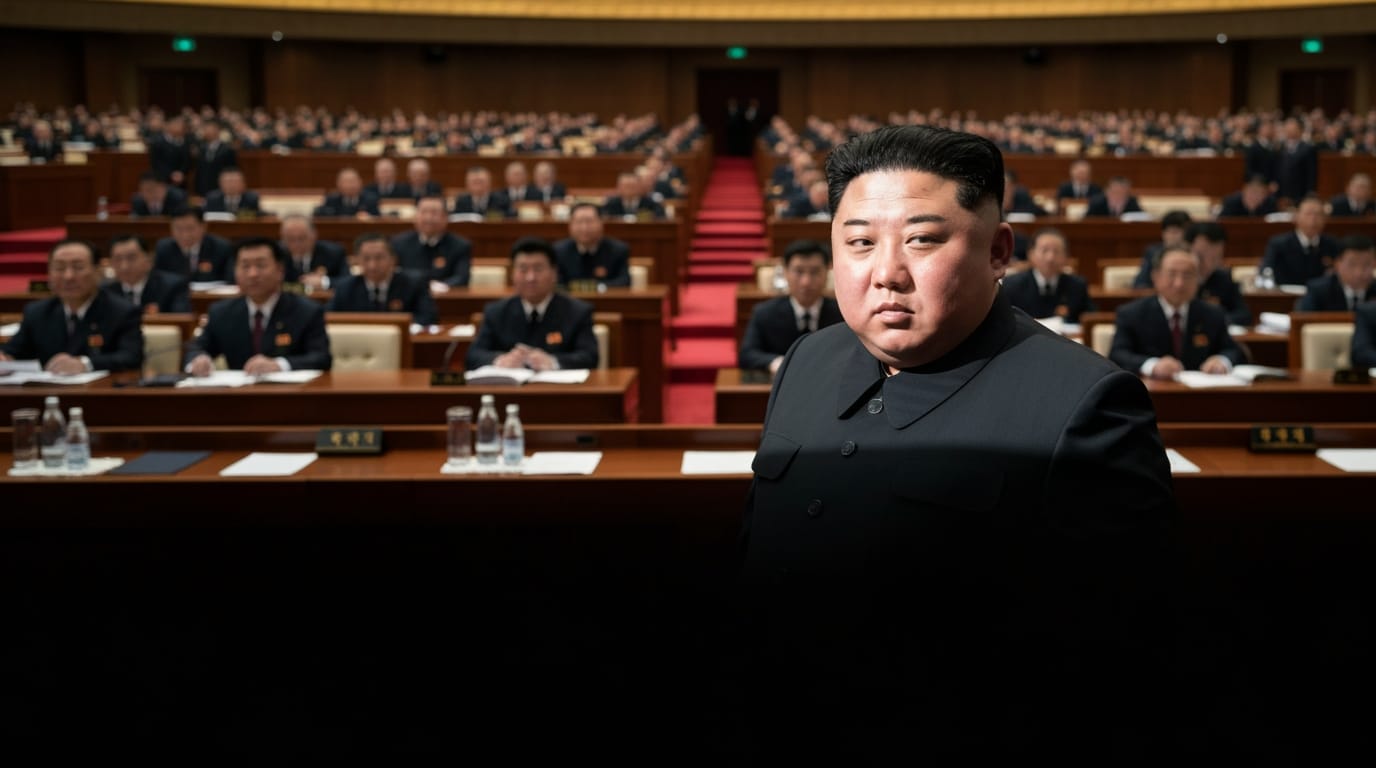
PYONGYANG – North Korea's ruling Workers' Party of Korea (WPK) commenced its Ninth Congress in Pyongyang on Thursday, February 19, 2026, marking a pivotal political event where leader Kim Jong Un is expected to unveil the nation's strategic roadmap for the next five years. The rare gathering, held at the April 25 House of Culture, draws thousands of delegates and serves as the highest decision-making body of the Party, setting the country's domestic and foreign policy course.
In his opening address, Kim Jong Un underscored economic revitalization and the improvement of living standards as "heavy and urgent historic tasks" for the Party. He declared that North Korea had made significant progress since the last congress in 2021, moving past "worst difficulties" to enter a new phase of "optimism and confidence in the future." This optimistic tone signals a shift from the 8th Congress five years prior, where Kim candidly admitted that his five-year economic plan had "fallen short in almost all areas."
A Strategic Forum for National Direction
Workers' Party Congresses are infrequent but crucial events in North Korea, providing a rare glimpse into the highly secretive state's priorities and future trajectory. The 9th Congress is only the ninth such gathering in the Workers' Party's history, revived by Kim Jong Un after a decades-long hiatus under his father, Kim Jong Il. These congresses are meticulously choreographed displays of Kim's authoritarian leadership, designed to reinforce his grip on power and rally public loyalty. Approximately 5,000 delegates are participating in the current congress, reflecting the Party's broad representation.
The primary agenda for the 9th Congress includes a comprehensive review and analysis of the work conducted during the 8th Central Committee's term. Additionally, the congress aims to establish new policies for elevating socialist construction to a higher stage and implement organizational and institutional measures to readjust and consolidate the Party's leadership capabilities. The duration of the congress, typically spanning several days, allows for in-depth discussions and the formalization of major policy goals.
Economic Drive Amidst Geopolitical Shifts
Kim's opening remarks primarily centered on economic development, highlighting perceived gains and an "irreversible" strengthening of the state's external status since the 2021 congress. This focus on the economy is a continuation of the "self-reliance" and "self-sufficiency" principles that have been central to North Korea's economic strategy for years, particularly emphasized in the 2021-2025 five-year plan adopted at the 8th Congress. That plan aimed to enhance national economic growth by promoting import substitution and strengthening inter-industry cooperation, while reducing reliance on foreign investments and trade. While external experts suggest the true economic state remains obscured by North Korea's strict information blockade, there are indications of gradual recovery, potentially aided by a post-pandemic rebound in trade with China and weapon exports to Russia.
The current congress is expected to elaborate on a "victory and accomplishments" narrative, contrasting with the self-critical tone of the 8th Congress where Kim acknowledged widespread failures in achieving economic goals. This shift suggests a concerted effort to project an image of stability and progress to both domestic and international audiences.
Evolving Strategic Priorities and Foreign Relations
Despite the strong emphasis on the economy in his opening speech, Kim Jong Un reportedly did not directly address the nation's nuclear weapons capabilities or its strained relations with the United States and South Korea. However, the congress unfolds against a backdrop of intensified nuclear and missile development, alongside strengthening alliances with Russia and China. The 8th Party Congress in 2021 had already determined that dramatically enhancing North Korea's nuclear deterrence against the United States was an essential prerequisite for national economic growth. At that time, Kim had outlined an ambitious plan to develop tactical nuclear weapons, submarine- and ground-launched solid-fuel intercontinental ballistic missiles, nuclear-powered submarines, and military reconnaissance satellites.
North Korea has been actively leveraging global instability, particularly the prolonged Russia-Ukraine conflict and escalating strategic competition between the U.S. and China, to strengthen its military and diplomatic positions. This has led to strengthened strategic relations with both Russia and China, with a shift in foreign relations principles from "independence-peace-friendship" to "independence-friendship-peace," and the clear designation of the U.S. and South Korea as "principal enemy" and "first enemy," respectively. The 9th Congress is forecasted to continue focusing on strengthening integrated nuclear and conventional forces and preparing for potential conflict using new technologies.
Future Outlook and Leadership Dynamics
Beyond policy directives, party congresses are also watched for potential leadership changes and signals regarding the future of the Kim dynasty. There is speculation among South Korean intelligence agencies that Kim Jong Un might use this congress to formalize the succession of his teenage daughter, Kim Ju Ae, who is believed to be about 13 years old. Such a move would further entrench the family's authoritarian rule and cement the fourth-generation succession. The 8th Congress notably saw Kim Jong Un's title changed from Party Chairman to General Secretary, signifying a consolidation of his formal authority within the Party structure.
The Ninth Party Congress represents a critical juncture for North Korea, as Kim Jong Un seeks to balance ambitious economic goals with a robust military development agenda in a volatile geopolitical landscape. The decisions and pronouncements made during this congress will undoubtedly shape North Korea's trajectory and its engagement with the international community for the foreseeable future, as the nation strives to achieve its self-defined "socialist construction" and bolster its global standing.


