Notorious Tren de Aragua Leader Killed in Joint US-Venezuelan Operation
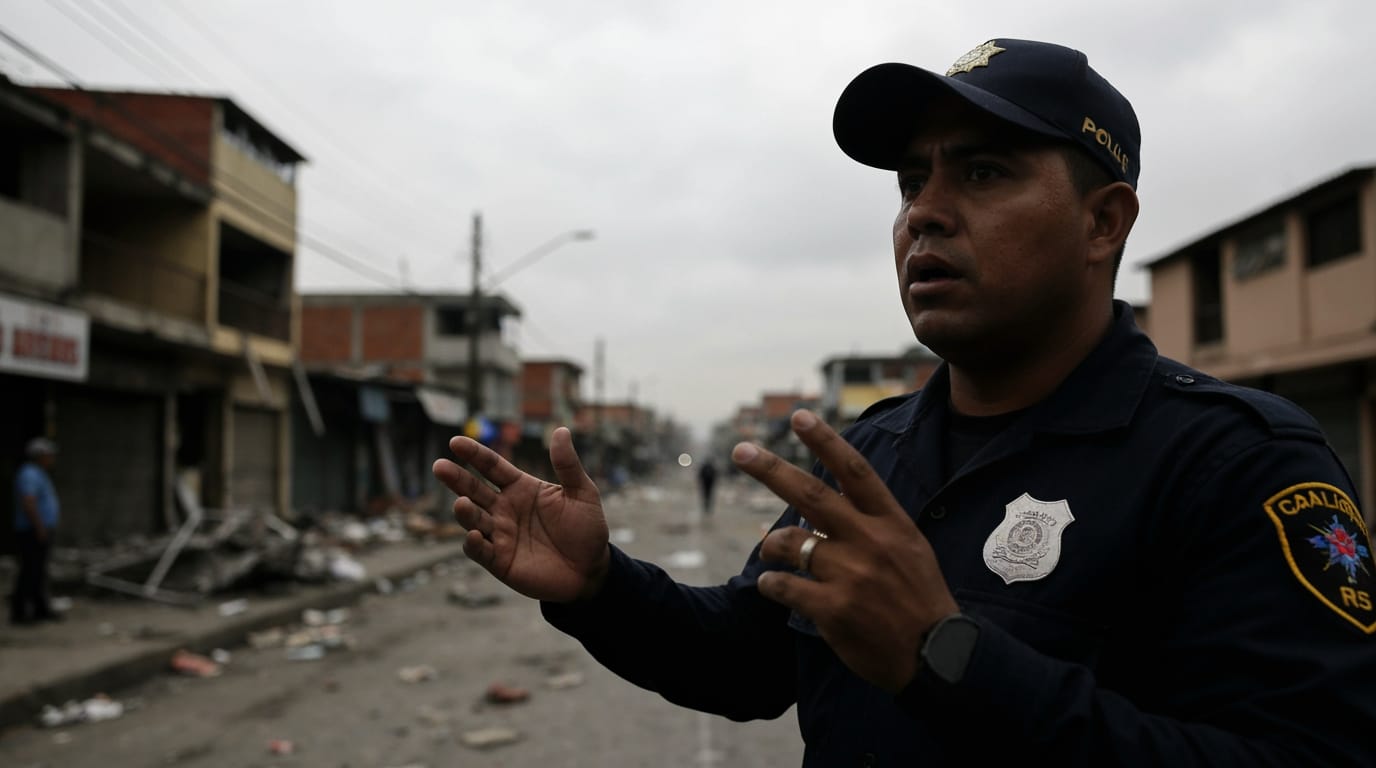
CARACAS, VENEZUELA – Héctor Rusthenford Guerrero Flores, widely known as "Niño Guerrero," the alleged supreme leader of the notorious Venezuelan transnational crime syndicate Tren de Aragua, was reportedly killed earlier this week in a U.S. military strike coordinated with Venezuelan security forces. The operation, which President Donald Trump announced on Friday, June 12, 2026, marks a significant development in the global fight against organized crime and highlights an unexpected collaboration between Washington and Caracas.
The strike, which Defense Secretary Pete Hegseth indicated took place on a Tren de Aragua compound in Venezuela's Bolívar state, targeted a figure the U.S. government had labeled a terrorist and offered a substantial reward for his capture. Venezuelan authorities corroborated the death, confirming Guerrero Flores was "neutralized" in a "combined operation" aimed at dismantling organized crime within the country. President Trump’s announcement included a video purporting to show a projectile striking a building, which then erupted in flames.
The Strike and its Immediate Impact
The coordinated military action culminating in Guerrero Flores's death represents a direct hit to the leadership of one of the Western Hemisphere's most feared criminal organizations. According to President Trump, the U.S. Southern Command executed a "swift and lethal kinetic strike" to neutralize "Niño Guerrero," whom he described as the leader of "one of the most bloodthirsty Terrorist Organizations on Planet Earth." This operation, he emphasized, was "closely coordinated" with Venezuelan authorities, signaling a rare instance of direct military cooperation between the two nations. Defense Secretary Hegseth further underscored this collaboration, stating the operation was conducted "in full collaboration with Venezuelan security forces" and highlighted a "shared U.S. and Venezuelan commitment to take the fight to narco-terrorists and deny them any safe haven in our hemisphere." A person familiar with the attack indicated that Joint Special Operations Command forces carried out the strike with a missile, with the CIA working alongside Venezuelan forces on the ground.
The Venezuelan communications ministry's statement confirmed the engagement, noting that Guerrero Flores was killed during clashes with members of criminal structures. Guerrero Flores had been charged in a New York federal court with racketeering conspiracy and other crimes, including supporting terrorists, with activities spanning more than a decade. The U.S. State Department had previously offered rewards of up to $5 million for information leading to his arrest. U.S. Attorney Jay Clayton, whom Trump nominated as director of national intelligence just days before the announcement, previously stated that the gang was responsible for countless acts of violence, extortion, and drug trafficking across North America, South America, and Europe.
The Rise of Tren de Aragua: From Prison Gang to Transnational Threat
Tren de Aragua originated in the early 2010s as a powerful prison gang within the Tocorón penitentiary in Venezuela's Aragua state. Héctor Guerrero Flores, also known as "Niño Guerrero," was instrumental in transforming the gang from a local prison entity into a sprawling transnational criminal organization. He had been in and out of Tocorón for years, escaping in 2012, being rearrested a year later, and then escaping again in 2023 after being sentenced to a 17-year term in 2018. While incarcerated, Tocorón prison functioned as the gang's de facto headquarters, where Guerrero Flores reportedly lived "like a king," directing operations and collecting fees from illicit activities. Venezuelan security forces took control of Tocorón in 2023, but the gang's leadership, including Guerrero Flores, managed to escape.
The gang's expansion rapidly accelerated during the Venezuelan refugee crisis, exploiting vulnerable populations and following migration routes across the continent. Tren de Aragua's criminal portfolio is extensive, including human trafficking, human smuggling, drug trafficking, arms trafficking, extortion, kidnapping for ransom, illegal mining, bribery, money laundering, and forced prostitution. Its violent tactics and ability to adapt to local conditions allowed it to establish cells and exert influence far beyond Venezuela's borders. The U.S. State Department designated Tren de Aragua as a foreign terrorist organization in February 2025, and the U.S. Treasury Department imposed sanctions on the gang in July 2024, labeling it a "transnational criminal organization."
Far-Reaching Implications for Regional and International Security
Tren de Aragua's operational reach now spans across at least ten countries in Latin America, including Colombia, Brazil, Peru, Ecuador, Bolivia, Panama, Costa Rica, Chile, Mexico, and even into the United States. Reports also suggest a presence in Europe, with a cell dismantled in Spain in November 2025, indicating the gang's growing global ambition. Its expansion into the U.S. has been a particular concern for federal authorities, with the FBI confirming its presence in January 2024. The gang has been linked to crimes such as retail theft, extortion, and even murder within the U.S.
The death of "Niño Guerrero" is expected to have significant implications for the gang's future operations. While it could disrupt the centralized command structure that allowed the gang to thrive, Tren de Aragua has also shown a capacity for decentralized operations with autonomous local leaders, particularly after the 2023 raid on Tocorón. Combating the gang has become a priority for many nations, with intelligence-sharing and targeted operations becoming more common to prevent its further entrenchment. The dismantling of a major money-laundering network linked to Tren de Aragua in Chile in June 2026, coinciding with Guerrero Flores's reported death, further underscores the intensified international efforts against the group.
Shifting Geopolitical Landscape: A U.S.-Venezuelan Rapprochement?
The joint operation stands out against the backdrop of historically tense U.S.-Venezuelan relations. Just months prior, in January 2026, former disputed Venezuelan President Nicolás Maduro was indicted by the U.S. for allegedly partnering with Tren de Aragua, including Guerrero Flores, to distribute drugs into the United States. The U.S. military also reportedly removed Maduro from power earlier this year, leading to a shift in Venezuela's leadership. The apparent collaboration in eliminating Guerrero Flores suggests a notable, albeit specific, rapprochement between the current U.S. administration and Venezuela, now led by Maduro's former deputy, Delcy Rodriguez.
President Trump's public statements have consistently linked Tren de Aragua to broader issues of border security and migration, often asserting its role in violence and illicit activities in U.S. cities. The administration has designated the gang as a foreign terrorist organization and has taken extraordinary actions against it, including strikes on boats accused of drug smuggling. The willingness of both the U.S. and Venezuela to coordinate on this high-profile target could signal a new phase in counter-narcotics and counter-terrorism efforts in the region, driven by shared concerns about the destabilizing influence of transnational criminal organizations.
Conclusion
The reported death of Héctor Rusthenford Guerrero Flores, "Niño Guerrero," marks a significant victory for international law enforcement and a potential turning point in the battle against Tren de Aragua. While the long-term impact on the gang's expansive network remains to be seen, the coordinated efforts between the U.S. and Venezuelan authorities underscore a growing global resolve to dismantle such criminal enterprises. This strike not only removes a key figure responsible for widespread violence and exploitation but also sets a precedent for unexpected alliances in the complex and evolving landscape of transnational organized crime. The ongoing efforts to monitor and counter Tren de Aragua's activities will continue to be crucial for regional stability and international security.


