OECD Warns of Slowing Global Growth Amid Trade Wars
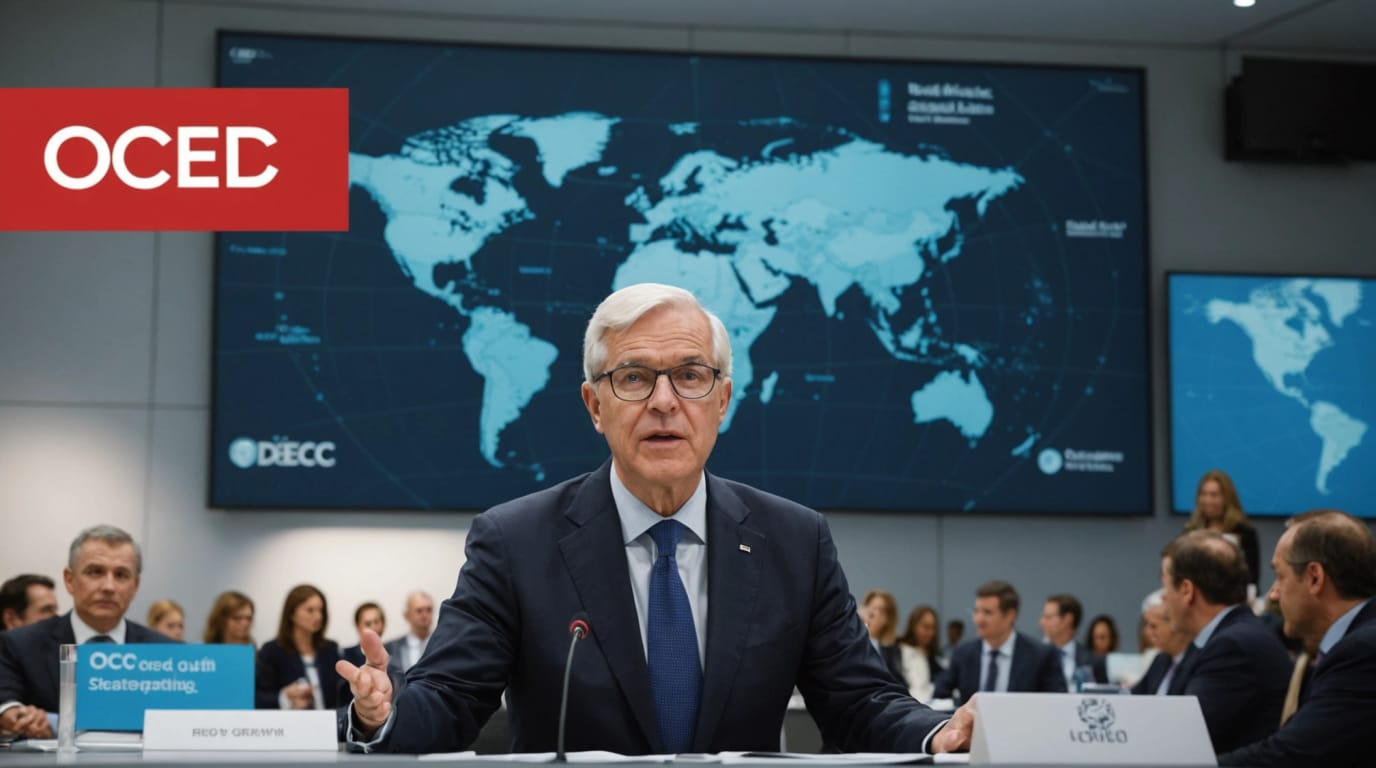
The global economy faces a grim outlook as trade wars and geopolitical tensions take their toll, according to a new report from the Organisation for Economic Co-operation and Development (OECD). The organization has slashed growth forecasts for major economies, including the United States and the United Kingdom, warning of rising inflation and a significant impact on living standards.
Global Growth Forecasts Downgraded
The OECD projects global GDP growth to slow from 3.2% in 2024 to 3.1% in 2025 and 3.0% in 2026. This represents a downward revision from previous forecasts of 3.3% for both years. The primary culprit, according to the OECD, is the escalating trade tensions sparked by protectionist policies, particularly those initiated by the United States.
The report highlights that the imposition of tariffs and other trade barriers is disrupting global supply chains, increasing costs for businesses, and ultimately hurting consumers. Canada and Mexico have been particularly hard hit by the new tariffs on imports, but the U.S. is also expected to suffer economic consequences.
Impact on Major Economies
The U.S. economy, previously expanding at a robust pace, is projected to decelerate significantly. The OECD now forecasts U.S. growth at 2.2% in 2025 and 1.6% in 2026, a marked downgrade from the 2.4% and 2.1% previously predicted. The organization attributes this slowdown to rising tariffs and increased economic policy uncertainty.
The UK's economic outlook has also been revised downward. The OECD now projects UK growth at 1.4% in 2025 and 1.2% in 2026, down from 1.7% and 1.3% in its previous predictions. This represents yet another blow to the UK economy, which is already grappling with the effects of Brexit and other challenges.
Inflation Concerns
In addition to slower growth, the OECD warns of rising inflation as a result of trade wars. Higher tariffs increase the cost of imported goods, which can lead to higher prices for consumers. The report notes that services inflation remains elevated, with tight labor markets, and goods inflation is picking up from very low levels.
The OECD projects that headline inflation in the G20 economies will rise to 3.8% this year and 3.2% next year, up from the 3.5% and 2.9% the OECD predicted in December. This could prompt central banks to maintain higher interest rates for longer, further dampening economic activity.
The Burden on Consumers
The OECD emphasizes that consumers will bear much of the burden of higher tariffs. As businesses face increased costs, they are likely to pass those costs on to consumers in the form of higher prices. This will erode purchasing power and reduce living standards, particularly for low-income households.
The report cautions over a “significant” impact on living standards, as consumers face the brunt of higher tariffs. This could lead to decreased consumer spending, which would further slow economic growth.
Calls for Cooperation
The OECD urges policymakers to find ways of addressing their concerns together within the global trading system. The organization warns that further increases in trade barriers would hit growth around the world and add to inflation.
The report stresses the importance of international cooperation in resolving trade disputes and promoting a stable and predictable global trading environment. It also calls on governments to implement policies that support inclusive growth and help workers adapt to changing economic conditions.
Fragmentation of the Global Economy
The OECD expresses concern about the potential for further fragmentation of the global economy. As countries erect trade barriers and pursue protectionist policies, the global trading system becomes more fragmented, which can lead to reduced efficiency and innovation.
The report warns that higher and broader increases in trade barriers would hit growth around the world and add to inflation. It also notes that higher-than-expected inflation would prompt more restrictive monetary policy and could give rise to disruptive repricing in financial markets.
Conclusion
The OECD's latest economic outlook paints a concerning picture of the global economy. Trade wars and geopolitical tensions are slowing growth, raising inflation, and threatening to erode living standards. The organization calls for international cooperation to resolve trade disputes and promote a stable and predictable global trading environment. Failure to do so could have significant consequences for the world economy. The coming years will be critical in determining whether policymakers can navigate these challenges and steer the global economy back on a path of sustainable and inclusive growth.


