Oil Tanker Struck in Strait of Hormuz Amid Escalating Regional Tensions, UK Reports
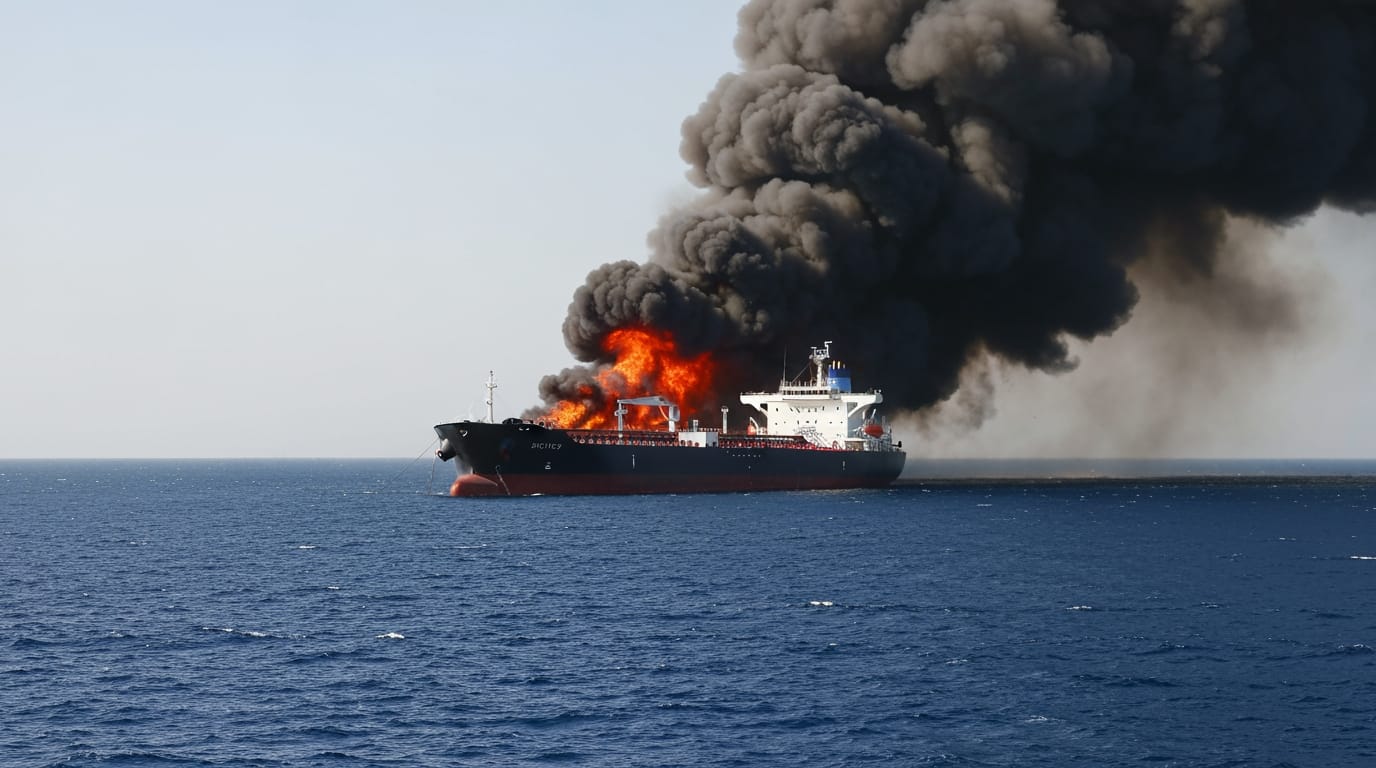
DUBAI, UAE – A commercial oil tanker has been struck by a projectile in the highly strategic Strait of Hormuz, the United Kingdom Maritime Trade Operations (UKMTO) confirmed, igniting fresh concerns over maritime security and global energy supplies in a region already fraught with geopolitical volatility. The incident, reported just days ago, underscores the persistent threat to international shipping lanes and has already sent ripples through global markets.
The attack, which saw a British-flagged crude tanker hit by what sources describe as an Iranian drone or missile, occurred east of Oman's Limah while the vessel was reportedly transporting a significant cargo of Qatari oil towards the port of Fujairah. While details surrounding the precise nature of the projectile and the party responsible remain under investigation, the UK military's maritime security agency issued an emergency alert, linking the event to ongoing US-Iran military tensions. This latest strike highlights an increasing willingness to employ asymmetric warfare tactics in the critical waterway, posing a direct challenge to the free flow of international commerce.
A Chokepoint Under Threat: The Strait of Hormuz's Vital Role
The Strait of Hormuz, a narrow passage connecting the Persian Gulf with the Gulf of Oman and the Arabian Sea, stands as the world's most crucial oil chokepoint. Its strategic importance is difficult to overstate; approximately 21% of global petroleum liquids consumption, equating to an average of 21 million barrels per day, transited through the strait in 2022. Beyond crude oil, the waterway is also indispensable for shipments of liquefied natural gas (LNG), with around one-fifth of the global LNG trade passing through it annually. Major oil-producing nations, including Saudi Arabia, Iraq, Kuwait, and the United Arab Emirates, are heavily reliant on this route to export their resources to markets in Asia, Europe, and beyond. Any disruption, whether from geopolitical tensions, military conflict, or maritime incidents, can rapidly affect international energy markets and reverberate across industries and nations worldwide.
The sheer volume of energy resources moving through this single, narrow channel makes it a perennial flashpoint. For instance, in the first half of 2023, more than a quarter of total global seaborne traded oil flowed through the Strait of Hormuz. Asian markets are particularly dependent, receiving an estimated 82% of the crude oil and condensate transiting the strait in 2022, with China, India, Japan, and South Korea being top destinations. This concentration of global energy supply makes the strait a "linchpin of global stability" and any incident within its confines a matter of international concern.
Escalating Tensions and a History of Confrontation
This recent attack is not an isolated incident but rather the latest in a series of events reflecting deeply entrenched geopolitical rivalries in the region, particularly between Iran and its adversaries. The 2026 Strait of Hormuz crisis earlier this year saw significant disruptions, with tanker traffic plummeting after US-Israeli strikes on Iran prompted the Islamic Revolutionary Guard Corps (IRGC) to issue warnings and engage in actions that largely blocked shipping through the strait for a period. During that crisis, the International Maritime Organization reported that some 20,000 mariners and 2,000 ships were left stranded in the Persian Gulf.
Historical parallels can be drawn to the "Tanker War" of the 1980s, a prolonged conflict during the Iran-Iraq War where both nations targeted merchant vessels, primarily oil tankers, in the Persian Gulf and Strait of Hormuz. This period, which saw over 400 civilian seafarers killed and hundreds of ships damaged, highlighted the extreme vulnerability of commercial shipping in the area. While oil tankers proved remarkably resilient in many instances during that era, with only 23% of attacked tankers being completely sunk or declared total losses, the broader significance lay in the danger posed to an international economy critically dependent on Gulf oil exports. The US Navy even intervened in 1987, providing military escorts to reflagged Kuwaiti tankers to deter attacks and ensure freedom of navigation.
Today, Iran has reportedly invested heavily in modern anti-shipping capabilities, including small submarines, mines, anti-shipping weaponry, and numerous fast attack boats designed for "swarming tactics." Leaked military audio, as reported by some sources, suggests that Iranian forces may have intentionally targeted the recent tanker as part of a "broader extortion campaign to dominate the strategic waterway."
Economic Repercussions and Global Fallout
The immediate aftermath of the tanker strike has seen a discernible impact on global oil markets. Concerns over potential supply disruptions have spurred a rebound in oil prices, with crude futures ending a losing streak and showing significant gains following the incident. Analysts indicate that the incident is consistent with scenarios where Iran targets shipping, further increasing the probability of shipping disruptions.
Beyond the immediate price fluctuations, the broader economic consequences are substantial and far-reaching. Insurance costs for tankers operating in the Strait of Hormuz have previously skyrocketed in times of heightened risk, with some reports citing increases of over 1000% due to extreme risks like ship attacks and drone threats. Such surges force rerouting and significantly boost global oil prices, threatening to delay supply chains. The United Nations Conference on Trade and Development (UNCTAD) warned that even after a ceasefire and the reopening of the strait earlier this year, the economic fallout from months of shipping disruptions would persist, particularly affecting vulnerable economies dependent on imported oil and food.
The Strait's closure or sustained disruption would represent an "economic clock of war," transitioning from a short-term oil shock to a more persistent phase of higher energy prices, tighter fuel markets, renewed inflation, and slower global growth. This scenario disproportionately affects major Asian importers and, through global pricing mechanisms, impacts European and other economies through diesel, freight, and aviation fuel costs. The interconnectedness of the global economy means that the stability of this waterway is not merely a regional issue but a critical component of international economic health.
Conclusion
The recent strike on an oil tanker in the Strait of Hormuz serves as a stark reminder of the fragile security landscape in one of the world's most critical maritime arteries. As international bodies and naval forces monitor the situation closely, the incident underscores the delicate balance between geopolitical interests and the imperative of maintaining safe passage for global trade. The implications extend beyond immediate maritime security, touching upon the stability of global energy markets, the resilience of international supply chains, and the broader economic well-being of nations far removed from the immediate theater of conflict. The international community now faces the continued challenge of de-escalating tensions and safeguarding the vital flow of commerce through this indispensable chokepoint.


