Olympic Champion Caster Semenya Decries Expanding Ban on DSD Athletes, Citing Human Rights Violations
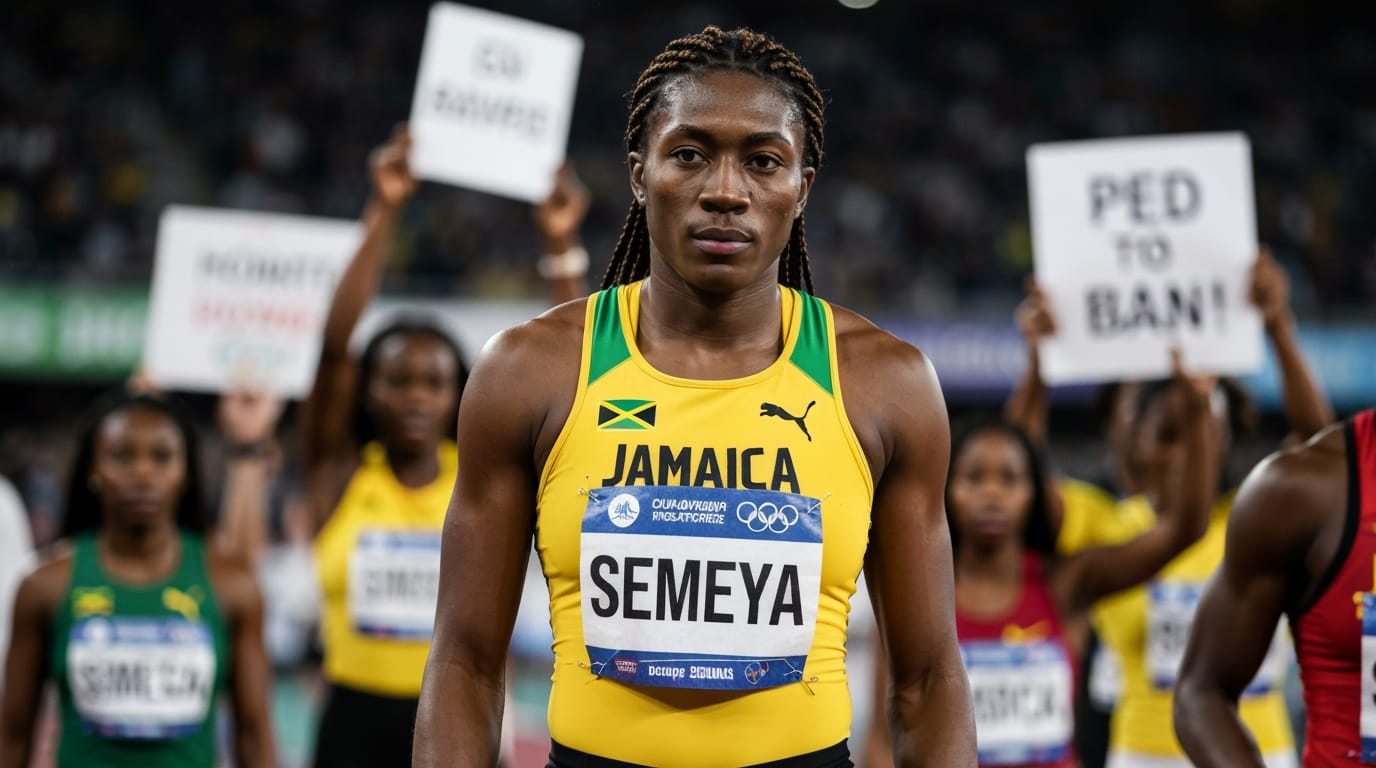
Olympic gold medalist Caster Semenya has intensified her criticism of eligibility rules impacting athletes with Differences of Sex Development (DSD), following a recent decision by the International Olympic Committee (IOC) that further restricts their participation in women's sports. Semenya, whose illustrious career has been significantly curtailed by such regulations, voiced profound disappointment, calling the new measures a "disrespect" to female athletes globally. The escalating debate intertwines complex issues of fair play, human rights, and the very definition of who can compete as a woman at the elite level.
The Evolving Landscape of DSD Regulations in Athletics
Differences of Sex Development (DSD) refer to congenital conditions where a person's chromosomes, hormones, or anatomy differ from typical male or female development, often resulting in naturally higher testosterone levels in individuals identified as female. World Athletics, formerly known as the International Association of Athletics Federations (IAAF), first introduced comprehensive regulations targeting DSD athletes in 2018, which became effective in 2019. These rules initially applied to track events ranging from 400 meters to one mile, an area where World Athletics claimed a significant performance advantage for DSD athletes. Under these initial regulations, DSD athletes were required to reduce their blood testosterone levels to below 5 nmol/L for at least six months to be eligible to compete in the female category. The stated objective behind these regulations was to ensure fair competition and protect the integrity of women's athletics.
The stringency of these rules tightened significantly in March 2023, when World Athletics expanded the DSD regulations to encompass all female track and field events. Concurrently, the acceptable testosterone threshold was lowered even further to 2.5 nmol/L, requiring athletes to maintain this level for a continuous period of at least 24 months before competition. These amendments effectively closed avenues for DSD athletes who had previously found eligibility in events outside the 400m-to-mile range.
Caster Semenya's Enduring Legal and Personal Ordeal
Caster Semenya, a two-time Olympic gold medalist in the 800 meters, has been at the forefront of this contentious issue since her emergence on the global stage in 2009, when questions were first raised about her eligibility. Her subsequent career has been defined not only by her athletic prowess but also by a relentless legal battle against the governing bodies.
In 2019, Semenya challenged the World Athletics regulations at the Court of Arbitration for Sport (CAS), the highest court for sports-related disputes. The CAS, while acknowledging that the regulations were discriminatory, upheld them, concluding that such discrimination was "necessary, reasonable and proportionate" to maintain fair competition in female athletics. Semenya's subsequent appeal to the Swiss Federal Tribunal was also dismissed in August 2020, which affirmed the CAS's right to uphold World Athletics' rules to guarantee fair competition.
Throughout these legal proceedings, Semenya steadfastly refused to undergo hormone-suppressing treatment, citing concerns for her health and human dignity. She has consistently characterized the requirement to alter her natural biological state as "inhuman" and discriminatory. Her unwavering stance meant she was barred from competing in her preferred 800m event in major international competitions since 2019.
A partial victory came in July 2023, when the European Court of Human Rights (ECtHR) ruled that Semenya's rights to a fair hearing had been violated by the Swiss state. This ruling, however, did not directly overturn World Athletics' regulations but rather highlighted procedural shortcomings in how her case was handled by the Swiss legal system. Despite this legal affirmation of her mistreatment, Semenya's lawyers announced in October 2025 that she would no longer pursue her seven-year legal challenge against World Athletics' rules, signaling a pragmatic end to a protracted and exhausting fight.
Broader Implications and Human Rights Concerns for DSD Athletes
The impact of these regulations extends beyond Semenya, affecting numerous other athletes with DSDs. Notable examples include Namibian sprinter Christine Mboma and Burundian middle-distance runner Francine Niyonsaba, both of whom have had to either switch events or comply with testosterone suppression to continue their careers. Many human rights organizations and medical professionals have vehemently opposed these regulations, arguing that compelling athletes to take medication to alter naturally occurring biological traits is unethical.
The United Nations Human Rights Council and Human Rights Watch have both issued reports detailing how such regulations can violate fundamental human rights, including rights to dignity, bodily integrity, and non-discrimination. Critics argue that the involuntary nature of the required medical interventions raises serious ethical questions, especially given that these athletes are assigned female at birth and identify as women.
IOC's Latest Stance: A Widening Ban
The landscape for DSD athletes became even more restrictive in March 2026, when the International Olympic Committee (IOC) announced a new policy effectively banning transgender women and most DSD athletes from competing in the female category at the Olympic Games, starting with the 2028 Los Angeles Olympics.
Under the IOC's new framework, all athletes wishing to compete in the female category will be subjected to a one-time screening for the SRY gene, which is responsible for male sex development. The IOC justified this stringent measure by emphasizing the need to ensure "fairness, safety and integrity" in women's sports and to "protect the women's category," citing a significant 10-12% performance advantage for biological males in many athletic events.
Semenya was quick to condemn the IOC's decision, expressing particular disappointment in IOC President Kirsty Coventry, a fellow African woman. Semenya criticized what she perceived as a lack of understanding regarding the experiences of African athletes and those from the Global South, suggesting the policy was driven by political pressure rather than sound science. While DSD and transgender identities are distinct, the new IOC policy groups them for eligibility purposes, adding another layer of complexity to an already fraught issue.
An Unresolved Dilemma
The ongoing saga surrounding DSD athletes and their eligibility in elite sports reflects a deep-seated tension between the pursuit of fair competition and the protection of individual human rights. Despite years of legal challenges and a growing chorus of ethical and medical opposition, the regulatory bodies are increasingly tightening restrictions. For athletes like Caster Semenya, who have dedicated their lives to their sport, these evolving rules represent not just career barriers but also profound personal struggles against systems they perceive as unjust and discriminatory. The debate over inclusion, biology, and the future of women's sports remains far from settled, leaving a lasting impact on the lives and careers of affected athletes.