Olympic Dream Derailed: Controversy Clouds Katie Uhlaender's Pursuit of Sixth Games
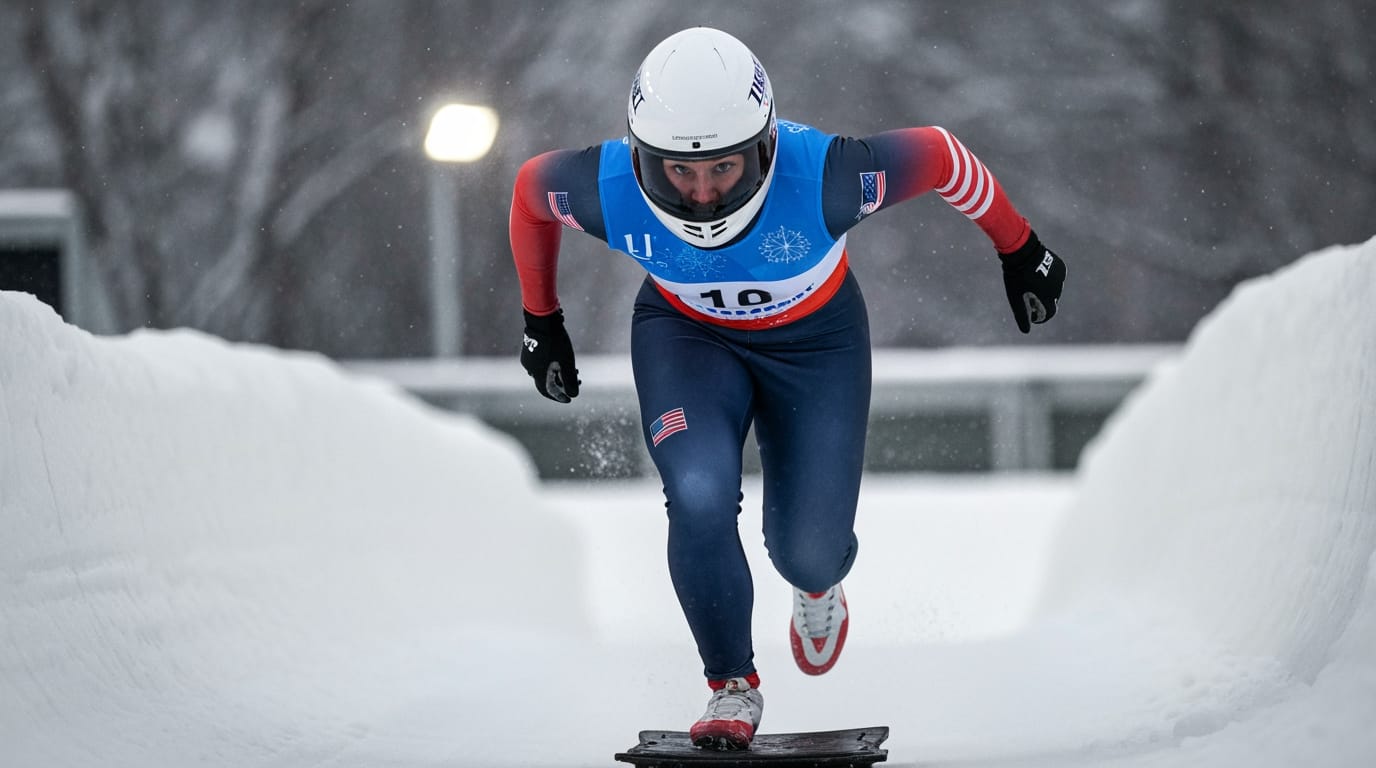
The quest for an unprecedented sixth Olympic appearance by veteran U.S. skeleton racer Katie Uhlaender has been significantly jeopardized following a contentious qualification period marred by international sports politics and a dispute over fair play. A recent incident involving the Canadian skeleton team during a critical qualifying event has left the 41-year-old five-time Olympian on the periphery of the Milan-Cortina 2026 Winter Games roster, sparking debate within the global sliding community.
The Contested Lake Placid Race
The controversy ignited on January 11, 2026, during a North American Cup (NAC) race in Lake Placid, New York, a developmental circuit event crucial for athletes seeking to accumulate Olympic qualification points. Katie Uhlaender, competing in a determined bid to secure enough points for her sixth Olympic berth, won the race. However, her victory was overshadowed by the eleventh-hour withdrawal of four of the six Canadian women scheduled to compete. This reduction in the field size consequently lowered the overall number of Olympic qualification points available for the event. Uhlaender, who had been primarily competing in NAC and Asian Cup events this season after not securing a spot on the U.S. World Cup roster, viewed this action as a direct impediment to her Olympic aspirations.
Accusations of Manipulation and Official Response
Uhlaender swiftly leveled accusations of "sabotage" and "competition manipulation" against the Canadian coaching staff, specifically implicating Canadian head coach Joe Cecchini, whom she described as a long-time friend. She claimed Cecchini had forewarned her of the plan, which she believed was designed not for athlete welfare, but to strategically manipulate the system to protect the Olympic spots of Canadian senior athletes, such as Jane Channell. Denmark's bobsled and skeleton federation echoed Uhlaender's concerns, calling for other nations to scrutinize Canada's actions for potential competition manipulation, asserting that such behavior contradicted the Olympic spirit and fair play.
The International Bobsleigh and Skeleton Federation's (IBSF) Integrity Unit launched an investigation into the matter. While the IBSF acknowledged that the "late withdrawal of athletes intuitively gives rise to concern that the action may have constituted impermissible manipulation," it ultimately concluded that Bobsleigh Canada Skeleton (BCS) had not violated any IBSF rules, Code of Ethics, or Code of Conduct. The federation stated that "current IBSF rules allow National Federations to withdraw athletes at any time."
Bobsleigh Canada Skeleton, in its defense, asserted that the decision to withdraw the young athletes was primarily for their welfare, particularly as some had struggled in previous races in Lake Placid. They also indicated that the move was partly aimed at enhancing Canada's chances of securing two women's spots at the Olympic Games. Canadian sliders involved in the incident, such as Madeline Parra and Brielle Durham, supported their coach's decision, stating they were comfortable with it and understood it was in the best interest of the team to secure Olympic berths for their senior athletes.
Olympic Qualification Landscape and Uhlaender's Position
The path to the Winter Olympics in skeleton is governed by a complex system of national quotas and world ranking points, determined by the International Bobsleigh and Skeleton Federation. A total of 50 quota spots are allocated for skeleton athletes, with 25 for each gender. The final distribution of these coveted spots is based on the World Ranking list as of January 18, 2026, where athletes' best seven results from the qualifying season are considered. World Cup races carry more weight in terms of points than developmental circuits like the North American, European, and Asian Cups.
For women's skeleton, the quota system allows two countries to qualify a maximum of three athletes, four countries to qualify two athletes, and eleven countries to qualify one. Athletes must also be ranked within the top 55 globally to be eligible. The United States secured two Olympic spots for women's skeleton, meaning only the top two American women in the world rankings would qualify. Despite her win in the contested Lake Placid NAC race and her consistent performance on the developmental circuits, Uhlaender ended up as the third-ranked American woman, putting her outside of the two available Olympic berths.
A Sixth Olympic Dream Derailed
Katie Uhlaender's illustrious career includes five previous Olympic appearances (2006, 2010, 2014, 2018, 2022), a remarkable feat for any athlete. Her best Olympic finish was a heartbreaking fourth place at the Sochi 2014 Games, where she missed a medal by a mere 0.04 seconds. She also boasts an impressive six medals from various World Championships, including two golds. Her pursuit of a sixth Olympic Games was driven by a deep commitment to the sport and an unwavering competitive spirit.
However, with the International Bobsleigh and Skeleton Federation finalizing its quota allocations and the U.S. Bobsled and Skeleton (USABS) having announced its roster, Uhlaender finds herself on the outside looking in. The confluence of Canada's controversial withdrawal of athletes, the subsequent IBSF ruling, and the rigid Olympic quota system has effectively curtailed her bid for an unprecedented sixth Olympic appearance. While no formal request for an additional U.S. spot for Uhlaender has been explicitly reported, the implications of the situation highlight the challenges faced by athletes navigating a qualification process that can be profoundly affected by strategic maneuvers and interpretation of rules, even in the absence of explicit violations. The outcome leaves a poignant mark on the career of one of skeleton's most enduring figures, underscoring the high stakes and intricate dynamics of international winter sports.