Ousted Defense Minister Calls for Wartime Elections, Challenging Zelenskyy's Authority Amidst Conflict
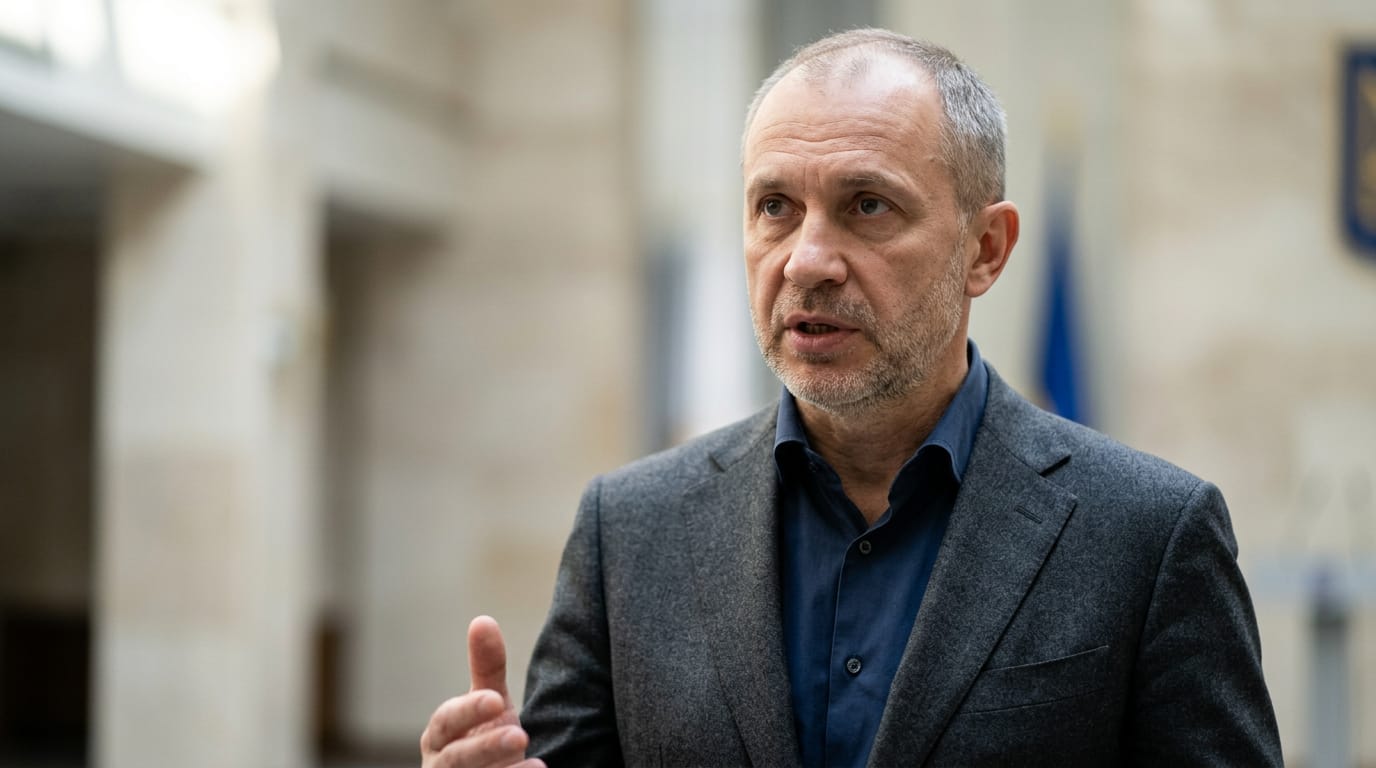
KYIV, Ukraine – Ukraine's recently dismissed Defense Minister, Mykhailo Fedorov, has issued a potent call for wartime elections, marking the most significant internal political challenge to President Volodymyr Zelenskyy since Russia's full-scale invasion began in February 2022. In a video address published Tuesday, Fedorov argued that "democracy cannot be held hostage by Russia" and urged the establishment of a "legal, safe and realistic mechanism" to restore a full democratic process, even amid prolonged conflict. His statements have ignited a contentious debate within Ukraine, highlighting the tension between wartime unity and democratic principles.
The Ousted Minister's Bold Call for Democracy
Mykhailo Fedorov, who served as Ukraine's Minister of Defense from January to July 2026, delivered his appeal on August 18, 2026, via a YouTube video. His nine-minute address, coming just weeks after his abrupt dismissal by President Zelenskyy, positioned him as a vocal critic of the current administration's approach to governance. Fedorov asserted that Ukraine is fighting to remain a free European state, implying that democratic processes, including elections, are integral to that fight and not a "peacetime luxury."
Beyond the call for elections, Fedorov launched a broad critique of what he termed a "systemic crisis of governance" within Ukraine. He lamented that citizens "cannot endlessly live in a state where they do not understand why certain decisions are made," and where some reforms advance while others are stalled. He also condemned corruption, without naming specific individuals, claiming it weakens Ukraine's ability to wage war effectively and stating that "every single hryvnia intended for defense must work for defense. Not for a private pocket." Fedorov suggested that a key factor in his own dismissal might have been his efforts to overhaul the Defense Ministry's procurement system.
Prior to his brief tenure as Defense Minister, Fedorov was widely recognized for his role as Minister of Digital Transformation, a position he held from 2019. During this time, he was instrumental in developing Ukraine's digital infrastructure, including the Diia government services portal, and became a prominent figure in the nation's successful drone warfare strategy. His dismissal in mid-July 2026 was attributed by President Zelenskyy to an "unsolvable feud" between Fedorov and then-top general Oleksandr Syrskyi. The move sparked widespread public protests across Ukrainian cities, demanding Fedorov's reinstatement. Although General Syrskyi was subsequently dismissed by Zelenskyy under public pressure, Fedorov was not brought back into the government.
The Legal Labyrinth of Wartime Elections
Fedorov's demand for elections directly confronts a significant legal and practical hurdle: Ukrainian law explicitly prohibits holding elections while the country is under martial law. Martial law was imposed on February 24, 2022, following Russia's full-scale invasion, and has remained in effect ever since. Consequently, the 2023 parliamentary elections and the 2024 presidential election, when President Zelenskyy's term officially ended in May 2024, were not held.
The Ukrainian Constitution bars constitutional amendments and parliamentary elections during martial law. While presidential and local elections are not directly prohibited by the Constitution, they have been suspended through legislation pertaining to martial law, which could, in principle, be altered by a simple parliamentary majority. However, experts and officials, including Secretary of the National Security and Defense Council Oleksiy Danilov, have consistently stated that elections cannot be held under martial law.
Beyond the legal framework, immense practical challenges complicate the prospect of wartime elections. Ensuring the safety of voters and election officials amidst ongoing Russian bombing and active combat zones is a primary concern. The logistical nightmare of organizing polls for millions of displaced citizens, both internally and those who have fled abroad, as well as for soldiers on the front lines and residents in occupied territories, is formidable. Furthermore, the core tenets of free and fair elections—including freedom of speech, assembly, and protest—are curtailed under martial law, making genuinely democratic competition nearly impossible.
A Political Gauntlet for President Zelenskyy
Fedorov's call for elections represents a stark political challenge to President Zelenskyy, coming at a sensitive time for the Ukrainian government. His statement was made on the eve of the Ukrainian parliament's vote to confirm Yevhen Khmara as the new permanent Defense Minister, a role Fedorov himself had recently vacated. This timing led some lawmakers to interpret Fedorov's address as a strategic move to undermine the appointment or even to signal his ambition to regain his former position. Fedorov has previously indicated he would only return to government as Defense Minister.
The public reaction to Fedorov's earlier dismissal underscored his significant popularity. Weeks of protests following his ouster culminated in the removal of General Syrskyi, although Fedorov was not reinstated. This public sentiment, combined with Fedorov's recent criticisms of government accountability and corruption, directly challenges the perceived unity of the wartime administration. A recent poll further highlighted the political potency of Fedorov, suggesting he would comfortably defeat President Zelenskyy in a hypothetical runoff election, indicating a significant shift in public opinion since the start of the full-scale invasion. This places considerable pressure on Zelenskyy to address the underlying concerns about governance and democratic process that Fedorov has raised.
Navigating the Democratic Imperative Amidst Conflict
The debate spurred by Fedorov's call forces Ukraine to grapple with a fundamental dilemma: how to balance the imperative of democratic governance with the existential demands of national security during an ongoing war. Fedorov argues that upholding democratic values, including the right to choose leadership, is precisely what Ukraine is fighting for against Russian aggression. "We must not let [Russian President Vladimir] Putin decide when Ukrainians can choose their government," he declared.
However, many within Ukraine's political and expert circles, including political analyst Artem Bronzhukov, express serious reservations about the practicality and safety of holding elections under current conditions. There is a "fairly deep-rooted view within Ukrainian society" that while elections are eventually necessary, they should only occur after the "hot phase of the war ends." The risk of Russian interference, disruption, and the inability to ensure equal access and participation for all citizens are major concerns that would undermine the legitimacy of any wartime vote.
The international community has also weighed in on the issue. The Parliamentary Assembly of the Council of Europe has previously raised the importance of Ukraine holding elections, even under martial law, to uphold democratic standards. Yet, a consensus on a viable mechanism that safeguards both democratic integrity and national security has remained elusive. Fedorov's proposal for a "legal, safe, and realistic mechanism" seeks to bridge this gap, suggesting that innovative solutions could allow for voting rights for soldiers, Ukrainians living abroad, and those in front-line regions.
Conclusion
Mykhailo Fedorov's call for wartime elections has injected a new and complex dimension into Ukraine's political landscape. His strong advocacy for democratic renewal, coupled with pointed critiques of current governance, presents a significant internal test for President Zelenskyy's leadership. As the nation continues its arduous fight against Russian aggression, it must now navigate the profound tension between maintaining wartime unity and stability, and adhering to the democratic principles it champions. The path forward remains uncertain, demanding careful consideration of legal constraints, practical realities, public sentiment, and the overarching goal of securing a free and democratic future for Ukraine.