Pakistan-Administered Kashmir Elections Face Turmoil Amid Mounting Tensions
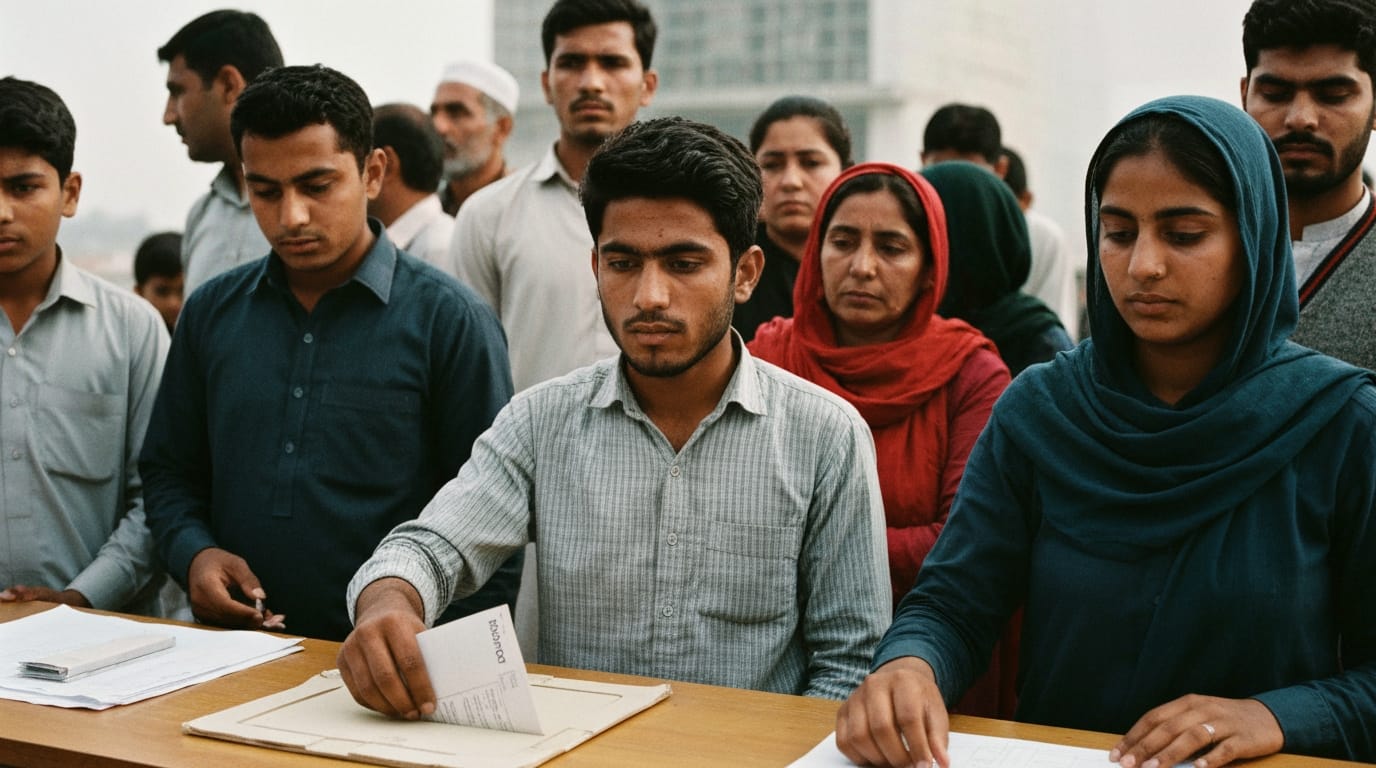
Muzaffarabad, Pakistan-Administered Kashmir – As Pakistan-administered Kashmir (AJK) prepares for its legislative elections on July 27, the region finds itself in a state of heightened political unrest, casting a shadow over the potential for these polls to genuinely calm long-standing tensions in the disputed territory. The upcoming vote follows weeks of violent protests, a government crackdown, and international calls for restraint, underscoring the deep-seated grievances and complex geopolitical dynamics that define Kashmir. The United Nations High Commissioner for Human Rights, Volker Türk, has urged all parties to de-escalate tensions, emphasizing the critical need for impartial investigations into protest-related deaths and renewed political dialogue.
The elections are taking place amidst a volatile period marked by significant demonstrations led by the Joint Awami Action Committee (JAAC), a coalition protesting various issues, including high prices and, more recently, the controversial system of reserved legislative seats. This unrest has resulted in dozens of fatalities, including both protesters and law enforcement personnel, further complicating the political landscape just days before voters head to the polls.
The Framework of Governance in Azad Jammu and Kashmir
Azad Jammu and Kashmir (AJK), often referred to as Pakistan-administered Kashmir, operates under a parliamentary democratic system. This structure includes a Prime Minister who serves as the executive head and a President who acts as the constitutional head of state. The region has its own Legislative Assembly, which is responsible for electing both the Prime Minister and President. Historically, adult franchise was adopted for the first time in AJK in 1970, marking a significant step in its political evolution.
The AJK Legislative Assembly comprises 53 members. Among these, 33 seats are general constituencies located within AJK itself, elected directly by the local populace. However, a contentious aspect of this electoral framework involves 12 seats specifically reserved for Kashmiri refugees who migrated to Pakistan and reside outside AJK. Additionally, eight other seats are reserved for women, religious scholars, technocrats, and overseas Kashmiris, elected indirectly by the 45 general members. While AJK is nominally self-governing, its constitutional arrangement, particularly the Azad Jammu and Kashmir Interim Constitution Act of 1974, provides for an administrative structure that ultimately places it under the significant influence of Pakistan. The Azad Jammu and Kashmir Council, chaired by the Prime Minister of Pakistan, holds paramount authority, effectively ensuring Islamabad's control over the territory's affairs. International observers and human rights organizations have noted that AJK is not a sovereign state nor a province of Pakistan, but rather a "local authority" whose affairs are largely managed by the federal government.
Conflicting Narratives and Contentious Legitimacy
The elections in Pakistan-administered Kashmir are consistently viewed through divergent lenses by the key stakeholders. Pakistan asserts that these elections represent a legitimate democratic exercise, highlighting that the people of AJK enjoy a free and participatory electoral process. This narrative often contrasts the situation with that in India-administered Kashmir, which Pakistan alleges is under illegal occupation and subject to human rights violations.
Conversely, India categorically rejects the legitimacy of these elections, frequently labeling them a "sham" and an attempt by Pakistan to consolidate its hold over a territory that India claims as its own. From New Delhi's perspective, AJK remains "Pakistani occupied Indian territory," and any electoral process conducted there lacks international legal standing in resolving the broader Kashmir dispute.
Locally, however, the perception is far more complex. The recent wave of protests, spearheaded by the JAAC, highlights significant dissatisfaction within AJK itself. A central grievance of the JAAC has been the system of 12 reserved seats for Kashmiri refugees residing in Pakistan. Protesters argue that these seats disproportionately grant individuals not living in AJK influence over the region's governance and budget, thereby undermining genuine local representation. They contend that this electoral arrangement allows Pakistan-based political parties to manipulate outcomes and diverts developmental resources intended for AJK residents. The AJK High Court recently ruled that these reserved seats are constitutionally protected and cannot be abolished without an amendment, further fueling the protests.
Deep-Rooted Challenges and Criticisms
Despite the democratic façade, the electoral process in AJK faces substantial criticism regarding its fairness and autonomy. A persistent concern is the discernible influence of Pakistan's federal government. It has been observed that the political party in power in Islamabad frequently secures victory in AJK elections, often leveraging the 12 refugee seats, which are particularly susceptible to manipulation.
Furthermore, candidates participating in AJK elections are mandated to formally endorse "the ideology of Pakistan" and Kashmir's accession to Pakistan. This requirement effectively bars pro-independence political groups from contesting elections, stifling diverse political expression. Human Rights Watch has criticized this electoral law, stating it undermines fundamental political rights by disqualifying individuals who oppose Kashmir's accession to Pakistan. Pro-independence activists have reportedly faced arbitrary arrests, harassment, and other forms of persecution, raising serious human rights concerns.
The period leading up to the current July 27 elections has been particularly turbulent. Escalating violence has seen dozens of casualties among both demonstrators and security forces. In a move that drew further condemnation, the AJK government banned the JAAC, declaring it a terrorist organization under anti-terrorism legislation, followed by mass arrests and reports of an internet shutdown, restricting the flow of information. These actions have intensified concerns about the impartiality and inclusivity of the electoral environment.
The Elections in a Broader Geopolitical Context
The elections in Pakistan-administered Kashmir are inextricably linked to the broader, decades-long Kashmir conflict, a constant source of tension between nuclear-armed rivals India and Pakistan. Each nation views and manages its respective portion of Kashmir to advance its own national narrative and strategic interests. Critically, both India and Pakistan have been accused by human rights watchdogs of suppressing democratic rights and freedoms in their administered territories of Kashmir.
The ongoing instability in AJK could potentially weaken Pakistan's stance on the "Kashmir cause" and its international standing. The dispute, rooted in the 1947 partition of British India, continues to be an unresolved issue on the United Nations Security Council's agenda. The recent protests in AJK, objectively, challenge Pakistan's official narrative of a "free" Kashmir (Azad Kashmir) as compared to India-administered Kashmir.
Conclusion
The upcoming legislative elections in Pakistan-administered Kashmir present a paradox. While they offer a semblance of local democratic governance, their capacity to genuinely calm tensions, either internally or regionally, appears limited. The strong influence of Pakistan's federal government, the electoral system that excludes pro-independence voices, and the recent violent crackdown on dissent all contribute to an environment where the legitimacy and effectiveness of these elections are questioned.
For these elections to contribute meaningfully to peace and stability, they would need to be perceived as genuinely free, fair, and representative by all segments of the Kashmiri population and the international community. Without addressing the underlying grievances, particularly concerning local autonomy and representation, and ensuring an open political space, the electoral exercises in Pakistan-administered Kashmir are likely to remain a source of contention rather than a pathway to enduring calm. The ongoing unrest underscores the urgent need for a comprehensive political dialogue that involves all stakeholders to address the complex layers of the Kashmir dispute beyond periodic elections.


