Pakistan's Political Labyrinth: Will Imran Khan Forge a New Deal from Behind Bars?
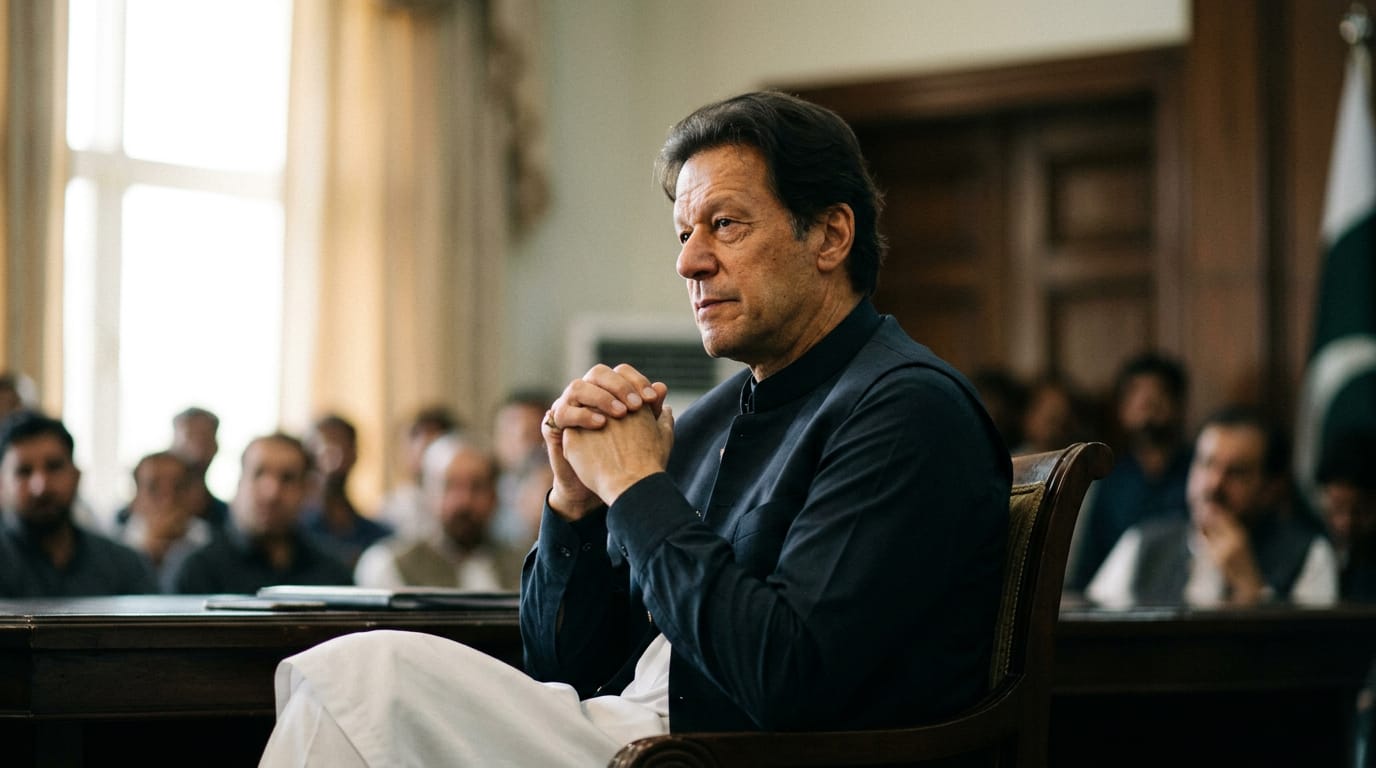
Pakistan's political landscape remains ensnared in a protracted crisis, with former Prime Minister Imran Khan at its epicenter, incarcerated and battling a barrage of legal challenges. As the nation grapples with economic instability and persistent political polarization, speculation intensifies around the possibility of a "new deal" that could alter Khan's fate and potentially reshape Pakistan's future trajectory. Recent developments, including a Supreme Court order for Khan's transfer to a private hospital for medical care, inject a new layer of complexity into the delicate negotiations between the embattled leader, the ruling government, and the powerful military establishment.
The Iron Cage: Khan's Confinement and Legal Battles
Imran Khan, the charismatic leader of Pakistan Tehreek-e-Insaf (PTI), has been imprisoned in Adiala Jail, Rawalpindi, since August 2023, following his conviction in the Toshakhana case. His arrest and subsequent incarceration have triggered widespread protests and plunged the country into a deeper political quagmire. Khan faces a multitude of charges, reportedly exceeding 100, which span corruption, state secrets, and even an accusation of unlawful marriage. He consistently maintains that these cases are politically motivated, orchestrated to dismantle his party and prevent his return to power.
Among the significant convictions are a 14-year sentence in 2025 related to the Al-Qadir Trust land case, where he and his wife, Bushra Bibi, were accused of receiving land as a bribe. Additionally, a 10-year sentence in 2024 for allegedly making public a classified diplomatic cable, though this particular conviction was later overturned. Health concerns surrounding the 73-year-old former cricketer have also gained prominence, with his family and legal team raising alarms about his deteriorating condition, including significant vision loss in one eye. In a notable turn, the Supreme Court recently mandated his transfer from Adiala Jail to Shifa International Hospital in Islamabad for comprehensive medical treatment, a move welcomed by his party and family who had long sought improved access to healthcare and visitation rights.
The Elusive "New Deal": A History of Failed Overtures
The notion of a political "deal" involving Imran Khan is not novel; rather, it is a recurring theme in Pakistan's tumultuous political narrative. Attempts to negotiate with Khan and his party have reportedly been made in the past, but without success. Rana Sanaullah, a former adviser to the prime minister on political affairs, disclosed that at least two serious attempts to strike a deal with Khan's PTI had failed. These previous overtures, often aimed at fostering a more stable political environment, indicate a persistent, albeit often frustrated, desire among various stakeholders to find a way forward.
Khan himself has presented a shifting stance on dialogue. While at times hinting at openness to talks if they serve the country's broader interest, he has also emphatically declared an end to negotiations with the "establishment," accusing them of betrayal. This wavering position underscores the deep mistrust and high stakes involved in any potential political reconciliation. Analysts suggest that Khan has, at various junctures, "played all his cards too soon," potentially leaving him with fewer options outside of negotiation. The very act of President Arif Alvi and Finance Minister Ishaq Dar meeting to discuss the possibility of talks between PTI and the ruling Pakistan Muslim League-Nawaz (PML-N) suggests an ongoing undercurrent of dialogue, despite official denials and public posturing.
The Military's Shadow: A Defining Force in Pakistani Politics
The military establishment has historically cast a long shadow over Pakistan's political landscape, often playing a decisive role in the rise and fall of civilian governments. Imran Khan's own ascent to power in 2018 was widely perceived as having the backing of the military, who sought to dislodge the then-ruling PML-N. However, this relationship soured dramatically, particularly after April 2022 when the military seemingly withdrew its support, paving the way for Khan's ouster through a no-confidence vote.
Following his removal, Khan embarked on an aggressive campaign against the military leadership, directly challenging its traditional authority – an unprecedented move in Pakistani politics. The tensions escalated further after an assassination attempt on Khan in November 2022, which he publicly blamed on a high-ranking official within the Inter-Services Intelligence (ISI) Directorate. A critical turning point was the widespread violence and attacks on military installations by PTI supporters on May 9, 2023, following Khan's arrest. This event prompted a severe crackdown by the military, who vowed to prosecute those involved in military courts and has since been seen as intent on "dismantling the PTI altogether." Despite the establishment's public declarations of neutrality, critics argue that its actions continue to shape the political environment.
PTI's Enduring Popularity and Resistance
Despite the intense crackdown and Khan's ongoing detention, Pakistan Tehreek-e-Insaf retains a significant and fervent support base, particularly among educated, middle-class urbanites. Khan's ability to mobilize large crowds and his narrative of fighting corruption and foreign interference continue to resonate with a substantial portion of the populace. This enduring popularity represents a potent leverage point for Khan, as any political resolution would need to account for the sentiment of his millions of supporters.
However, the party has faced severe impediments, including the loss of its iconic cricket bat election symbol ahead of the 2024 general elections, forcing its candidates to run as independents. Despite these challenges, PTI-backed independents secured the most seats in the election, although they fell short of a majority needed to form a government. The party has also sought to mobilize public opinion through nationwide protests, particularly around significant dates like the anniversary of Khan's imprisonment, to pressure authorities for his release. This resilience and public backing underscore the difficulty for any government or establishment to simply sideline Khan and his movement without risking further instability.
Implications and the Path Forward
The question of whether Imran Khan can forge a new deal carries profound implications for Pakistan's political stability, democratic process, and economic recovery. For the country, a carefully negotiated accommodation, potentially involving some form of release with political restraint or even temporary exile, could help reduce domestic polarization and the recurring political mobilization that has complicated governance and economic efforts. Such an outcome would likely be viewed favorably by international actors, including the United States, which prioritizes stability in Pakistan.
Conversely, a failure to reach a political settlement, or a release that leads to renewed confrontation between Khan and the military establishment, could introduce fresh uncertainty and instability. The country faces an inflection point where continued political infighting risks undermining civil liberties and democratic institutions. Analysts suggest that Khan's future largely hinges on his political choices: continued confrontation makes compromise unlikely, while opting for dialogue could ease pressure on both him and his party. Ultimately, any meaningful change in Khan's status is likely to emerge from complex political negotiations rather than solely judicial resolutions, reflecting the intricate civil-military balance of power in Pakistan. The path ahead remains fraught with uncertainty, but the call for dialogue, even if tentative, suggests that the possibility of a new chapter in Pakistan's political saga has not been entirely closed.