Passenger Train Attacked in Balochistan, Pakistan; Separatist Group Claims Responsibility
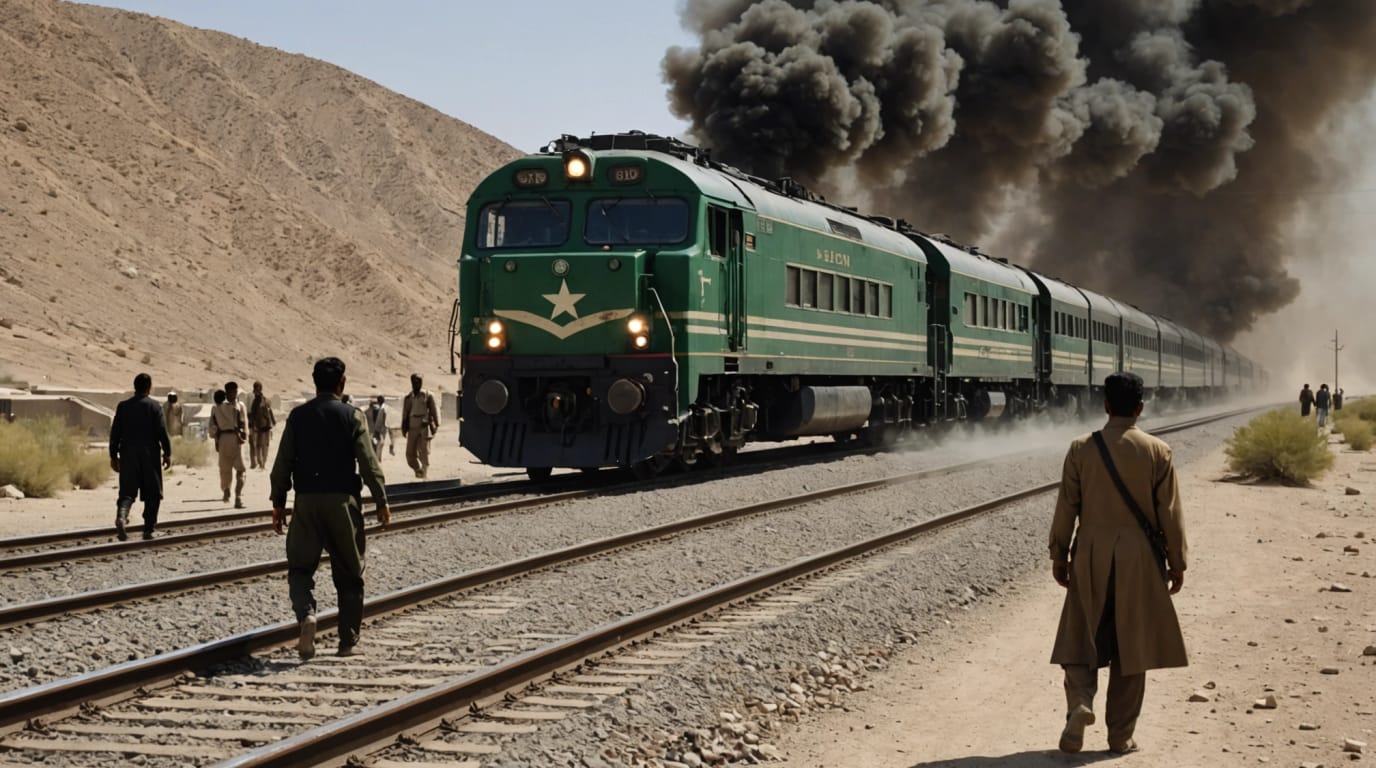
A passenger train, the Jaffar Express, came under attack in Pakistan's Balochistan province on Tuesday, leaving at least one person injured and hundreds of passengers stranded. The Baloch Liberation Army (BLA), a separatist militant group, has claimed responsibility for the attack, alleging they briefly held hostages. The incident underscores the ongoing instability and security challenges in the region, which has been plagued by a decades-long insurgency.
The Attack
The Jaffar Express, en route from Quetta to Peshawar, was targeted in the Mushkaaf area of Bolan district, a mountainous region within Balochistan. Reports indicate that the train was fired upon by armed assailants, resulting in injuries to the train driver. Initial reports suggested multiple passengers were wounded, but those reports remain unconfirmed. The attack prompted immediate emergency measures by the Balochistan government, mobilizing security forces and resources to respond to the situation.
Controller Railways Muhammad Kashif stated the train, comprised of nine coaches, had approximately 500 passengers on board. The train was reportedly stopped by armed men in Tunnel No. 8.
Baloch Liberation Army Claims Responsibility
The Baloch Liberation Army (BLA), a separatist group seeking independence for Balochistan, claimed responsibility for the attack. In a statement to the media, the BLA asserted that its fighters had taken control of the train and held passengers hostage, including security personnel. The group also claimed to have killed six military troops, but these claims have not been verified by government or military sources. Officials from the provincial government or railways did not confirm any hostages were taken. The BLA has stated the attack was to further their goals of independence and to claim what they believe is their fair share of the mineral-rich resources of the area.
Security Response and Aftermath
Following the attack, security forces were dispatched to the scene to secure the area and launch an operation to track down the assailants. An emergency relief train was also dispatched to assist the stranded passengers. Government officials have condemned the attack and vowed to bring the perpetrators to justice. The extent of the damage to the train and the railway infrastructure is still being assessed.
Background: Insurgency in Balochistan
Balochistan, which borders Iran and Afghanistan, has been the site of a long-running insurgency led by various Baloch separatist groups. These groups have been fighting the Pakistani government for decades, demanding greater autonomy, a larger share of the province's natural resources, and an end to alleged human rights abuses. The insurgents accuse the government of exploiting Balochistan's resources while leaving its people in poverty. They also allege that security forces routinely abduct, torture, and execute ethnic Baloch, accusations that government officials and security forces strongly deny. They maintain that they are working to uplift the province through development projects.
The separatist groups frequently target security forces, government installations, and infrastructure projects, including those associated with the China-Pakistan Economic Corridor (CPEC). The CPEC, a multi-billion dollar project, aims to connect China to Pakistan's Gwadar port through a network of roads, railways, and pipelines. Baloch insurgents view these projects as exploitative and detrimental to the interests of the local population.
Implications for Regional Stability
The attack on the Jaffar Express highlights the persistent security challenges in Balochistan and the broader implications for regional stability. The ongoing insurgency not only threatens the lives and livelihoods of the local population but also undermines investor confidence and hinders economic development. The targeting of railway infrastructure disrupts transportation and commerce, further exacerbating the region's economic woes.
The attack also raises concerns about the security of the CPEC projects, which are considered vital to Pakistan's economic future. China has invested heavily in these projects, and any disruption to their progress could have significant economic and strategic consequences. The Pakistani government has repeatedly assured China of its commitment to protecting the CPEC projects, but the recent attack underscores the difficulties in maintaining security in the face of a determined insurgency.
Conclusion
The attack on the Jaffar Express is a stark reminder of the ongoing conflict and instability in Balochistan. While the government has vowed to address the grievances of the Baloch people and promote development in the region, a lasting solution will require a comprehensive approach that addresses the root causes of the insurgency, including political marginalization, economic deprivation, and human rights concerns. Until these issues are resolved, Balochistan will likely remain a volatile and unstable region, posing a threat to both Pakistan and the wider region.


