Pentagon Intensifies Press Curbs, Defying Federal Court Ruling on Access
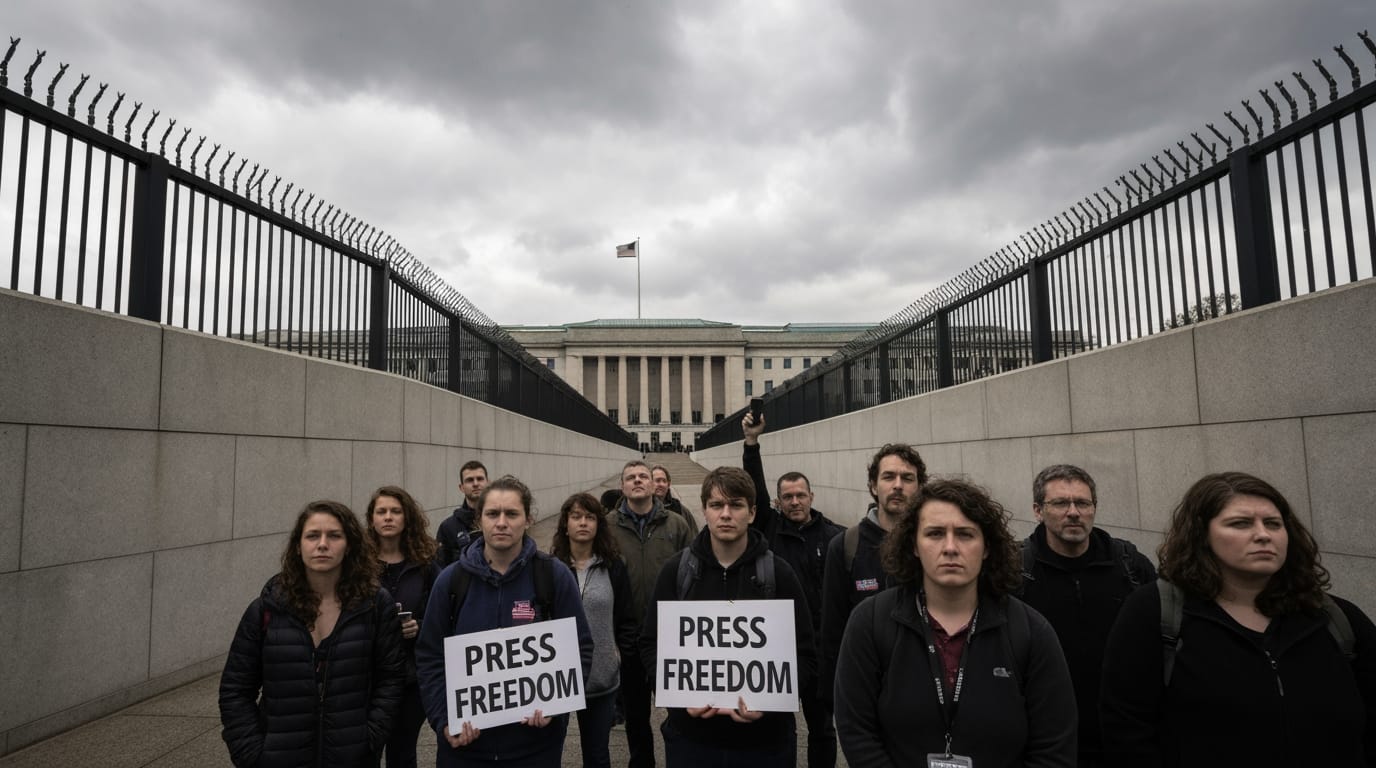
Washington D.C. - Just days after a federal judge struck down the Pentagon's restrictive media access policy as unconstitutional, the Department of Defense has doubled down on its efforts to control information, implementing new measures that effectively tighten restrictions on journalists. The move has ignited a fresh legal battle and drawn sharp condemnation from press freedom advocates, who accuse the Pentagon of defying the spirit, if not the letter, of the court's order.
Court Declares Pentagon's Prior Policy Unconstitutional
The latest escalation stems from a ruling issued on Friday, March 20, by U.S. District Judge Paul Friedman, who sided with The New York Times in its lawsuit against Defense Secretary Pete Hegseth. Judge Friedman declared key provisions of the Pentagon's media access policy, enacted in October 2025, to be unconstitutional, citing violations of the First and Fifth Amendments. Specifically, the judge invalidated the policy's stance that journalists could be deemed security risks and have their credentials revoked for "soliciting" unauthorized information from military personnel. He also rejected the department's characterization of press access as a "privilege" rather than a right.
In his 40-page ruling, Judge Friedman emphasized the critical importance of public access to diverse perspectives about government actions, particularly given the nation's "recent incursion into Venezuela and war with Iran." He found that the policy was designed to "weed out disfavored journalists" and replace them with reporters more "favorable to or spoon-fed by department leadership," constituting illegal viewpoint discrimination. The lawsuit by The New York Times argued that the policy unlawfully restricted essential newsgathering techniques and granted the Pentagon "unfettered" discretion to revoke passes, infringing upon constitutional free speech protections.
Pentagon's Initial Crackdown Sparked Mass Protest
The contested policy, approved by Defense Secretary Hegseth in October 2025, marked a significant departure from long-standing norms. It aimed to limit reporters' coverage to officially sanctioned statements and information, threatening credential revocation for those who sought information outside official government channels. The policy's requirement for journalists to sign an agreement not to solicit unauthorized information was met with widespread resistance.
In a rare show of unity, dozens of major news organizations, including The New York Times, The Washington Post, Associated Press, Reuters, CNN, NBC News, and Fox News, refused to sign the new restrictions. On October 15, 2025, these journalists symbolically turned in their access badges and vacated their dedicated office spaces within the Pentagon, an area historically known as the "Correspondents' Corridor." Their departure effectively left the Pentagon's in-house press corps predominantly composed of outlets that agreed to the new terms, which critics perceived as pro-administration.
New Restrictions Imposed Amid Appeal
Despite Judge Friedman's clear ruling, Pentagon spokesperson Sean Parnell announced Monday, March 24, that the Defense Department would immediately appeal the decision. Simultaneously, Parnell revealed new access protocols that, paradoxically, appear to further restrict media operations.
Effective immediately, the "Correspondents' Corridor" within the Pentagon building, which journalists have utilized for decades, has been permanently closed. Under the revised policy, all journalist access to the Pentagon will now require escort by authorized Department personnel. While credential holders will still have access for scheduled briefings and interviews arranged through public affairs, the sudden closure of their workspace and the new escort requirement represent a significant hurdle to independent reporting. Parnell stated that a "new and improved press workspace" would eventually be established in an "annex facility" outside the main Pentagon building but still on its grounds, though no timeline was provided for its availability. The Pentagon cited ongoing security concerns as the rationale for these changes.
Media Outlets and Advocates Condemn Escalation
The Pentagon's swift response has been met with renewed outrage from press organizations. The New York Times quickly issued a statement, asserting that the new policy does not comply with the judge's order and "continues to impose unconstitutional restrictions on the press." The Times spokesperson, Charlie Stadtlander, confirmed the newspaper would be "going back to court."
The Pentagon Press Association, representing the journalists who cover the Defense Department, condemned the move as a "clear violation of the letter and spirit" of Judge Friedman's ruling. The association questioned the timing of the restrictions, particularly "at such a critical time" given the ongoing military actions in Venezuela and Iran, arguing that it undermines the public's need for "clear, unfiltered information" about the U.S. military. The National Press Club echoed these sentiments, stating that closing the corridor and mandating escorted access "undermines independent reporting" at a moment when transparency is paramount.
First Amendment advocates, including the Freedom of the Press Foundation and the Reporters Committee for Freedom of the Press, had previously celebrated Friedman's initial ruling as a victory against what they called a "shocking" and "sweeping prior restraint" on the press. The Pentagon's subsequent actions are seen by many as a direct challenge to the judiciary and a continued assault on the fundamental principles of press freedom.
Broader Implications for Transparency and Public Discourse
This ongoing conflict between the Pentagon and the press carries significant implications for government transparency and informed public discourse. Critics argue that limiting journalists' ability to gather information independently creates an environment where the public's understanding of military operations, foreign policy, and the substantial expenditure of taxpayer dollars is filtered through an official lens.
The restrictions are viewed by many as part of a broader pattern by the current administration to manage information flow, often by discrediting traditional media and promoting outlets perceived as more favorable. The ability of journalists to question officials, seek diverse sources, and report from the ground without constant escort is central to their role as watchdogs in a democratic society. As the legal battle continues, the fundamental right of the public to be informed about its government's actions remains at the heart of the dispute.


