Peru Faces Pivotal Election to Select Ninth President in a Decade Amid Deep Political Instability
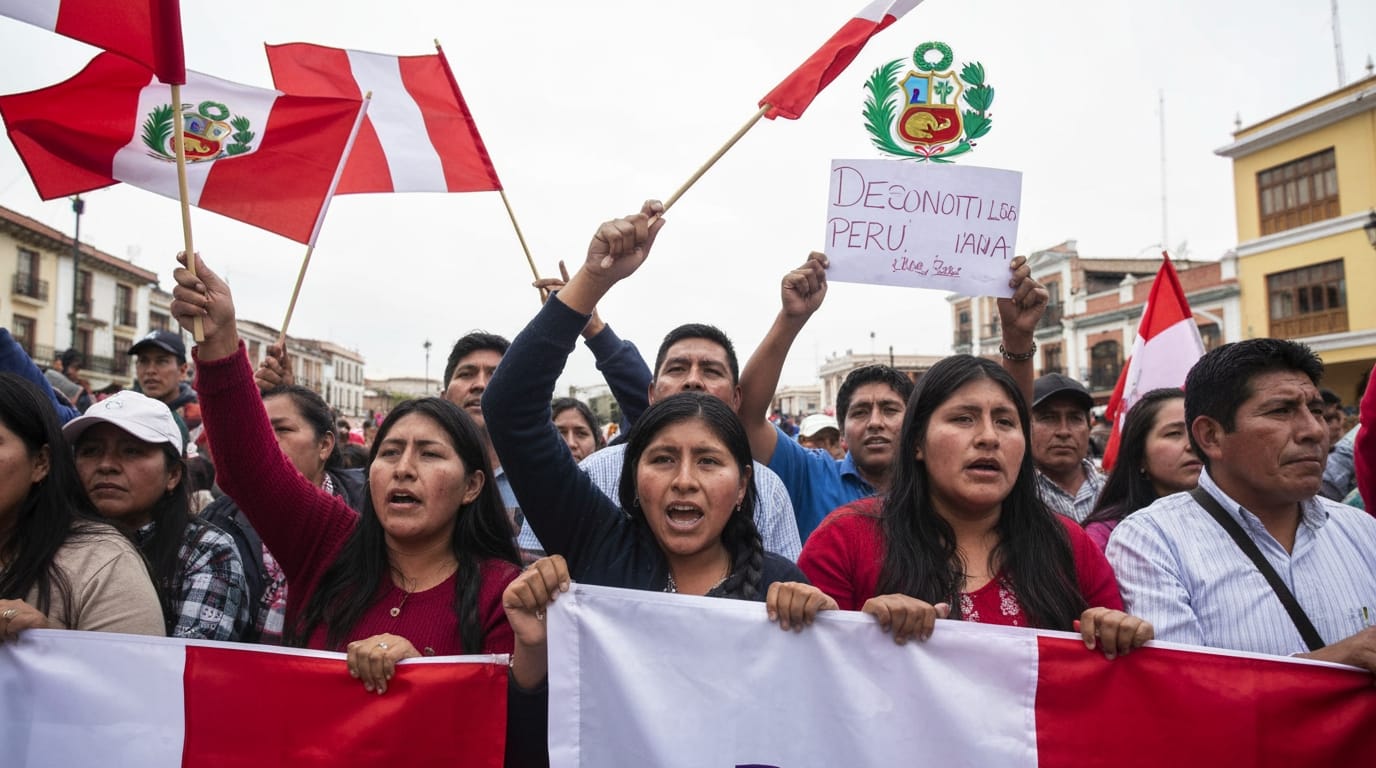
Lima, Peru – June 7, 2026 – Peruvians head to the polls today for a critical presidential runoff election, a contest that will install the nation's ninth president in just a decade. This extraordinary rate of leadership turnover underscores a profound and ongoing crisis of political instability, corruption, and public distrust that has plagued the Andean nation for years. As conservative Keiko Fujimori and left-leaning Roberto Sánchez vie for the top office, voters express deep fatigue and skepticism, desperately hoping this election might finally usher in a period of much-needed stability.
A Cycle of Constant Upheaval
Since 2016, Peru has endured an almost uninterrupted sequence of presidential collapses, impeachments, resignations, and institutional paralysis, making it a stark case study in political volatility. The current cycle of revolving leadership traces back to the presidency of Pedro Pablo Kuczynski, who took office in 2016 and later resigned amid corruption allegations linked to the Odebrecht scandal. His successors, including Martín Vizcarra, Manuel Merino, Francisco Sagasti, Pedro Castillo, and Dina Boluarte, each saw their tenures cut short by impeachment proceedings, resignations, or attempted power grabs. The most recent interim president, José Jerí, was himself removed just months into his term over corruption allegations. Many of these former leaders have faced criminal investigations, and some are currently imprisoned, including former President Pedro Castillo, who was jailed after attempting to dissolve Congress in December 2022.
At the heart of this relentless churn is Peru's 1993 constitution, which includes a vaguely defined clause allowing Congress to remove a president for "permanent moral or physical incapacity." This provision has been repeatedly weaponized by a fragmented and often obstructionist Congress, turning individual political failures or clashes into rapid changes in leadership. Political analyst Franco Olcese notes that the executive branch in Peru often lacks the structural weight of the legislature, making it "uncomplicated to remove a sitting president" through frequent impeachment proceedings. This dynamic has fostered an environment where achieving sustained governance and implementing long-term policies is exceedingly difficult.
The Fragmented Political Landscape
The 2026 election reflects this deep fragmentation. The initial ballot featured a staggering 35 to 36 presidential candidates, leading to a first-round outcome where no candidate secured a significant mandate. Keiko Fujimori of the conservative Popular Force party finished first with 17.19% of the vote, while Roberto Sánchez of the left-leaning Juntos por el Perú party narrowly secured second place with 12.03%. These low percentages underscore a political system where traditional party structures have collapsed, and no single figure commands broad national legitimacy.
Keiko Fujimori, daughter of the controversial former president Alberto Fujimori, is making her fourth bid for the presidency. Her campaign, often evoking her father's "mano dura" (iron fist) reputation, promises a tough stance on crime and a return to order. However, her political career is also shadowed by her party's history of congressional obstructionism and its role in destabilizing previous administrations. Roberto Sánchez, a former minister in Pedro Castillo's administration, appeals to a different segment of the electorate, particularly rural voters, by aligning himself with Castillo's legacy and advocating for a new constitution. The runoff is exceptionally tight, with recent polls indicating a statistical tie, leaving a significant portion of the electorate undecided or planning to cast blank ballots.
Economic Resilience Tested by Social Woes
Remarkably, Peru's economy, driven by its rich mineral resources and status as the world's second-largest copper producer, has shown a degree of resilience amidst the political chaos. The country posted more than 3% growth in 2024 and 2025, and major investment decisions in the mining sector do not appear to have been entirely deterred by the instability.
However, economists warn that the continuous political turmoil is taking a toll on Peru's long-term economic prospects. The persistent uncertainty negatively affects investment, consumption, and credit conditions, potentially slowing growth below its pre-pandemic trend. Progress on crucial structural reforms, particularly those needed to unlock stalled mining projects, is hampered by political gridlock and frequent changes in government. Furthermore, the country's fiscal framework has weakened, with Congress increasingly asserting fiscal powers that have led to missed targets and difficulties in implementing sound economic policies. The average tenure of a minister in Peru now stands at little more than six months, a stark contrast to two years just over a decade ago, severely hindering policy continuity and effective governance across sectors.
Beyond economics, the social fabric of Peru is under immense strain. Public concern over rising crime and corruption has surged, becoming the top priorities for most Peruvians. Organized crime, extortion, illegal mining, and urban violence have expanded rapidly, fostering a climate of fear and frustration. This discontent has frequently spilled over into social unrest and protests, further challenging the stability of successive governments. Public distrust in political institutions is at an all-time high, with polls showing widespread disapproval of Congress and a general weariness with the political class.
The Path Forward: Challenges and Hope
The next president will inherit a nation grappling with a multitude of deep-seated challenges. Governing with a highly fragmented Congress, which will transition to a bicameral system later this year, will require unprecedented negotiation and consensus-building to avoid perpetuating the cycle of legislative-executive clashes. While a bicameral system might make presidential removal more difficult, it could also lead to legislative paralysis, hindering necessary reforms. Addressing soaring crime rates, combating entrenched corruption, reducing social inequality, and strengthening democratic institutions will be paramount.
For many Peruvians, this election is less about ideological enthusiasm and more about a desperate plea for stability and effective governance. The incoming leader will face the monumental task of rebuilding public trust, fostering political dialogue, and implementing comprehensive institutional reforms to break free from a decade-long pattern of instability. Without genuine efforts to reform the political system and forge a more cooperative relationship between the branches of government, Peru risks further entrenching the volatility that has defined its recent history. The outcome of today's vote will determine not just who holds the presidential office, but potentially the very trajectory of Peru's democratic future.


