Peru Grapples with Deepening Crisis After Interim President’s Swift Ouster Amid Corruption Fallout
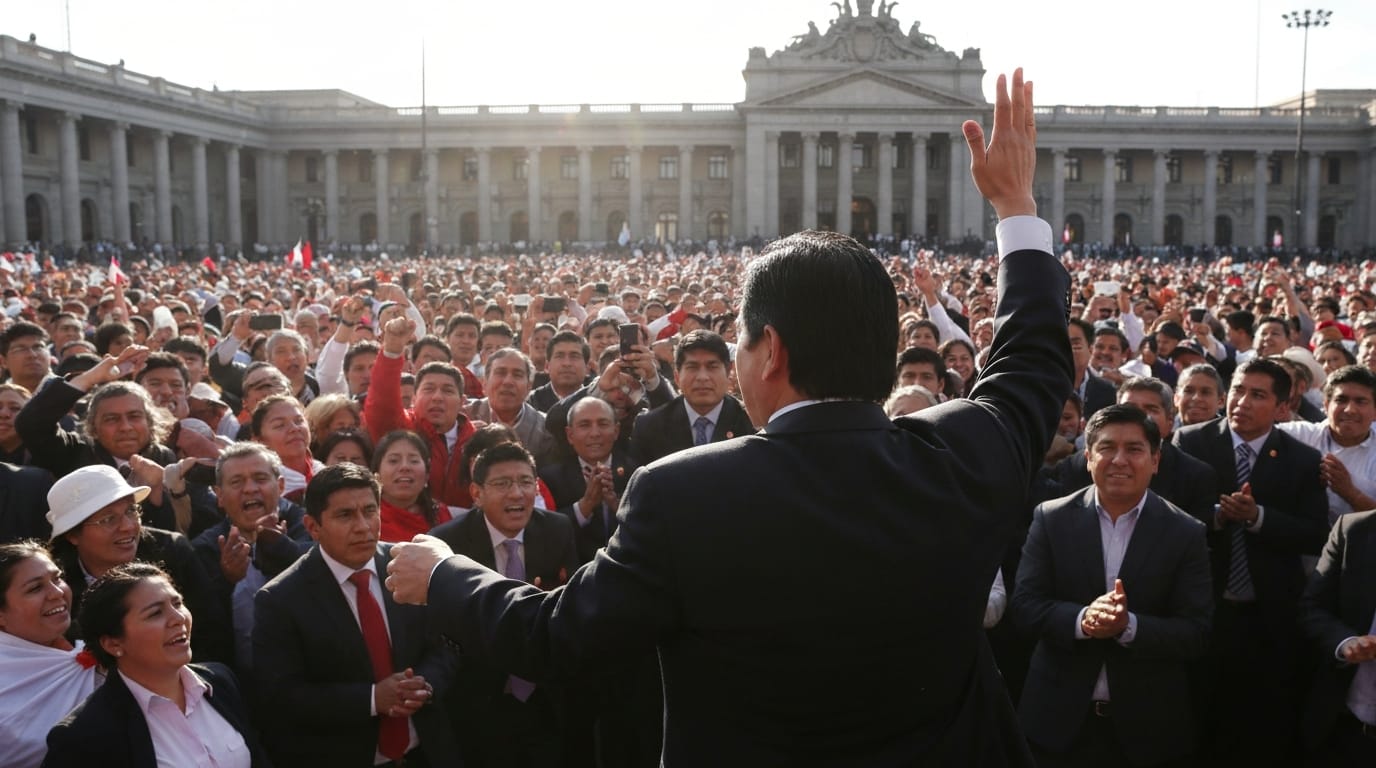
LIMA, Peru – Peru finds itself once again at a critical political crossroads, reeling from the abrupt resignation of its interim president, Manuel Merino, just days into his contentious tenure. The lightning-fast departure, spurred by massive street protests and a national outcry over alleged corruption, underscores the profound instability gripping the Andean nation and highlights a relentless cycle of political upheaval that has seen multiple leaders fall in recent years. Merino's exit, less than a week after taking office, plunges Peru further into uncertainty, leaving a power vacuum and a populace deeply fractured by distrust in its political institutions.
The dramatic events of November 2020 began with the impeachment and removal of popular President Martín Vizcarra by Congress on charges of "moral incapacity," stemming from allegations of bribery during his time as a regional governor. This move, widely perceived by many citizens as an illegitimate power grab by a highly unpopular Congress, immediately thrust Merino, then head of Congress, into the presidency. However, his ascension ignited a firestorm of public outrage, leading to widespread, often violent, demonstrations across the country. The intensity of public rejection, fueled by a pervasive sense of betrayal and exasperation over chronic corruption, quickly rendered Merino's position untenable.
A Nation on Edge: The Ousting and Its Immediate Aftermath
Manuel Merino's presidency was controversial from its inception. Taking the oath of office following Congress's vote to impeach President Vizcarra, Merino inherited a nation simmering with discontent. Vizcarra, despite facing corruption allegations, maintained high approval ratings among the populace, largely due to his anti-corruption stance and efforts to reform the judiciary and Congress. His impeachment, viewed by many as a politically motivated maneuver by a Congress eager to avoid accountability and investigations, was met with immediate and widespread condemnation.
Within hours of Merino's swearing-in, thousands poured into the streets of Lima and other major cities, protesting what they called a parliamentary coup. The demonstrations escalated rapidly, fueled by social media and a deep-seated frustration with the political elite. Security forces responded with increasing force, leading to clashes that resulted in dozens of injuries and, tragically, the deaths of at least two young protesters. These fatalities proved to be the tipping point. The public outcry intensified, leading to the resignation of nearly Merino's entire cabinet and a direct ultimatum from Congress for him to step down. Facing an untenable situation and a nation on the brink, Merino announced his resignation, marking one of the shortest presidential tenures in Peru's history. His departure triggered a desperate scramble within Congress to appoint a new leader, eventually settling on Francisco Sagasti, a moderate legislator, to steer the country through the crisis.
The Shadow of Corruption: A Persistent Stain on Peruvian Politics
The rapid-fire political shifts are inextricably linked to a deep-rooted and pervasive problem of corruption that has plagued Peru for decades, undermining public trust and stability. The specific allegations against former President Vizcarra involved accepting bribes from construction companies in exchange for public works contracts when he served as governor of the Moquegua region between 2011 and 2014. These accusations, part of a larger ongoing investigation into a network of bribery known as the "Club de la Construcción," highlight a systemic issue where illicit payments have become deeply embedded in public contracting processes.
Vizcarra's impeachment itself was not his first encounter with such a move; an earlier attempt by Congress to remove him in September 2020 over similar allegations failed to garner sufficient votes. The persistent nature of these allegations against multiple high-ranking officials, coupled with a perceived lack of accountability, has eroded the public's faith in the political system. The average Peruvian sees a revolving door of leaders, many of whom are quickly implicated in or removed over corruption scandals, fostering a profound sense of cynicism and hopelessness regarding the prospect of clean governance. This environment of distrust formed the volatile backdrop against which Merino's brief presidency unfolded and ultimately collapsed.
A Decade of Instability: Peru's Recurring Political Nightmare
Peru's recent history is a stark chronicle of political instability, making the current crisis tragically familiar. Over the past five years, the country has cycled through four presidents, with several former heads of state either imprisoned, facing active investigations, or having died by suicide to avoid arrest in corruption probes. Martín Vizcarra's predecessor, Pedro Pablo Kuczynski, resigned in 2018 amidst allegations of corruption and vote-buying, specifically linked to the massive Odebrecht scandal that implicated leaders across Latin America. Before him, Ollanta Humala, Alan García, and Alejandro Toledo have all faced or are facing charges related to corruption during their tenures. Alan García famously took his own life in 2019 as police arrived to arrest him on bribery charges.
This pattern of presidential turnover and scandal is not merely superficial; it reflects deep structural weaknesses within Peru's political system, including a highly fragmented Congress with numerous small parties, often lacking strong ideological cohesion, and a constitutional framework that allows for relatively easy impeachment of presidents. The constant friction between the executive and legislative branches, exacerbated by persistent corruption allegations on both sides, creates an environment where governance becomes incredibly challenging, hindering long-term policy implementation and economic development. The political turmoil not only distracts from crucial socio-economic issues but also deters foreign investment and erodes international confidence in Peru's stability.
Implications and the Path Forward for a Fragile Democracy
The swift removal of an interim president within days of taking office, fueled by popular protests and the persistent specter of corruption, carries profound implications for Peru's already fragile democracy. The immediate challenge lies in restoring a semblance of political stability and public trust ahead of the general elections scheduled for April 2021. Francisco Sagasti, as the new interim president, faces the daunting task of bridging deep societal divisions, calming social unrest, and ensuring a transparent electoral process, all while navigating a deeply polarized Congress and a public that has lost faith in its leaders.
Beyond the immediate political landscape, the crisis underscores the urgent need for fundamental institutional reforms. Strengthening anti-corruption bodies, reforming campaign finance laws, and reviewing the constitutional provisions that allow for such frequent changes in leadership are critical steps. Without addressing the systemic issues that foster corruption and political gridlock, Peru risks perpetuating this cycle of instability, jeopardizing its economic recovery from the pandemic and its long-term development. The events of November 2020 serve as a stark reminder that while leaders may come and go, the underlying demand for accountability and honest governance remains a powerful, unyielding force among the Peruvian people.
Conclusion
Peru's dramatic political convulsions, culminating in the rapid ouster of interim president Manuel Merino, are a vivid manifestation of a nation grappling with profound disillusionment and a pervasive crisis of trust. The events laid bare the deep fissures within Peruvian society, exacerbated by a relentless cycle of corruption allegations and the perceived unaccountability of its political class. As the country looks toward a new interim leader and impending elections, the path to stability remains fraught with challenges. Rebuilding confidence in democratic institutions, fostering genuine accountability, and addressing the root causes of corruption will be paramount for Peru to break free from this debilitating cycle and chart a course toward a more stable and prosperous future. The lessons from this tumultuous period underscore the critical importance of legitimate governance and the unwavering power of a populace demanding integrity from its leaders.