Philippine Senate to Investigate Duterte's Arrest and Handover to ICC
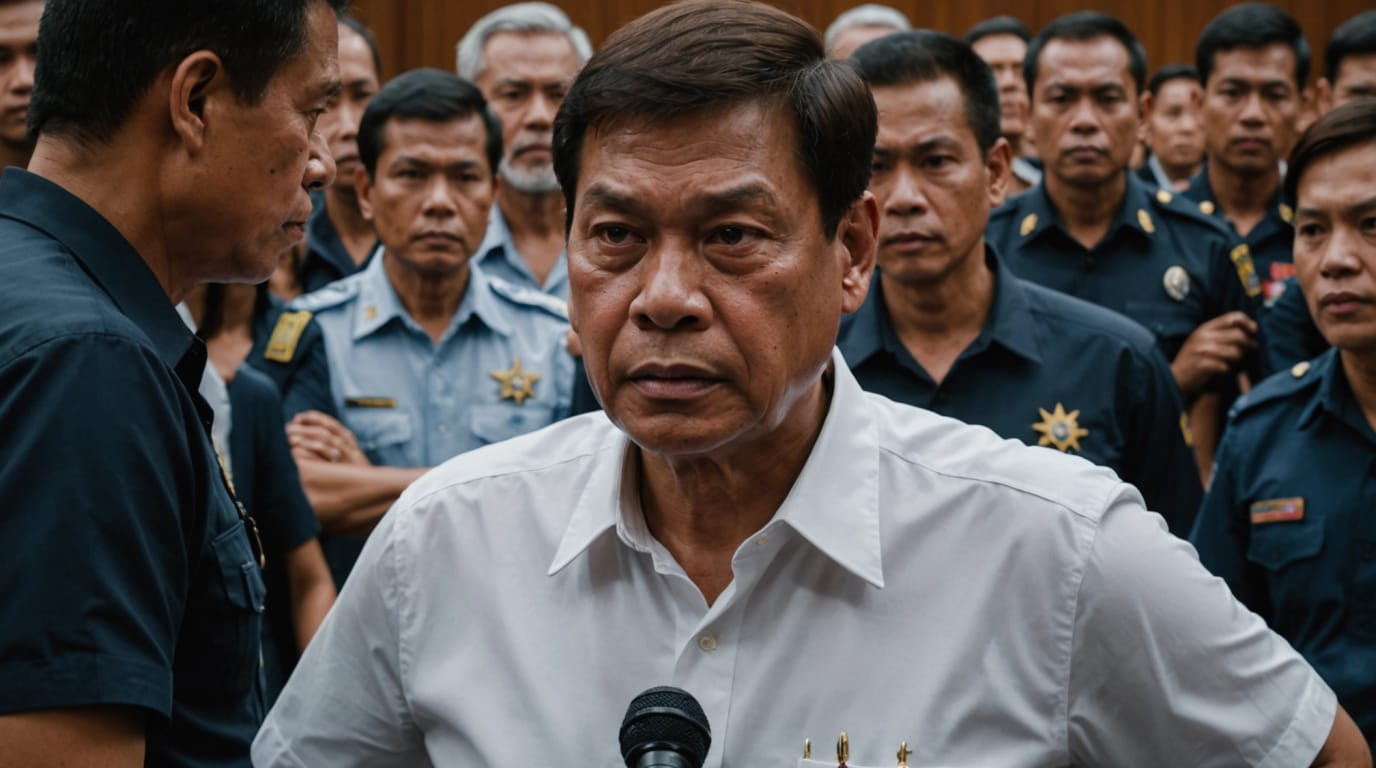
The Philippine Senate is set to launch a formal investigation into the arrest and subsequent handover of former President Rodrigo Duterte to the International Criminal Court (ICC). Senator Imee Marcos, sister of President Ferdinand Marcos Jr., announced the probe amid growing concerns about due process and the country's sovereignty. The investigation comes after Duterte's arrest on March 11 in Manila, upon his return from Hong Kong, and his swift transfer to The Hague to face charges of crimes against humanity.
Background: Duterte's Arrest and ICC Involvement
Rodrigo Duterte, who served as president of the Philippines from 2016 to 2022, faces accusations of crimes against humanity related to his administration's "war on drugs." The ICC has been investigating these allegations since 2018, focusing on extrajudicial killings allegedly committed between November 2011 and March 2019, a period during which the Philippines was a member of the ICC. Duterte withdrew the Philippines from the Rome Statute, the ICC's founding treaty, in 2019, but the court maintains jurisdiction over crimes committed before the withdrawal took effect.
The ICC issued an arrest warrant for Duterte on March 7, citing reasonable grounds to believe he bears criminal responsibility for murder as a crime against humanity. The warrant alleges that Duterte, as founder and head of the Davao Death Squad and later as president, directed a widespread and systematic attack against the civilian population. Official police statistics indicate that over 6,000 Filipinos were killed in the "drug war," while human rights groups estimate the number to be over 30,000.
Duterte's arrest marks the first time a leader in the Philippines has faced a case before an international tribunal. His detention and transfer to The Hague have been hailed by human rights groups as a crucial step toward accountability for the victims of the drug war.
Senate Investigation: Due Process and Sovereignty Concerns
Senator Imee Marcos, as chairperson of the Senate Committee on Foreign Relations, is spearheading the investigation into Duterte's arrest. The probe aims to determine whether due process was followed and to ensure that Duterte's legal rights were protected during the arrest and handover. Marcos emphasized the need to uphold the country's jurisdiction and clarify policies governing law enforcement agencies' engagement with international tribunals.
"As chairperson of the Senate Committee on Foreign Relations, I am calling for an urgent investigation into the arrest of former President Rodrigo Roa Duterte, an issue that has deeply divided the nation," Marcos said in a statement. "It is imperative to establish whether due process was followed and to ensure that his legal rights were not just upheld but protected. Our sovereignty and legal processes must remain paramount."
The Senate has scheduled a public hearing for March 20 and has invited top police and government officials to provide evidence. Key officials from the Philippine National Police, Office for Transportation Security-Department of Transportation, Department of Justice, National Security Council, and Civil Aviation Authority of the Philippines are expected to attend.
Marcos Administration's Shifting Stance
The arrest of Duterte represents a significant shift in the Marcos administration's stance toward the ICC. Initially, President Ferdinand Marcos Jr. rejected the ICC's jurisdiction over the Philippines and stated that the country would not cooperate with the investigation. However, after a political falling out between the Marcos and Duterte camps in 2024, the administration toned down its rhetoric and stated it would work with Interpol if an arrest warrant were issued.
President Marcos Jr. has defended Duterte's arrest as "proper and correct," citing the Philippines' commitment to Interpol. He stated that the arrest was not an act of political persecution but rather a fulfillment of the country's obligations to the international police organization. However, this explanation has faced scrutiny, given the administration's previous rejection of the ICC's involvement.
Reactions and Implications
Duterte's arrest has elicited mixed reactions in the Philippines. Supporters of the former president have staged protest rallies, demanding his return and denouncing the ICC's intervention. In Davao City, an estimated 30,000 people gathered to support Duterte. Conversely, families of victims of the drug war and human rights advocates have welcomed the arrest, viewing it as a step toward justice and accountability.
The Philippine National Police (PNP) has vowed to cooperate with the Senate investigation. PNP Public Information Office chief Col. Randulf Tuaño stated that the process of arrest should be tackled in court and that the PNP is ready to provide any necessary information.
The ICC's involvement in the Philippines has sparked debate about the country's sovereignty and the role of international tribunals. Some argue that the ICC's investigation undermines the Philippines' jurisdiction over its domestic affairs, while others maintain that it is necessary to address human rights violations and ensure accountability for those responsible.
Conclusion: A Nation Divided
The arrest of Rodrigo Duterte and the subsequent Senate investigation have further divided the Philippines. The probe raises critical questions about due process, sovereignty, and the country's relationship with the International Criminal Court. As the investigation unfolds, it is crucial to ensure transparency, protect the rights of all parties involved, and uphold the rule of law. The outcome of this process will have significant implications for the Philippines' justice system, its international relations, and its commitment to human rights.


