Polish Authorities Thwart Christmas Market Attack Plot, Detain University Student
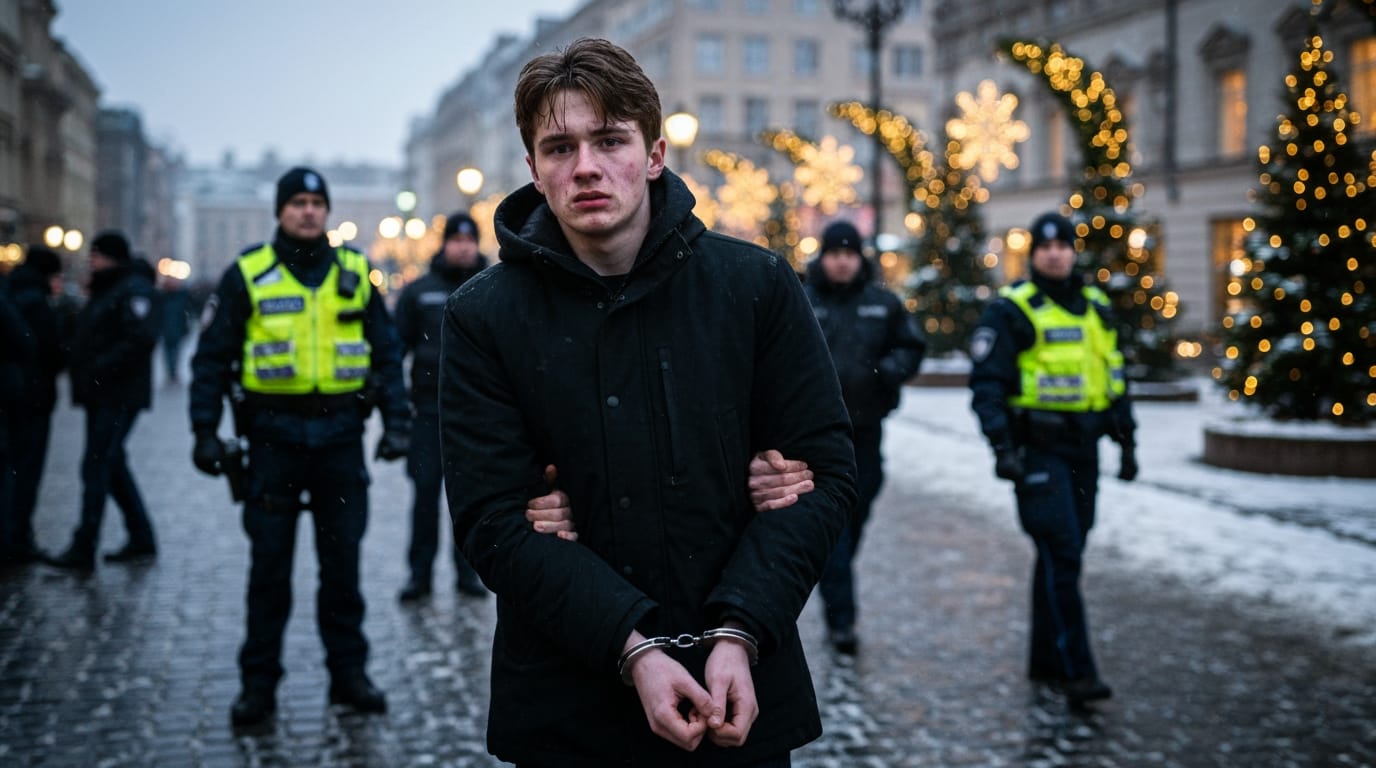
WARSAW, Poland – Polish security services have announced the detention of a university student suspected of plotting a "mass attack" at a Christmas market, an incident that underscores the persistent threat of terrorism targeting festive European gatherings. The Internal Security Agency (ABW) apprehended the individual, identified only as Mateusz W., following an investigation into his alleged intent to use explosives and his reported efforts to align with the Islamic State terrorist organization. This latest development highlights heightened vigilance across the continent as seasonal markets open under increased security measures.
Allegations of a Foiled Bomb Plot
Jacek Dobrzynski, a spokesperson for Poland's special services, confirmed Tuesday that Mateusz W., a student at the Catholic University of Lublin, was suspected of preparing an attack intended to cause widespread casualties and sow terror. Investigators allege that the suspect's objective was to "intimidate many people and support the Islamic State". The plot reportedly involved the use of explosives, with Mateusz W. actively gathering information on how to independently construct such devices. Furthermore, authorities indicate that the student had taken steps to establish contact with a terrorist organization, seeking operational support for his planned actions.
The ABW's operation culminated on November 30 with searches conducted in the Łódź and Lublin provinces, where officers seized various data carriers, including the suspect's mobile phone, and items associated with Islam. Following his apprehension, Mateusz W. was formally charged by the prosecutor's office with "undertaking preparatory actions to carry out a terrorist attack that could have resulted in the death or serious injury of many people" and with taking steps to establish contact with a terrorist organization. A court subsequently ordered his pre-trial detention for a period of three months while the investigation continues. Officials have refrained from disclosing the specific Christmas market targeted to prevent public panic, noting that such threats could materialize in any urban center. The Catholic University of Lublin has confirmed the suspension of Mateusz W., a first-year law student, following notification of his detention. If convicted, he could face a prison sentence of up to 12 years.
The Suspect's Reported Radicalization
Details emerging from the investigation paint a picture of a young man from a reportedly devoutly Catholic family who allegedly became drawn to extremist ideologies. Mateusz W., described as 19 years old, is said to have become "deeply infatuated with Islam" and, in the words of a security services spokesperson, "fell in love with terrorism". This alleged shift towards radicalization and a desire to connect with the Islamic State forms a central part of the charges against him. The seizure of data carriers and items related to Islam during the searches suggests investigators are probing the extent of his involvement and the sources of his alleged radicalization. The case raises questions about how young individuals, even those without prior overt connections to extremism, can reportedly become ensnared in such dangerous plots.
European Vigilance Amid Recurring Threats
This arrest in Poland occurs within a broader European landscape marked by persistent concerns over terrorist activities, particularly those aimed at public gatherings during the holiday season. The detention comes just days after authorities in Germany foiled another alleged plot involving five suspects who reportedly intended to carry out a vehicle-ramming attack at a Bavarian Christmas market. That incident involved an Egyptian imam and several Moroccan men. Earlier, Austrian authorities also thwarted an Islamic State-inspired plot to bomb a Christmas market in Vienna.
Christmas markets, vibrant centers of seasonal tradition and community, have regrettably become recurring targets for extremist groups across Europe. Notable past incidents include the 2016 attack on a Christmas market in Berlin, where a terrorist drove a stolen truck into a crowd, killing 12 people, and the 2024 vehicle-ramming attack in Magdeburg, which resulted in six deaths and hundreds of injuries. These events have prompted governments to implement extensive security measures, including concrete barriers, increased surveillance, and heightened police presence, significantly altering the experience of these festive events. Polish authorities themselves had previously charged three 19-year-old men in June with stockpiling explosives and plotting terror attacks, including a suspected school target. The continuous nature of these threats underscores the critical role of intelligence and security services in pre-empting potential tragedies and safeguarding public spaces.
Legal Framework for Young Adults in Poland
Given Mateusz W.'s age, the legal proceedings will navigate Poland's criminal justice system, which has specific provisions for young adults. In Poland, individuals aged 17 and above can generally be subject to criminal liability and detention on the same basis as adults. While the law allows for educational or reformatory measures for perpetrators between 17 and 18 years old, especially considering their mental development and personal situation, Mateusz W. is 19, placing him firmly within the adult criminal responsibility framework. Nonetheless, even if tried as an adult, the maximum penalty in certain cases for a juvenile may not exceed two-thirds of the statutory maximum, though for a 19-year-old, this specific provision might not apply in the same way as for a minor. The fact that he is already in three-month pre-trial detention indicates the serious nature of the charges and the ongoing judicial process.
The swift action by Polish authorities in uncovering and neutralizing this alleged plot serves as a stark reminder of the persistent global fight against terrorism. While the holiday season is a time for celebration and community, it also demands unwavering vigilance from security agencies and the public alike. The successful thwarting of this attack demonstrates the critical importance of intelligence gathering and inter-agency cooperation in protecting civilians and preserving the cherished traditions that define European culture. The case against Mateusz W. will continue to unfold, shedding more light on the motivations and methods behind such dangerous undertakings, as authorities remain committed to preventing future acts of violence.


