Polish Opposition Candidate Signals Overture to Far-Right, Reshaping Political Landscape
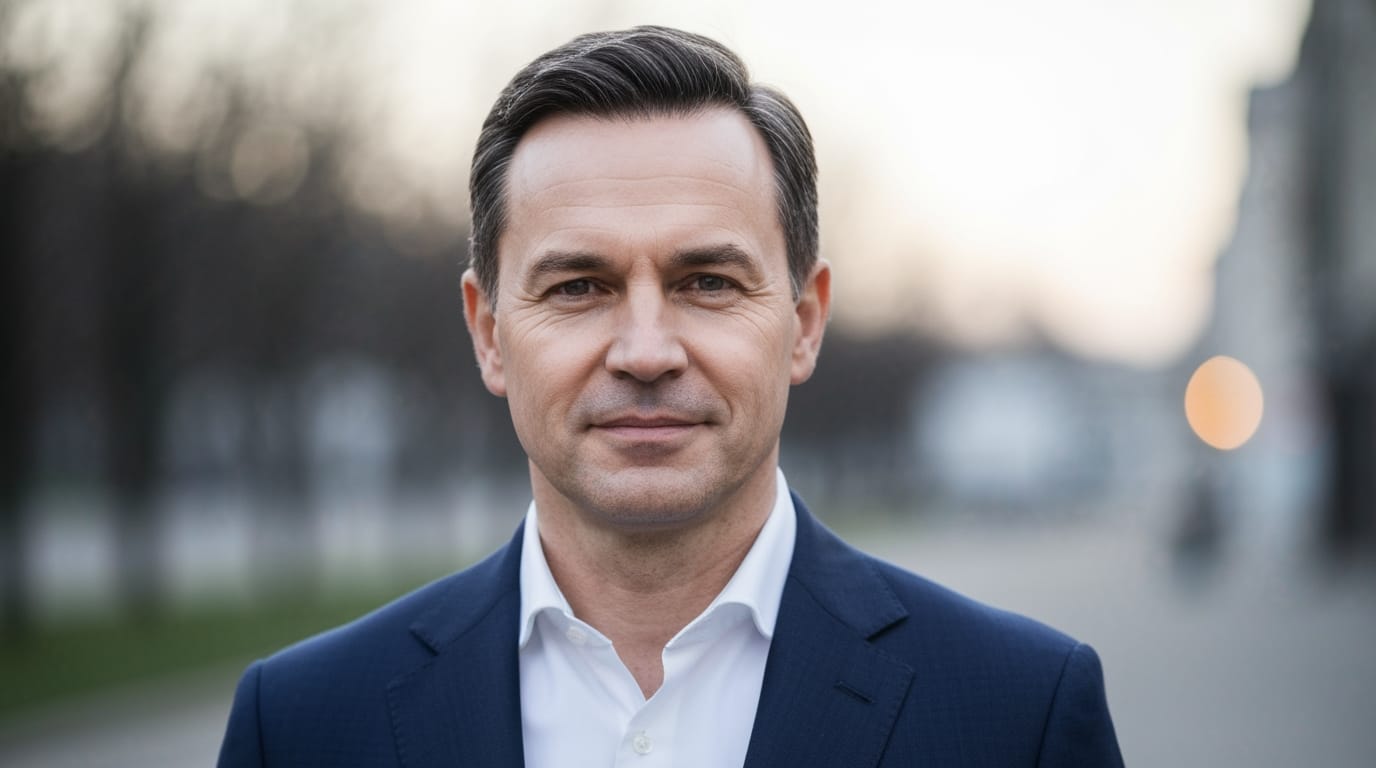
WARSAW – Poland's main opposition Law and Justice (PiS) party has named Przemysław Czarnek, a controversial hardliner, as its candidate for prime minister in the upcoming 2027 parliamentary elections, a move signaling a strategic shift to attract the burgeoning far-right electorate. Immediately following his nomination, Czarnek extended an olive branch to the far-right Confederation, suggesting a shared vision for a "responsible right-wing government" and sparking concerns among liberal circles about a potential consolidation of nationalist forces that could profoundly alter Poland's political trajectory and its relationship with the European Union. This strategic overture comes amidst a significant rise in support for far-right parties, presenting PiS with both an opportunity for a parliamentary majority and a critical challenge to its traditional dominance on the right.
The New Face of PiS: A Decisive Rightward Shift
The selection of Przemysław Czarnek as PiS's prime ministerial candidate marks a significant turning point for the national-conservative party. Announcing the decision at a party congress in Kraków, PiS leader Jarosław Kaczyński presented Czarnek as the individual best suited to "face up to the challenge" of returning to power and to unify the party's base. Czarnek, a 48-year-old lawyer and academic, previously served as education minister and is widely recognized for his staunchly conservative views. He has been an outspoken critic of LGBTQ+ rights, holds fervent Catholic beliefs, and has made controversial remarks regarding the role of women in society, even expressing support for corporal punishment. Observers largely interpret his nomination as a clear signal of PiS's intention to further shift its rhetoric to the right, aiming to capture votes from those disillusioned with what they perceive as PiS's insufficient adherence to nationalist principles. His policy positions also include extremely tough rhetoric on historical memory and relations with Kyiv, indicating potential shifts in foreign policy should he come to power.
The Unstoppable Ascent of Poland's Far-Right
The strategic pivot by PiS is a direct response to the rapid rise of Poland's far-right, which has transformed from a fringe movement into a significant political force. The Confederation party, in particular, has seen its support almost double, now polling around 13% compared to its 7% share in the 2023 parliamentary elections. Adding to this dynamic is the Confederation of the Polish Crown (KPP), led by Grzegorz Braun, which has surged in popularity to around 7-8% following Braun's unexpectedly strong performance in last year's presidential campaign. Braun, a highly controversial figure known for his antisemitic and strongly anti-EU views, gained international notoriety for dousing a Hanukkah menorah in parliament in 2023.
These far-right factions are attracting a diverse coalition of protest voters, economically frustrated groups, and culturally conservative constituencies, expanding their reach beyond traditional fringe audiences. Political analysts suggest that if Confederation and KPP were to overcome their fragmentation and reunite before the 2027 parliamentary elections, they could collectively garner over 20% of the vote. Such a consolidation would pose an unprecedented challenge to Poland's long-standing two-party system, which has historically been dominated by PiS and the Civic Coalition. This growing influence has created a vacuum on the extreme right that PiS appears eager to fill or at least neutralize through cooperation.
PiS's Electoral Calculation: A Pragmatic Alliance?
PiS's decision to appoint Czarnek and subsequently court the far-right Confederation is rooted in a pragmatic assessment of its current electoral standing. After eight years in power, PiS lost control of the government in December 2023 to a coalition led by Donald Tusk's Civic Coalition. Since then, PiS's support has dwindled to its lowest level in 14 years, with average poll numbers hovering around 25% in February. The party is facing internal divisions and is losing support on two fronts: centrist voters are gravitating towards the Civic Coalition, while hardline conservatives are defecting to the more extreme far-right parties.
Political observers believe PiS would struggle significantly to secure a parliamentary majority on its own in the next election. Therefore, forming a coalition with the far-right Confederation, and potentially KPP, becomes a mathematical necessity for PiS to return to power. A joint bloc comprising PiS, Confederation, and KPP could achieve a stable parliamentary majority, a prospect that underscores the high stakes of Czarnek's recent overtures. This represents a notable shift, as PiS leader Jarosław Kaczyński had previously ruled out cooperation with Grzegorz Braun, even likening an alliance with him to one with Russian President Vladimir Putin. However, the current political landscape appears to be pushing PiS towards a more pragmatic, if ideologically challenging, alliance.
Implications for Poland and Europe
The potential consolidation of hardline nationalist forces in Poland, spearheaded by a PiS-far-right alliance, carries significant implications for both domestic policy and international relations. Domestically, such a government could lead to a further hardening of positions on social issues, potentially impacting LGBTQ+ rights, reproductive rights, and the separation of church and state. Przemysław Czarnek's past remarks and policy initiatives, such as the controversial "Lex Czarnek" aimed at reforming the education system, suggest a move towards a more ideologically driven governance.
Internationally, a government formed by a PiS-far-right coalition could strain Poland's relationship with the European Union. While PiS under its previous rule often clashed with Brussels over rule of law issues, the far-right Confederation holds even more radical anti-EU sentiments, going "well beyond Law and Justice's anti-federalism." Such a government might adopt a more confrontational stance, potentially jeopardizing Poland's standing within the bloc and access to EU funds. Furthermore, Czarnek's tough rhetoric on relations with Kyiv could impact Poland's crucial role in supporting Ukraine, particularly concerning historical memory issues.
Prime Minister Donald Tusk's governing Civic Coalition is keenly aware of this developing dynamic. Tusk has acknowledged the reinforcement of right-wing political forces opposing his government. In an effort to counter the far-right's appeal, Tusk's coalition has reportedly begun hardening its own rhetoric and policy positions, even mirroring elements of the far-right agenda on issues such as abortion rights and civil partnerships, moving away from previous liberal pledges. This suggests that the influence of the rising far-right is already shaping the political discourse across the spectrum.
A Critical Juncture
Poland stands at a critical political juncture. The nomination of Przemysław Czarnek as PiS's prime ministerial candidate and his immediate overtures to the far-right Confederation indicate a calculated gamble by the main opposition party. Faced with declining support and a fragmented right-wing electorate, PiS appears to be pursuing an alliance that could secure its return to power. However, this strategy risks further polarizing the nation and could usher in a government with even more pronounced nationalist and conservative policies, with profound consequences for Poland's domestic society and its role on the European and global stages. As the 2027 elections draw closer, the interplay between PiS's renewed strategy and the escalating influence of the far-right will be a defining feature of Polish politics.


