Polish Top Court Mandates Recognition of Same-Sex Marriages from EU States, Marking Legal Shift
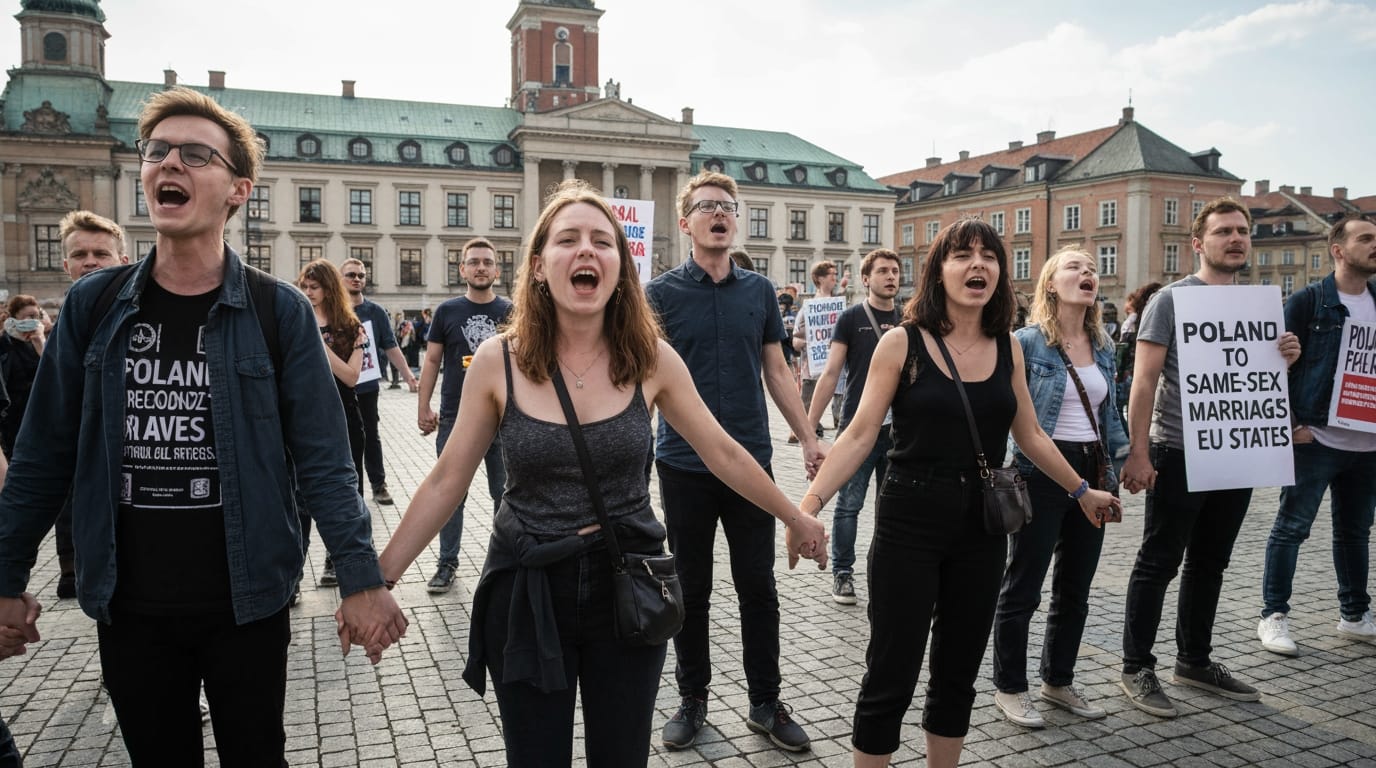
WARSAW, Poland – In a pivotal legal development that redefines the rights of same-sex couples within its borders, Poland's Supreme Administrative Court (NSA) ruled on March 20, 2026, that the country must recognize same-sex marriages legally contracted in other European Union member states. This landmark decision requires Polish civil registry offices to transcribe foreign same-sex marriage certificates into the national system, ushering in a new era of legal acknowledgment for couples who previously faced significant hurdles upon returning home. The ruling follows a November 2025 judgment from the European Court of Justice (ECJ), which established the obligation for EU states to recognize such unions, particularly concerning the fundamental rights of free movement and residence for EU citizens and their spouses.
A New Chapter for Same-Sex Couples
The Supreme Administrative Court's decision on March 20, 2026, directly mandates Polish authorities to recognize same-sex marriages performed elsewhere in the European Union. This means that public administration bodies are now obliged to enter these marriages into Poland's civil registry, effectively ending a long-standing practice of denial for couples returning to their home country. The NSA's ruling stipulated that civil registry offices have 30 days to process such transcriptions. This administrative shift represents a significant victory for LGBTQ+ rights advocates and thousands of same-sex couples who have been in legal limbo. Deputy Prime Minister and Minister for Digital Affairs Krzysztof Gawkowski lauded the decision as "landmark," asserting that it confirms "rainbow families are equal before the law".
The Polish court's judgment is a direct consequence of the European Court of Justice's binding decision delivered on November 25, 2025. The ECJ, in the case of Cupriak-Trojan and Trojan v Wojewoda Mazowiecki, declared that refusing to acknowledge same-sex marriages legally performed in another member state breaches EU law and infringes upon fundamental rights, including respect for private and family life. The Luxembourg-based court reiterated that while EU member states retain the autonomy to determine whether to legalize same-sex marriage domestically, they cannot impede the right of residence for EU citizens and their spouses. Importantly, the ECJ clarified that the term "spouse" is gender-neutral and applies equally to same-sex unions for the purposes of free movement within the Union.
Navigating Poland's Legal Framework
Poland has historically maintained a conservative stance on family law, with Article 18 of its 1997 Constitution explicitly defining marriage as "a union of a man and a woman". This constitutional provision has frequently been interpreted by Polish courts as precluding the recognition of same-sex marriage within the country. Consequently, Poland stands as one of the few EU nations, alongside Romania, Bulgaria, and Slovakia, that currently offer no legal recognition for same-sex couples, neither through marriage nor civil partnerships.
Despite this deeply entrenched legal landscape, the NSA's recent ruling offered a crucial reinterpretation. Justice Leszek Kiermaszek, in justifying the decision, stated that Article 18 "cannot be interpreted as an absolute obstacle to recognising a same-sex marriage concluded in another EU member state". The court argued that interpreting the Constitution otherwise could conflict with principles prohibiting discrimination, including on the basis of sexual orientation. This nuanced interpretation seeks to reconcile Poland's constitutional definition of marriage with its obligations as an EU member state, particularly regarding the rights derived from EU citizenship.
Prior to this ruling, same-sex couples in Poland possessed only limited legal protections. A 2012 Supreme Court ruling granted them certain rights regarding the tenancy of a shared household, alongside the ability to refuse to testify against a partner and some social benefits. However, comprehensive legal recognition, which would afford thousands of rights and protections typically enjoyed by heterosexual married couples, remained out of reach.
The Trajectory of Legal Challenges and EU Influence
The path to this watershed moment has been paved by years of persistent legal challenges from same-sex couples seeking recognition of their relationships. The ECJ and NSA rulings were triggered by cases involving Polish nationals who married in other EU countries, such as Germany and Portugal, only to have their marriages denied recognition by Polish authorities upon their return. One such case involved a dual Polish-German couple married in Berlin in 2018, whose refusal of transcription by Polish registry offices ultimately led to the referral to the ECJ.
These developments also align with broader human rights pronouncements from European courts. In December 2023, the European Court of Human Rights (ECHR) ruled in Przybyszewska and Others v Poland that Poland had violated Article 8 of the European Convention on Human Rights by failing to provide legal frameworks for same-sex partnerships, imposing a positive obligation on the government to do so. A subsequent ECHR judgment in September 2024, Formela and Others v Poland, further reinforced this, finding violations in Poland's refusal to recognize foreign same-sex marriages. These rulings underscore the consistent pressure from European judicial bodies to ensure greater equality for same-sex couples in Poland. The ECJ's November 2025 decision itself is rooted in Article 2 of the Lisbon Treaty, which enshrines human rights as a core value of the European Union, with the court interpreting the right to marry a person of the same sex as a fundamental human right binding on member states.
Political Divisions and Future Uncertainties
While the NSA's decision has been met with applause from human rights organizations and segments of Poland's political spectrum, it has also highlighted deep-seated ideological divisions within the country. Equality advocates like Przemek Walas of the Campaign Against Homophobia emphasized that the ruling ensures Poland's compliance with EU law, calling it "a significant step towards marital equality".
However, conservative factions and nationalist elements view the ruling with concern, often characterizing it as an unwelcome intrusion of EU authority into Poland's national sovereignty and traditional family values. The current pro-European coalition government, which took power recently, has been working on introducing legislation for civil partnerships, including for same-sex couples. Yet, this initiative faces considerable resistance from conservative coalition partners and the country's nationalist President, Karol Nawrocki, who has publicly stated his intention to veto any bill that he perceives as undermining the constitutionally protected status of marriage as between a man and a woman. Critics from the conservative camp suggest that the government is utilizing European courts to achieve policy changes that lack sufficient support in the Polish parliament, thereby sidestepping domestic legislative processes.
Conclusion
The Supreme Administrative Court's decision to compel the recognition of same-sex marriages from other EU states marks a watershed moment for Poland, aligning its administrative practices more closely with broader European legal principles regarding fundamental rights and free movement. While this ruling does not domestically legalize same-sex marriage or civil unions within Poland – a matter that remains subject to intense internal political and social debate – it significantly improves the legal standing and daily lives of many same-sex couples who have married abroad. It underscores the enduring tension between national constitutional traditions and the evolving obligations of EU membership, particularly in the realm of human rights. As Poland navigates this complex legal and political landscape, the ruling undeniably represents a tangible step towards greater legal recognition and equality for its LGBTQ+ citizens, even as the journey towards full domestic marriage equality continues to be a contentious issue on the national agenda.


