Pontiff Declares No Fear of Trump Administration Amid Escalating Tensions
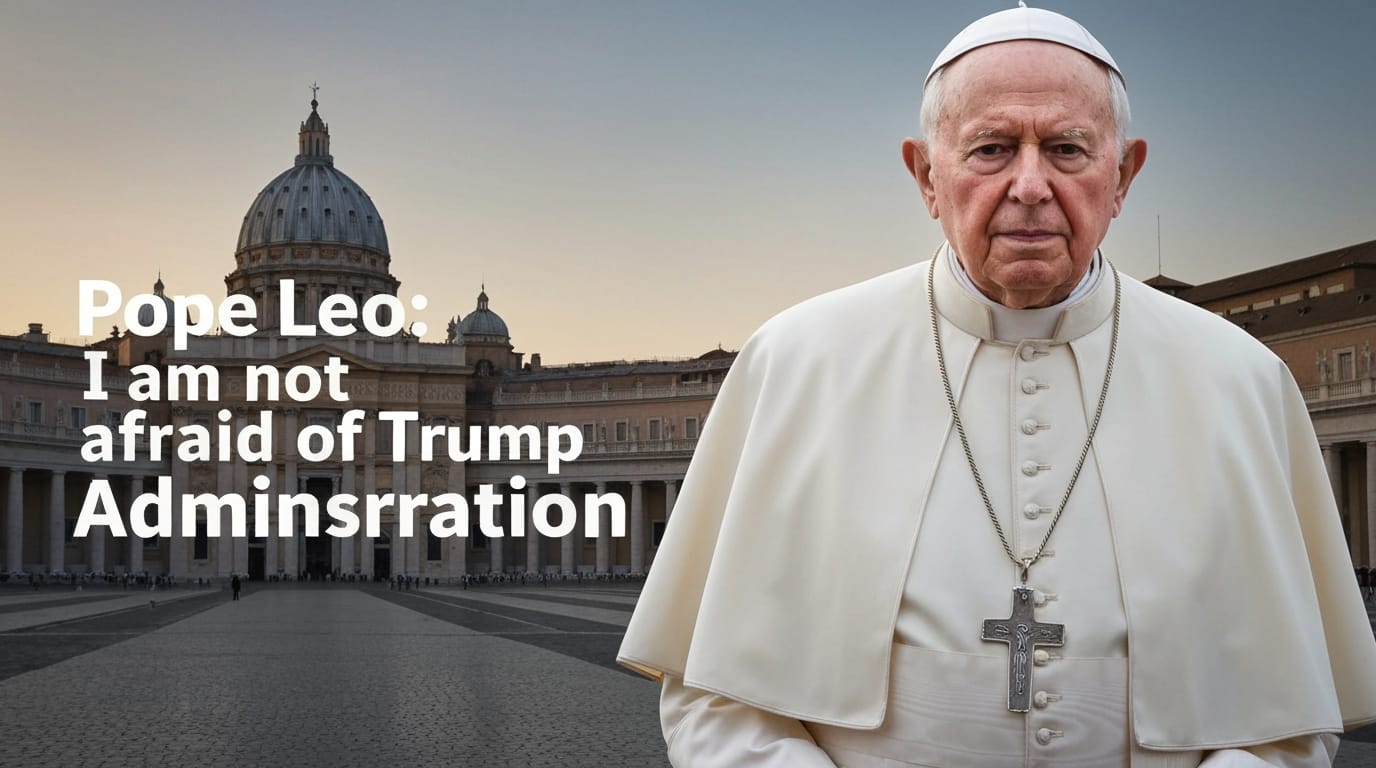
VATICAN CITY – In an extraordinary public declaration, Pope Leo XIV, the first U.S.-born pontiff, asserted on Monday, April 13, 2026, that he holds "no fear of the Trump administration". The resolute statement came aboard the papal plane en route to Algeria, following a weekend of sharp exchanges with President Donald Trump over issues ranging from the U.S.-Israel war in Iran to the role of the Catholic Church in global affairs. The Pontiff's remarks underscore a deepening rift between the Vatican and the current U.S. administration, signaling an unprecedented period of public discord between these influential global entities.
A Pope's Resolve: Upholding Gospel Amid Political Firestorm
Pope Leo XIV's pronouncement was a direct response to a "broadside" from President Trump, who had taken to social media and later spoke to reporters, criticizing the Pope's performance and suggesting he was "WEAK on Crime, and terrible for Foreign Policy". Trump also claimed that the Pope's election was influenced by his American heritage, positing, "If I wasn't in the White House, Leo wouldn't be in the Vatican". In response, Pope Leo XIV emphasized that the Vatican's appeals for peace and reconciliation are "rooted in the Gospel" and reiterated his commitment to the Church's mission. He clarified that his statements are "certainly not meant as attacks on anyone," but rather a call to build "bridges of peace and reconciliation" and avoid war. The Pope had previously characterized Trump's threats regarding the Iran conflict as "truly unacceptable".
Echoes of Past Friction: A History of Vatican-Trump Disagreements
The current standoff is not the first instance of public tension between the Vatican and a Trump administration. During President Trump's previous term, his administration frequently clashed with then-Pope Francis over a range of social and political issues, most notably immigration. Pope Francis, a vocal advocate for migrants, famously declared in 2016 that a person "who only thinks about building walls... and not building bridges, is not Christian". He also critically addressed the Trump administration's "mass deportation" policies, warning in February 2025 that such actions "will end badly" and damage the "dignity of many men and women". These earlier criticisms often focused on the humanitarian implications of policies, directly challenging the ethical foundations of the administration's approach. This historical context illustrates a pattern of moral and theological opposition from the Holy See to certain U.S. governmental policies under Donald Trump.
Diplomatic Fault Lines: Pentagon Meetings and Cancelled Visits
The escalating rhetoric has been accompanied by reports of strained diplomatic relations. A contentious meeting reportedly took place in January 2026 at the Pentagon, involving U.S. defense officials and Cardinal Christophe Pierre, then the Apostolic Nuncio to Washington. Accounts suggest that U.S. officials urged the Holy See to align more closely with Washington's strategic posture, particularly concerning the Iran conflict, with some reports alleging a tense exchange where the Pentagon asserted U.S. military power. The Vatican, however, later disputed the characterization of this meeting, stating it "does not correspond to the truth in any way". Further signaling the strained ties, Pope Leo XIV cancelled a planned visit to the United States for its 250th anniversary, a decision reportedly influenced by the fraught relationship between the White House and the Vatican.
The Enduring Mission: Peacemaking in a Polarized World
The public dispute highlights the distinct roles of the spiritual and political leaders. While President Trump has articulated a foreign policy driven by national interest and military strength, Pope Leo XIV consistently grounds his pronouncements in the universal message of the Gospel, emphasizing peace, human dignity, and reconciliation. Experts suggest that Pope Leo XIV's direct criticisms are unusual in their specificity, distinguishing them from the more general critiques of political systems typically offered by the Vatican. This ongoing dialogue, or rather, divergence, between the two figures creates a dynamic that is closely watched by international observers and Catholics worldwide. The pontiff's declared lack of fear underscores the Vatican's commitment to its moral authority, even when confronting powerful political figures, reinforcing the notion that the Church's mission transcends temporal politics.


