Saudi Arabia Extends Critical Financial Lifeline to Pakistan Amid Economic Pressures
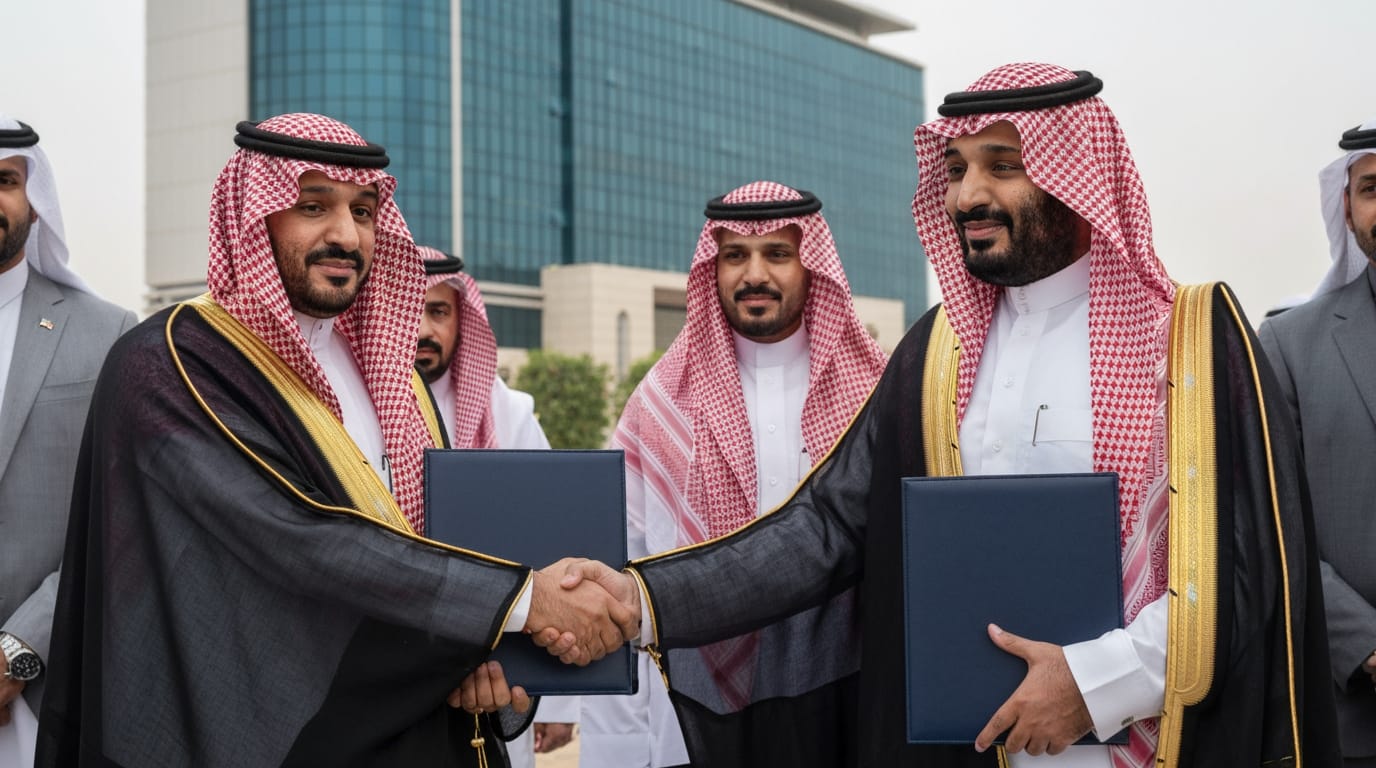
In a significant move poised to stabilize Pakistan's precarious economic landscape, Saudi Arabia has pledged an additional $3 billion in financial support, with disbursement anticipated in the coming week. This fresh injection of funds, confirmed by Pakistan's Finance Minister Muhammad Aurangzeb, comes at a critical juncture as Islamabad grapples with looming external debt obligations and a persistent need to bolster its foreign exchange reserves. The commitment underscores a rapidly deepening strategic partnership between the two historically allied nations, extending beyond mere financial transactions to encompass broader economic and defense cooperation.
The timely assistance is expected to provide substantial relief to Pakistan, which is facing an immediate $3.5 billion debt repayment to the United Arab Emirates by the end of April. This repayment obligation, which Pakistan was unable to roll over with the UAE for the first time in seven years, has placed considerable strain on Islamabad's foreign currency reserves, highlighting the nation's vulnerability to external financial shocks. The new Saudi deposit, alongside the extension of an existing $5 billion facility, is crucial for helping Pakistan meet these obligations and maintaining stability in its external accounts.
Bolstering Reserves Amidst Economic Headwinds
Pakistan’s economy has been navigating a challenging period since late 2021, marked by high inflation, a weakening currency, and persistent balance-of-payments deficits. The 2022 floods further exacerbated the crisis, causing an estimated $30 billion in economic losses and pushing national poverty rates higher. While recent reports indicate signs of gradual macroeconomic recovery and stabilization, the country's foreign exchange reserves remain under pressure. As of March 27, Pakistan's reserves stood at approximately $16.4 billion, sufficient to cover roughly three months of imports.
The government, operating under an International Monetary Fund (IMF)-backed program, has set a target to increase these reserves to around $18 billion, equivalent to about 3.3 months of import cover, by the close of the current fiscal year. The financial lifeline from Saudi Arabia directly supports this objective, providing essential liquidity and reinforcing the government's commitment to meeting its international financial obligations. Finance Minister Aurangzeb emphasized during the World Bank-IMF Spring Meetings 2026 in Washington that this support comes at a "critical time" for Pakistan's external financing needs. He also highlighted the successful repayment of a $1.4 billion Eurobond last week as a testament to Pakistan's disciplined approach to its financial strategy.
Beyond the immediate $3 billion, Saudi Arabia has also restructured its existing $5 billion deposit with Pakistan, extending its tenure for a longer period and moving away from the previous annual rollover arrangement. This existing facility, initially deposited in 2021 and subsequently rolled over in 2022, 2023, and 2024, has been a consistent source of support for Pakistan's central bank, providing a more stable financial buffer. This shift from annual renewals to a longer-term arrangement signifies a deeper level of trust and commitment from Riyadh, offering Pakistan enhanced predictability in managing its financial reserves.
A Historical Trajectory of Support and Deepening Ties
The financial assistance from Saudi Arabia is not an isolated event but rather a continuation of a long-standing pattern of support, rooted in decades of close bilateral relations between Islamabad and Riyadh. Historically, Saudi Arabia has often stepped in to aid Pakistan during periods of economic distress. For instance, in 2018, Riyadh unveiled a $6 billion package that included a $3 billion deposit at Pakistan's central bank and $3 billion in oil supplies on deferred payments. Earlier, in 2014, Saudi Arabia provided a $1.5 billion loan to shore up Pakistan's economy. These interventions highlight Saudi Arabia's consistent role as a key financial ally for Pakistan.
However, the current phase of engagement transcends traditional aid, signaling an evolution towards a more comprehensive strategic partnership. Analysts suggest the relationship is now developing into a broader collaboration encompassing energy cooperation, investment, security coordination, and regional geopolitics, moving beyond religious affinity and crisis-driven financial support. This strategic shift is underpinned by recent high-level diplomatic and military interactions.
Last year, Pakistan and Saudi Arabia formalized their commitment to mutual security by signing a mutual defense pact, an agreement that stipulates an attack on one nation would be considered an attack on both. This pact has seen recent activation, with Pakistani military contingents and fighter jets arriving at King Abdulaziz Air Base in Saudi Arabia earlier this month. This military deployment, announced by the Saudi Ministry of Defense, aims to enhance joint military coordination and improve operational readiness between the armed forces of both nations, reflecting a shared commitment to regional stability.
Broader Implications and Regional Dynamics
The deepening ties between Pakistan and Saudi Arabia carry significant implications for regional dynamics. The enhanced economic and military cooperation positions Pakistan as an increasingly integral partner in Saudi Arabia’s strategic vision for the Gulf and wider Middle East. This strengthening bond also comes at a time when Pakistan is actively seeking to diversify its economic partnerships and secure stable external financing.
The current financial support from Saudi Arabia, particularly in the context of Pakistan's need to repay the UAE, also sheds light on evolving alliances within the Gulf region. While traditionally strong, relations between some Gulf states have seen shifts, prompting Pakistan to seek robust backing from key partners like Saudi Arabia and China. This strategic balancing act is crucial for Pakistan as it navigates complex regional geopolitics and secures its economic future.
The sustained support from Riyadh not only provides immediate financial relief but also sends a strong signal of confidence to international markets and other potential investors. Pakistan's Finance Minister Aurangzeb noted that this international appreciation, coupled with Saudi Arabia's timely financial support, provides Pakistan with significant momentum and confidence for its economy and external accounts moving forward. The government's broader external financing agenda includes exploring avenues such as a Global Medium-Term Note (GMTN) program and a planned inaugural Panda Bond issuance, further diversifying its funding sources.
Conclusion
The commitment of an additional $3 billion in financial support, coupled with the extension of the existing $5 billion deposit from Saudi Arabia, marks a pivotal moment for Pakistan. This substantial assistance arrives at a critical time, offering immediate relief for pressing debt repayments and significantly bolstering Pakistan's foreign exchange reserves. More profoundly, it signifies a robust and evolving strategic partnership between Islamabad and Riyadh, moving beyond traditional benefactor-recipient roles to encompass deeper economic, investment, and defense cooperation. As Pakistan works towards macroeconomic stability and sustained growth, the steadfast support from Saudi Arabia is poised to be a cornerstone of its recovery and future prosperity, reinforcing bilateral bonds and influencing regional alignments.


