Pope Confronts Painful Legacy of Clergy Sexual Abuse During France Pilgrimage
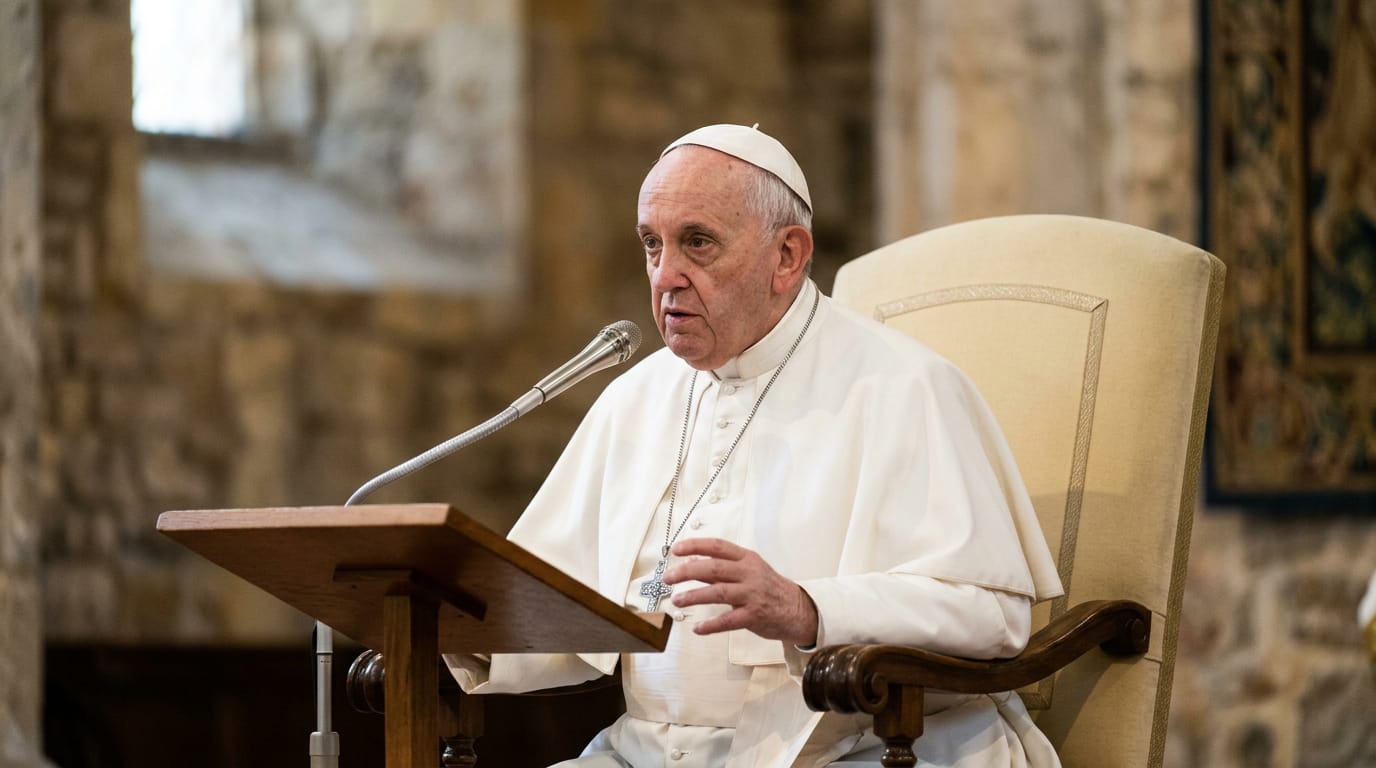
LOURDES, France — In a direct confrontation with the gravest crisis facing the modern Catholic Church, the pontiff condemned the lingering scourge of clerical sexual abuse during a high-stakes visit to France. The trip brought the head of the Roman Catholic Church to the holy sanctuary of Lourdes, where prayers for physical and spiritual healing stood alongside an urgent call for church leaders to root out misconduct, hear the cries of victims, and dismantle decades of institutional secrecy.
Addressing French bishops in a private assembly, the pope praised their recent efforts to face past wrongdoing while demanding relentless vigilance. The message carried particular weight in France, where the trauma of historic cover-ups remains raw, and public confidence in the hierarchy continues to struggle against deep secular currents.
Confronting Decades of Institutional Silence
The shadow hanging over the pilgrimage traces back to the devastating findings of an independent inquiry published in 2021. Led by senior civil servant Jean-Marc Sauvé, the commission estimated that Catholic clergy and religious workers abused approximately 216,000 children in France between 1950 and 2020. That estimate rose to 330,000 victims when including lay figures affiliated with church-run schools, youth organizations, and scout troops.
The Sauvé report concluded that church authorities across France had systematically concealed allegations, shielded predatory priests, and disregarded the trauma inflicted upon young victims. In the years following those findings, the French bishops' conference formally accepted institutional responsibility, established compensation mechanisms, and partnered with independent civilian bodies to evaluate claims.
Speaking behind closed doors to the assembled episcopate, the pontiff commended French prelates for adopting decisive reforms. He insisted, however, that acknowledging past failures was merely the starting point. He urged the hierarchy to maintain total vigilance, implement robust safeguards in every parish, and ensure that accountability remains non-negotiable.
Private Encounters and Deep Trauma
Beyond official speeches to prelates, the moral focal point of the visit unfolded during a private gathering with seven adult survivors of clerical abuse. The participants represented a cross-section of victims whose childhoods were shattered by predatory church figures across several French regions.
Among those who shared their experiences was an 80-year-old survivor who suffered abuse decades earlier while attending Notre-Dame de Betharram, a Catholic boarding school near Lourdes that has since become the center of extensive criminal and civil complaints. Vatican officials confirmed that the encounter lasted well beyond its scheduled time. The pope listened intently to each narrative, offered personal prayers, and embraced participants in an effort to acknowledge their enduring suffering.
Participants later described the exchange as solemn and deeply emotional. Survivors noted that the pope demonstrated a firm grasp of the systemic mechanisms that allowed offenders to evade prosecution and remain hidden inside religious communities. Several participants expressed relief at being heard directly at the highest level of authority, viewing the meeting as an essential validation of their decades-long quest for justice.
Tensions Over Reform and Reparations
Despite the emotional resonance of the meeting, the papal gestures were met with skepticism from multiple survivor advocacy groups. Outside the gates of the sanctuary, prominent activists argued that closed-door meetings with a curated group of victims risk becoming symbolic exercises unless accompanied by binding policy overhauls.
Advocacy organizations highlighted that thousands of victims are still waiting for financial restitution and formal apologies from individual religious orders. France's Independent National Authority for Recognition and Reparation recently confirmed that around 2,000 individuals have filed formal applications seeking financial compensation. Some survivor associations boycotted the official events entirely, demanding that the Vatican open all secret diocesan archives to civil prosecutors, remove all statute-of-limitations barriers in canon law, and enforce zero-tolerance dismissals for any superior who conceals abuse.
The tension underscores a widening divide between church leaders attempting to demonstrate progress and victims who feel that institutional reforms remain far too slow. While church authorities highlight newly created safeguarding protocols and psychological screening for seminary candidates, survivor federations maintain that true justice requires external oversight and independent civil scrutiny.
A Faith at a Crossroads
The pilgrimage to France took place against a backdrop of steep secularization in a country historically dubbed the eldest daughter of the Church. Regular church attendance across France has fallen to roughly 5 percent of the national population, accelerated by successive abuse disclosures that shattered the church's traditional standing as a moral authority.
Even so, large crowds gathered to greet the pontiff in the Pyrenean valley, demonstrating that the sanctuary at Lourdes continues to draw millions of pilgrims seeking spiritual solace and physical healing. The juxtaposition was striking: while faithful believers filled open fields for outdoor liturgies, church leaders faced uncomfortable reminders that institutional recovery depends entirely on truth-telling.
Throughout his public appearances, the pontiff emphasized that genuine spiritual renewal cannot happen without confronting past errors head-on. Observers noted that the credibility of the church's broader message on peace, social justice, and human dignity hinges almost entirely on its ability to clean its own house.
Sustaining the Fight for Healing and Justice
As the four-day visit to France concluded, the Catholic Church found itself confronted by the reality that apologies alone cannot erase decades of trauma. The pontiff's clear condemnation of abuse as a scourge that must be eradicated leaves French bishops with an unmistakable mandate to sustain their preventive programs and expand support services for survivors.
The path ahead remains difficult. For thousands of abuse survivors, true healing requires long-term legal transparency, prompt financial compensation, and permanent institutional change. By bringing the issue to the forefront at one of global Catholicism's most revered shrines, the visit served as a reminder that the church's moral integrity will be judged not by ritual prayers, but by its resolve to protect the vulnerable and deliver genuine justice.